
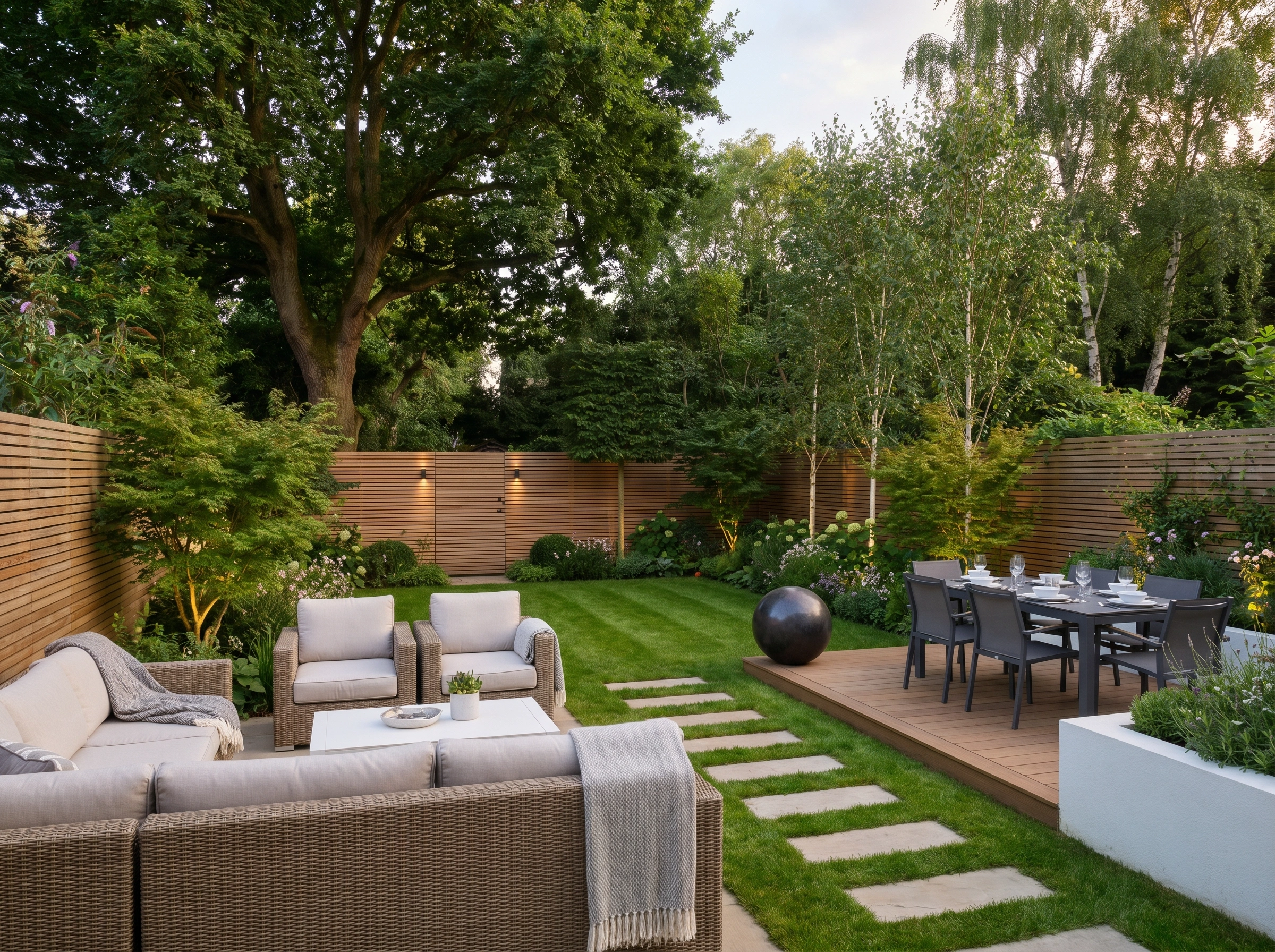
Modern exterior design is defined by restraint and intention. As seen across these spaces, the most successful front yards treat landscaping as architectural elements. By utilizing strong geometric pathways, contrasting textures like raw concrete and Corten steel, and highly structured plantings, a home’s exterior becomes a cohesive extension of its interior style.
Thoughtful lighting remains the ultimate finishing touch, ensuring these modern facades remain striking long after the sun goes down. Ultimately, precision and material discipline are the keys to a timeless modern exterior.
1 Material Contrast
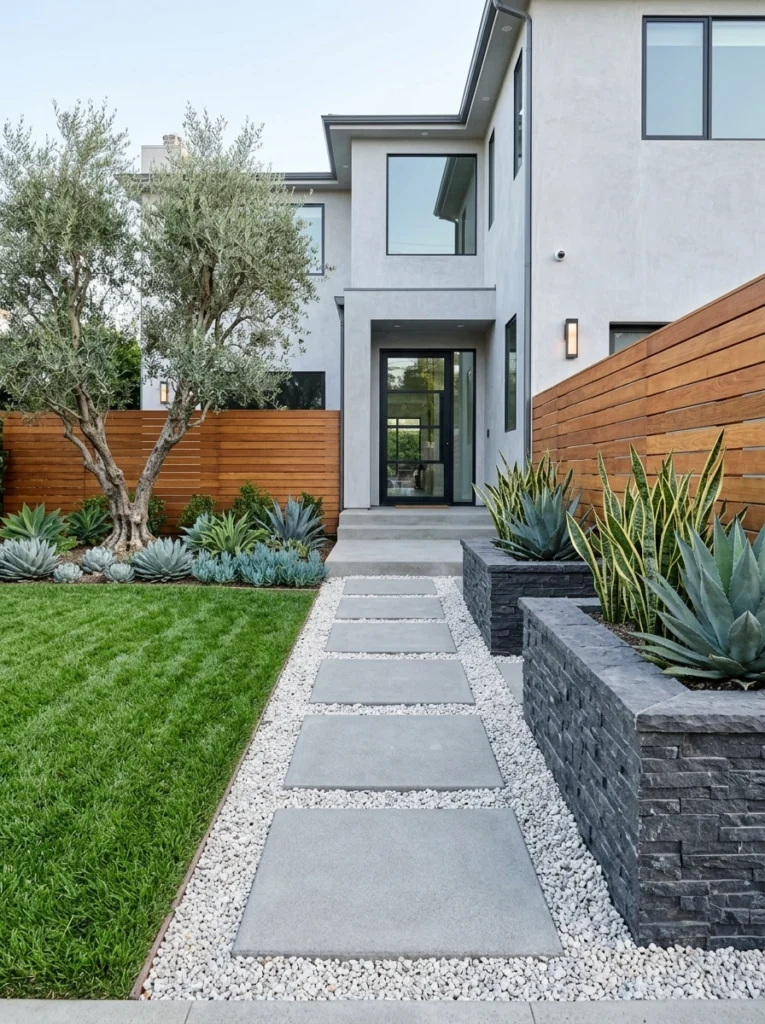
The immediate takeaway is how effectively contrasting materials organize the space. The warmth of the horizontal wood fencing softens the industrial feel of the smooth concrete pavers and dark, stacked-stone planters. Using white gravel as negative space around the path forces your eye directly to the architectural agaves and the mature olive tree.
2 Linear Illumination
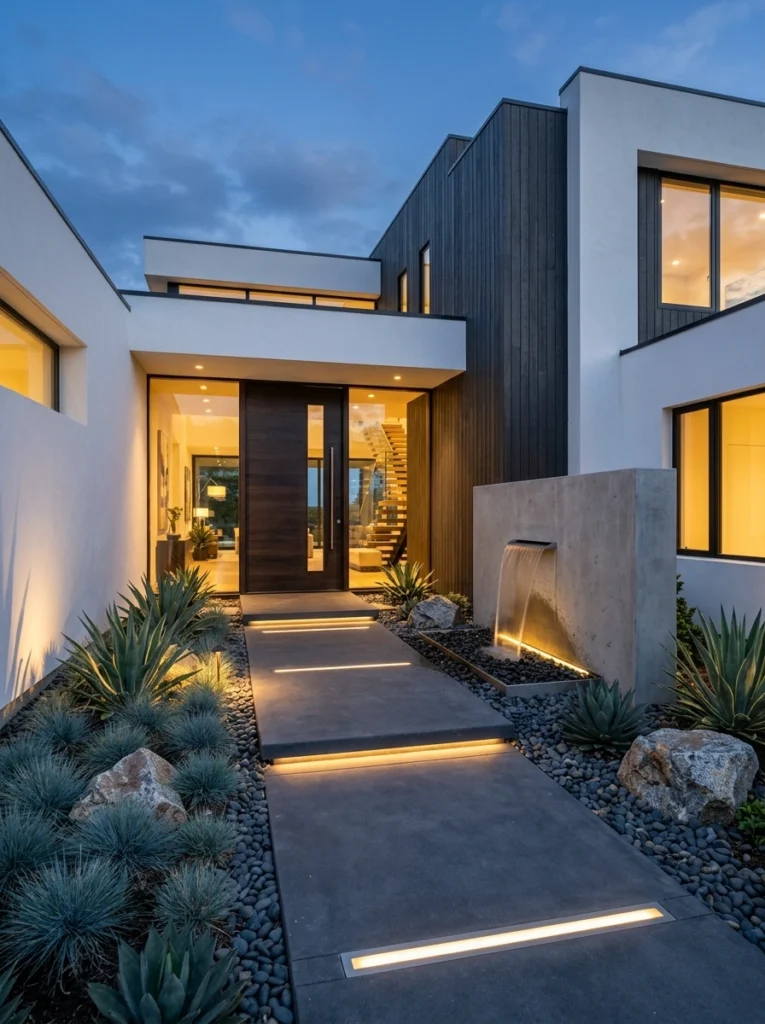
Integrated lighting is doing the heavy lifting here. Embedding LED strips directly into the concrete steps creates a clear, geometric sightline to the dark wood front door. The raw concrete water feature adds subtle movement without breaking the strict, linear geometry. Notice how the spiky agaves and mounding grasses provide necessary textural relief.
3 Structured Framing
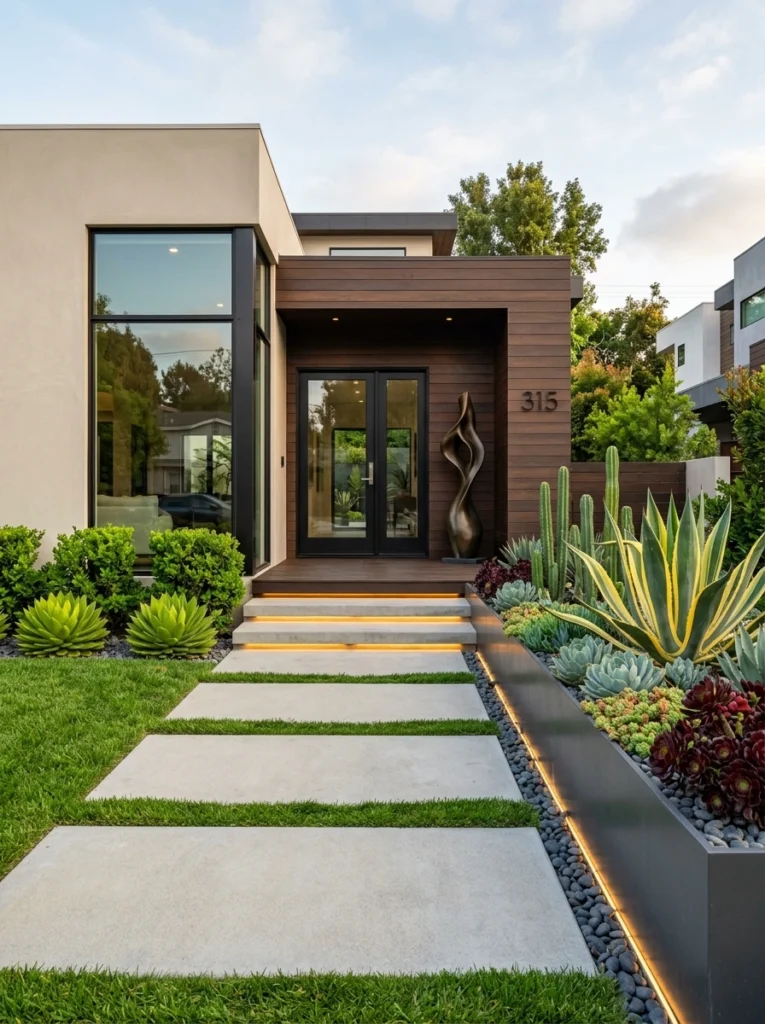
It’s all about creating a distinct entry portal. The warm wood siding wraps the doorway, heavily contrasting with the pale stucco. Those wide concrete pavers divided by precise strips of turf pull you inward. The dark, steel-edged planter beds function like a gallery pedestal, showcasing structural succulents and cacti rather than traditional, fussy blooms.
4 Sculptural Focus
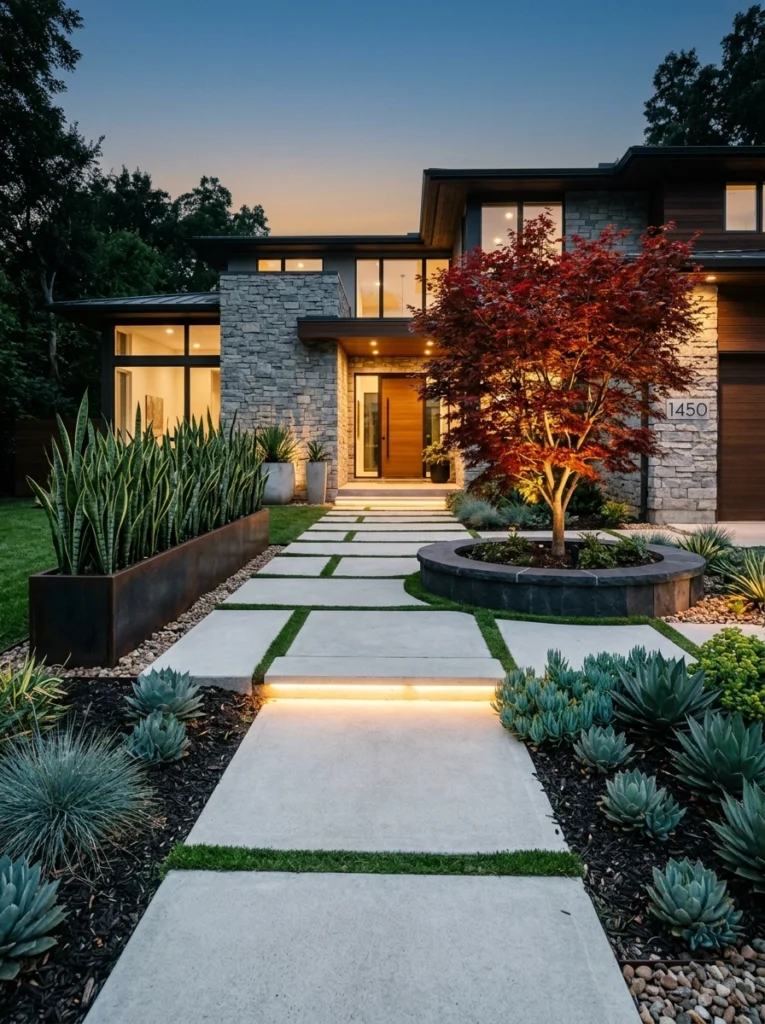
The deeply textured stone facade is grounded by aggressive, geometric landscaping. The long Corten steel planter acts as a hard boundary, filled with rigid snake plants that mimic the home’s vertical lines. However, that single Japanese maple in the circular concrete retaining wall acts as the perfect, organic counterpoint to all the strict right angles.
5 Intentional Zoning
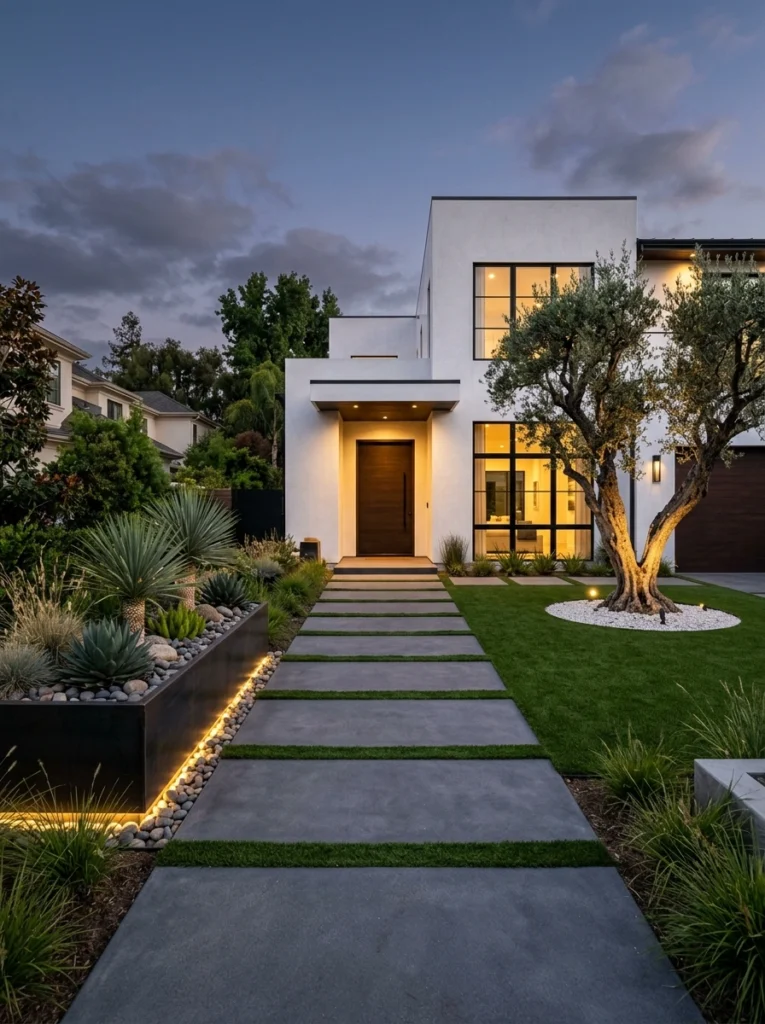
The landscape is organized into highly deliberate zones. The massive, dark steel planter establishes a strong edge along the driveway, underlit to float above the river rock. Using turf joints between the massive concrete slabs softens the approach, while the gnarled olive tree sits isolated in its own stark, circular gravel bed for maximum impact.
6 Layered Approach
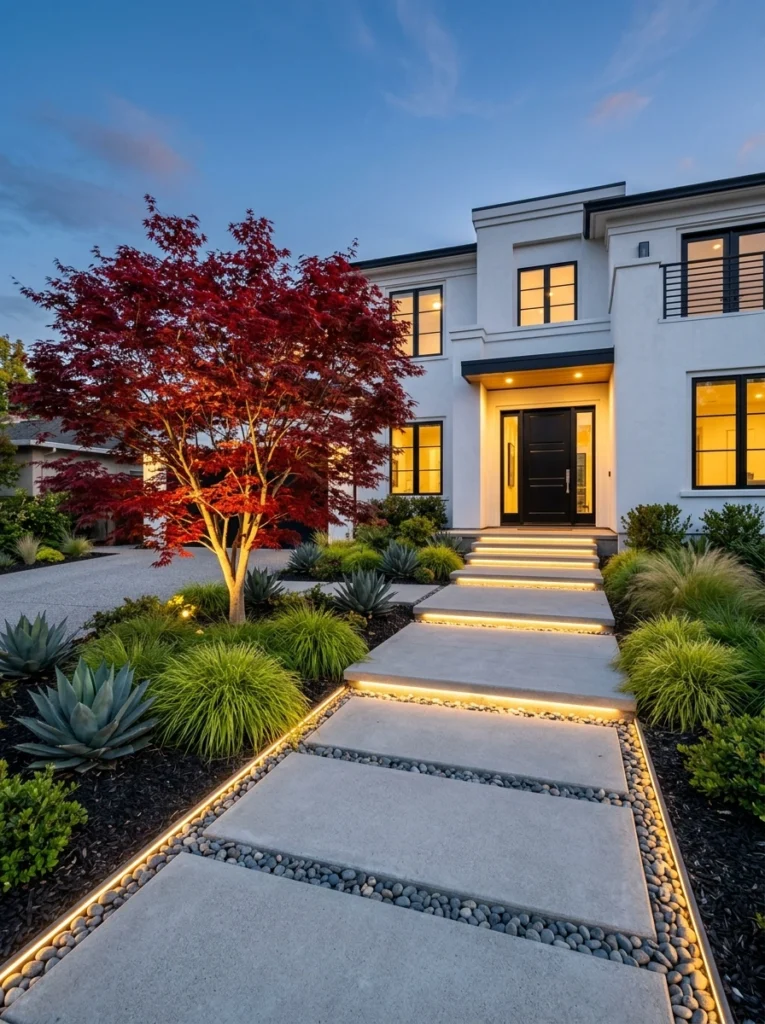
Elevation changes are treated as an opportunity for dramatic lighting. The under-lit concrete steps appear to hover above the dark gravel, guiding the eye up. The landscaping relies heavily on mounding grasses to soften the hardscape, while the deep red foliage of the specimen tree provides a necessary disruption to the otherwise neutral, high-contrast palette.
7 Natural Integration
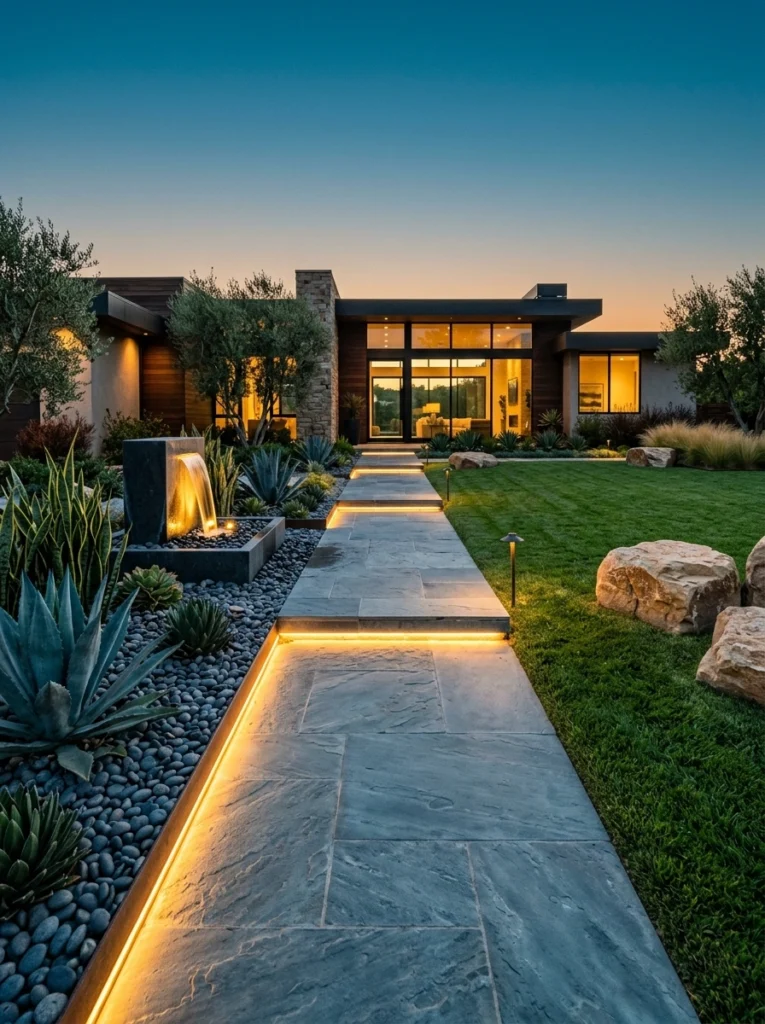
This design bridges modernism with its natural surroundings. Instead of stark concrete, the textured slate pathway brings in organic movement, bordered by subtle strip lighting. The blocky, dark stone water feature maintains the modern discipline, but the incorporation of massive, unrefined boulders directly into the lawn grounds the entire property in a rugged, earthy context.
8 Grid Discipline
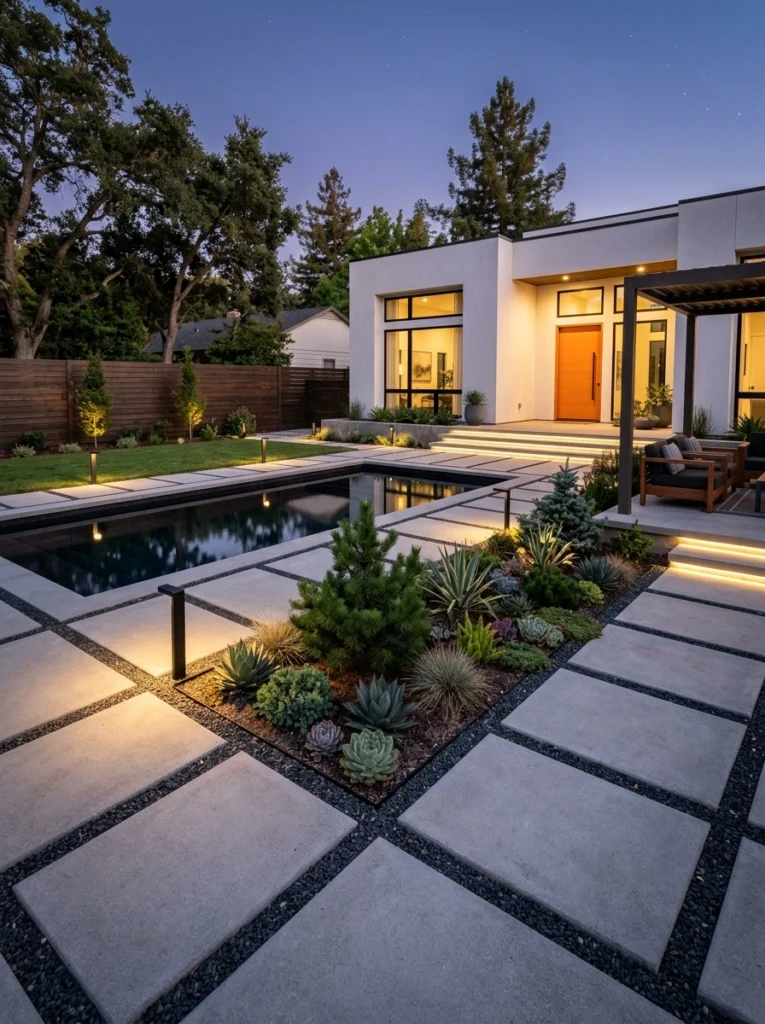
The layout is an exercise in strict grid geometry. The square concrete pads floating in dark gravel mirror the exact proportions of the dark, still reflecting pool. To keep the space from feeling too sterile, the central planting bed introduces varied heights and textures with dwarf pines and dense succulents, breaking up rigid horizontal planes.
9 Reflective Symmetry
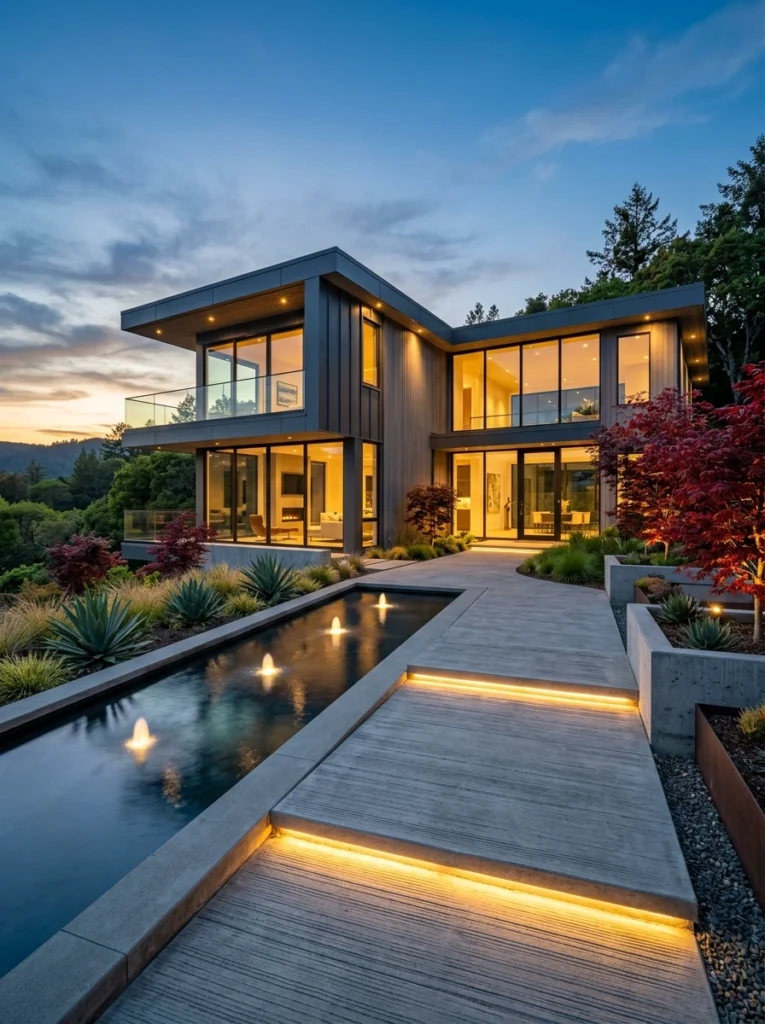
The long, narrow water feature acts as a mirror, doubling the visual impact of the home’s expansive glass facade and the dramatic sunset lighting. The low, staggered concrete steps with integrated strip lighting create a slow, deliberate ascent to the entry. The dark metal siding is smartly offset by the soft, organic shapes of the maples.
10 Floating Elements
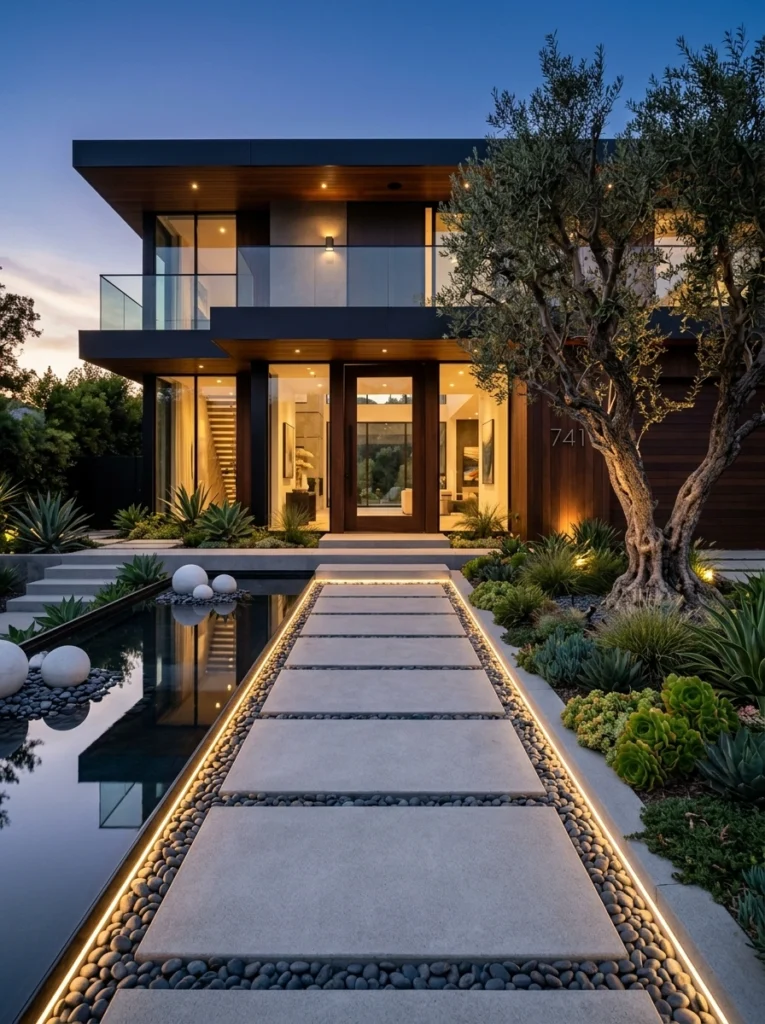
The entry sequence is designed to feel weightless. The concrete pathway appears to float directly over the dark water feature, flanked by smooth river rock. Those spherical landscape lights add an unexpected, playful geometry against the strict, dark vertical lines of the home’s exterior. The massive, illuminated olive tree anchors the composition perfectly.
11 Linear Glow
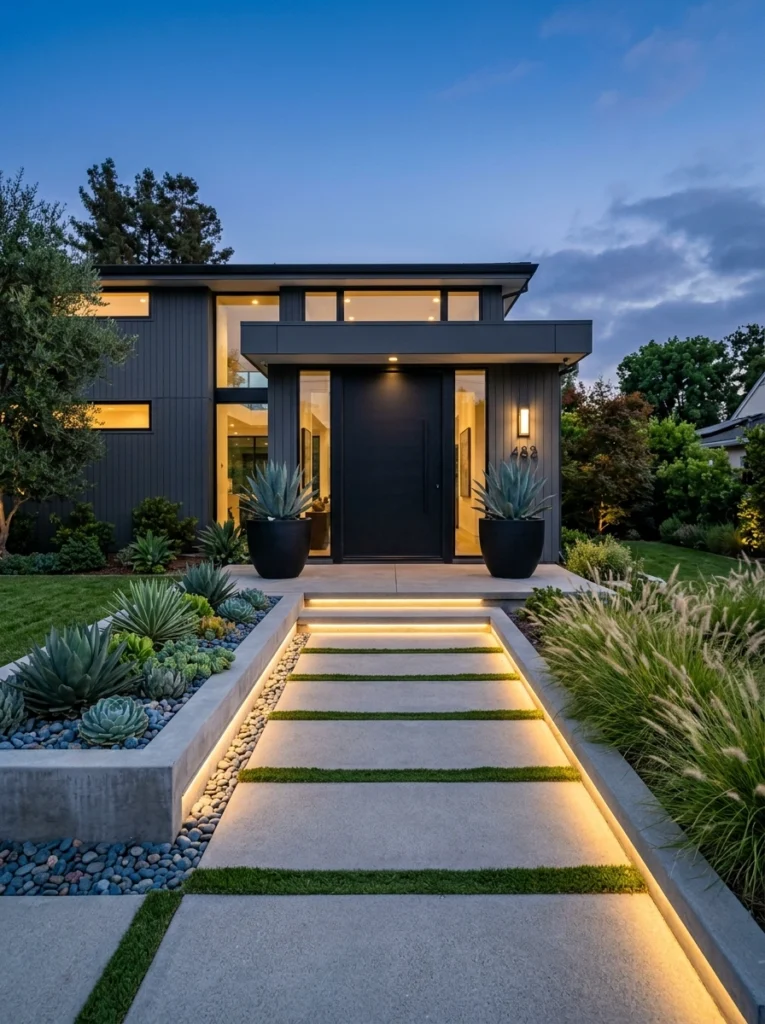
The power here lies in symmetry and linear lighting. By framing the dark, imposing wood entry portal with warm LED strips embedded directly into the pavers, they’ve created a dramatic “runway” effect. Those massed hydrangeas and structured grasses soften the sharp edges without losing the home’s strict architectural discipline.
12 Outdoor Flow
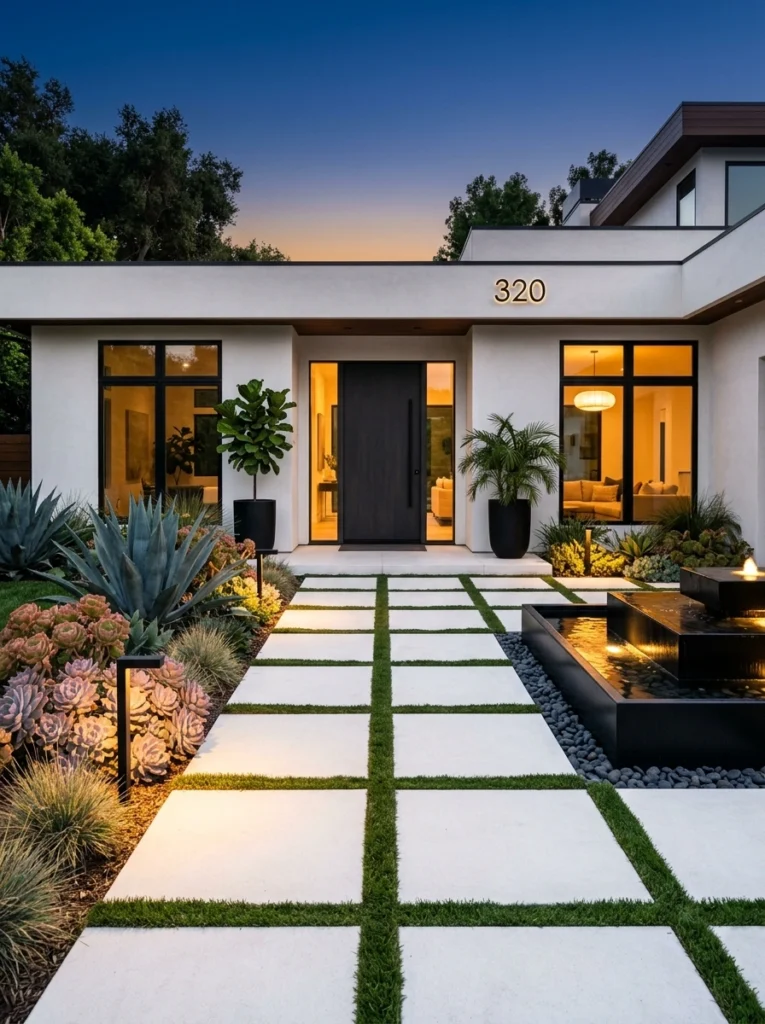
This is how you handle scale when your front facade is all glass. The massive glass walls require landscaping that competes but doesn’t obstruct views. This textured mix of wild ornamental grasses in structured, patinaed metal planters alongside low-mounding succulents and large concrete pads is incredibly balanced.
Conclusion
Modern exterior design isn’t about stripping everything away; it’s about making sure every element that remains serves a distinct, deliberate purpose. From the exact placement of a monolithic paver to the temperature of the embedded LED lighting, these spaces prove that discipline in material choice creates the most compelling homes. By treating the landscape as an extension of the architecture, the exterior becomes an unforgettable experience.
FAQs
What are the best plants for a modern front yard? Focus on structural, low-maintenance options. Agaves, snake plants, ornamental grasses like blue fescue, and architectural specimen trees (like an olive or Japanese maple) provide strong, recognizable shapes without looking overgrown or messy.
How important is exterior lighting in modern design? It is absolutely critical. Modern design relies heavily on shadow and geometry. Integrated LED strip lighting under steps or subtle uplighting on textured walls emphasizes architectural lines and creates depth that would otherwise disappear at night.
Why is concrete so popular in modern hardscaping? Poured concrete or large-format concrete pavers offer clean lines, neutral color palettes, and massive geometric scale. It contrasts perfectly with organic elements like wood siding or structured plantings, providing the necessary visual anchor to keep the space looking grounded and intentional.