
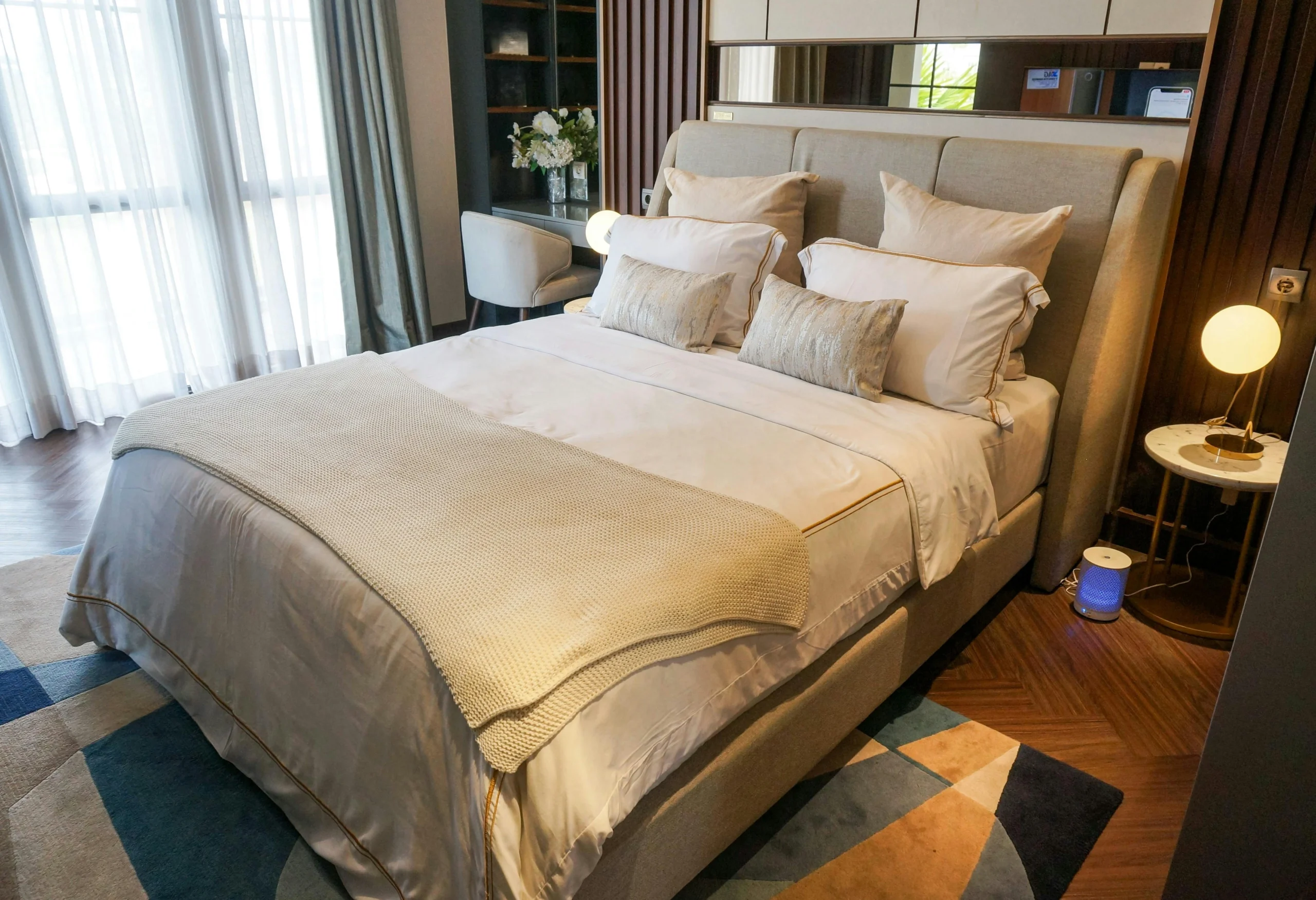
You finally got the bedroom you wanted — soft whites, warm beiges, maybe a touch of greige — and it looks like a Pinterest dream. But after a few months, something feels off. The room is calm, sure. It’s also a little flat. A little hotel-lobby. You want personality without blowing up the peaceful palette you worked so hard for.
Good news: you don’t have to repaint, redo, or start over. Adding color to a neutral bedroom is mostly about being intentional with a few small things — pillows, art, plants, light. Here’s how to do it without losing the soft, restful mood that made you go neutral in the first place.
1. Start with One Anchor Color, Not a Rainbow
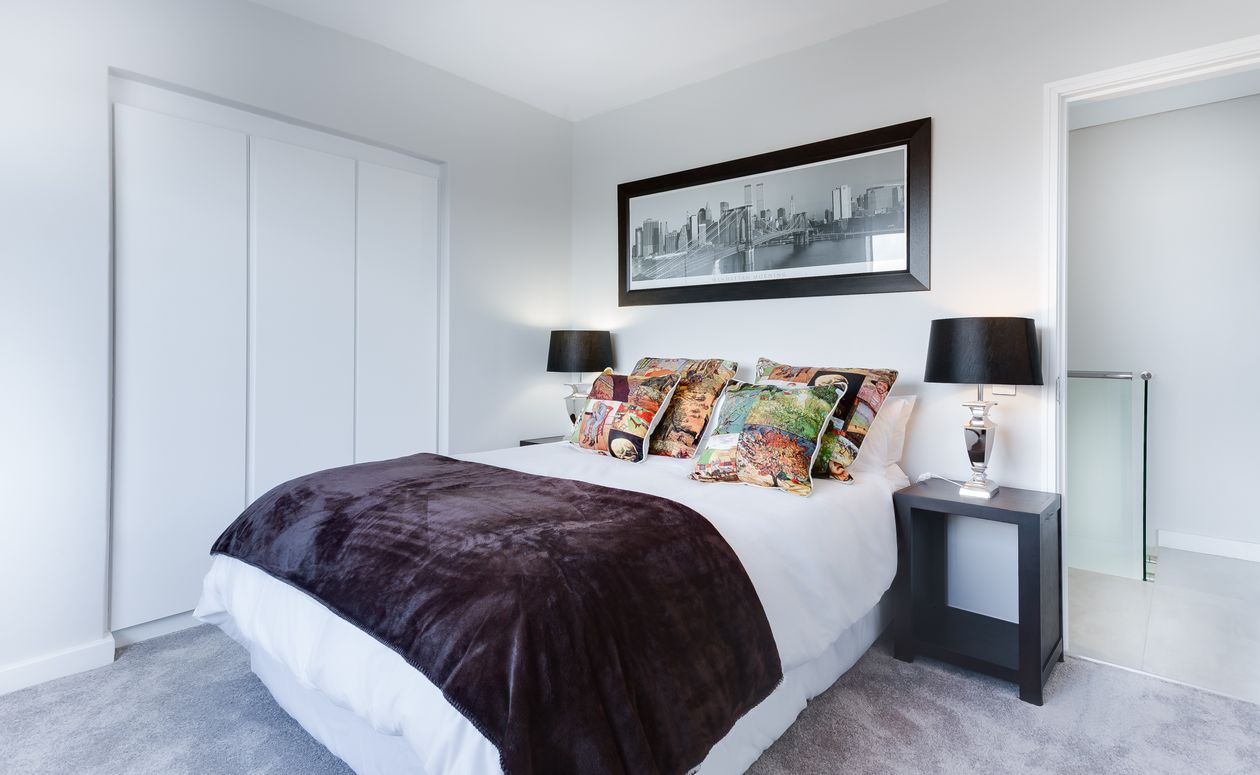
The biggest mistake people make is treating “adding color” like a buffet — a little blue here, some mustard there, a pink throw, a green plant. The room ends up looking confused instead of curated.
Pick one anchor color and let it lead. Then add a secondary color only if it complements the first. Think of it the way you’d think about an outfit: a navy dress with brown shoes works; a navy dress with brown shoes, a red bag, a green scarf, and a yellow belt does not.
Some neutral-friendly anchors that almost always work:
- Sage or olive green — earthy, calming, plays nicely with beige and warm wood
- Terracotta or rust — warm, grounded, gives a sun-baked Mediterranean feel
- Dusty blue — soft and restful, perfect if your neutrals lean cool
- Mustard or ochre — bolder, but pairs beautifully with cream and oak
Pro tip: choose your anchor color based on the undertone of your neutrals. Warm beige walls love terracotta and mustard. Cool greys love dusty blue and sage.
2. Layer Color Through Bedding
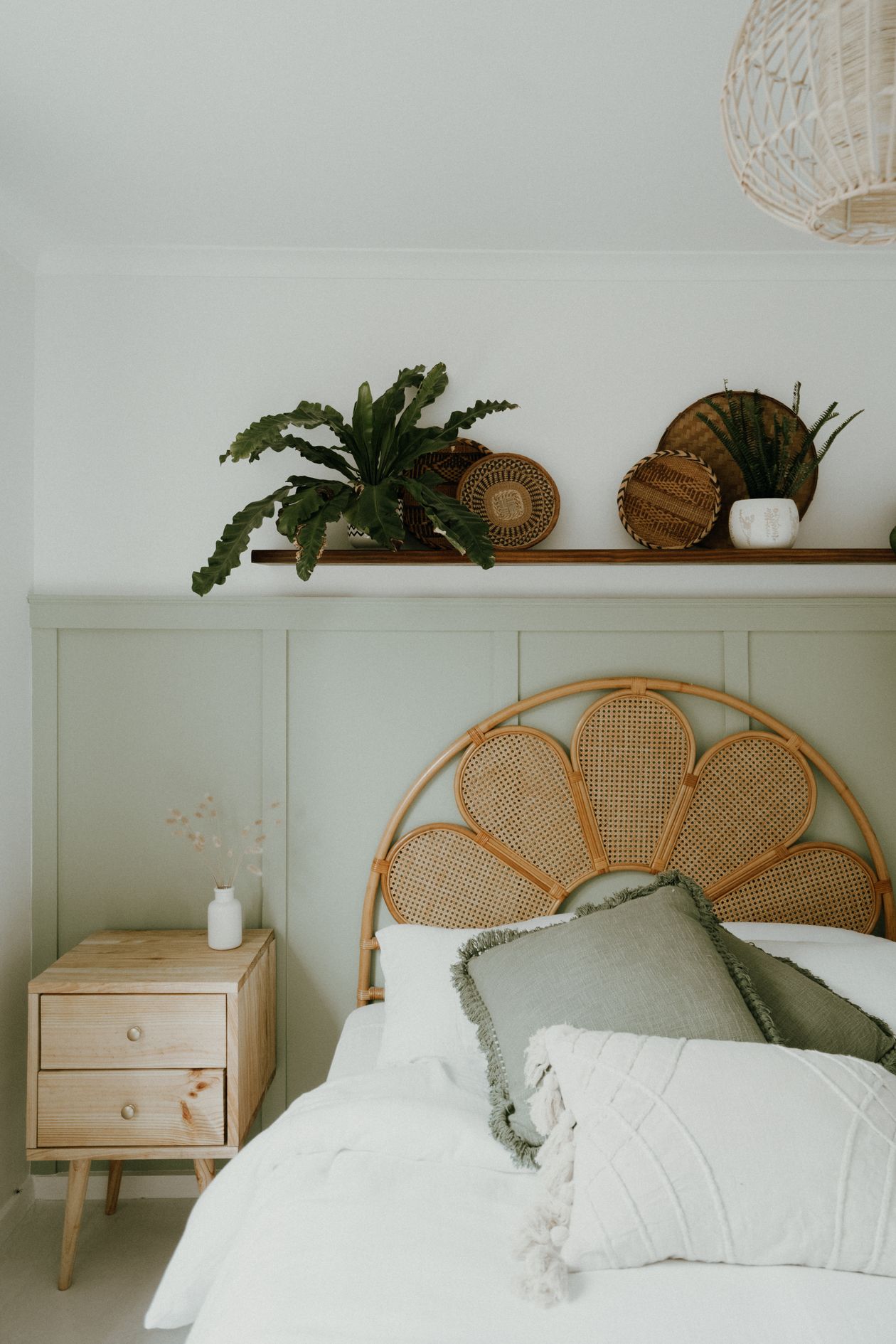
Bedding is the easiest, lowest-commitment way to add color, and it’s the one I always recommend starting with. You’re not painting a wall, you’re not buying furniture — you’re just swapping textiles.
Keep your sheets neutral (white, ivory, or oatmeal — they photograph better, sleep cooler, and never go out of style). Then layer color on top: a colored duvet cover, a chunky knit throw at the foot of the bed, two or three accent pillows in your anchor color.
The trick is varying the saturation. If your throw is a deep rust, your pillows might be a softer terracotta and a creamy speckled linen. Same family, different volumes — like a chord instead of a single note. Your eye reads it as cohesive instead of matchy.
3. Bring in Color Through Plants
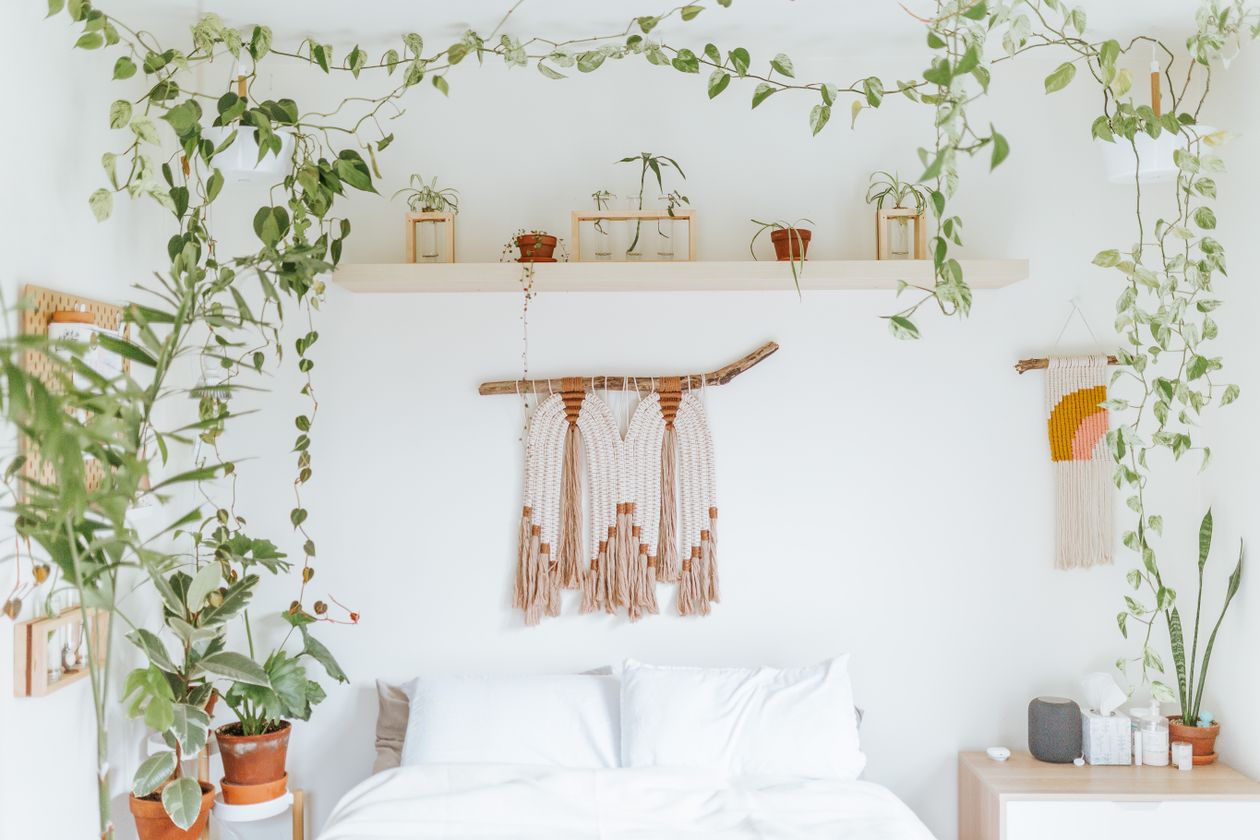
Green is the cheat code of color. It’s technically a color, but our brains read it as “nature,” not “decor decision.” A neutral bedroom with one or two real plants instantly looks more alive — without committing to a palette.
You don’t need a jungle. One large floor plant in a corner, plus a smaller trailing plant on a nightstand or shelf, is plenty. If you don’t trust yourself with real plants, a snake plant or ZZ plant will survive almost anything, including you forgetting they exist for three weeks.
My favorite combo: a fiddle leaf fig (or a faux one — no shame) by the window, and a small pothos trailing off a dresser. Done.
4. Add Art with Intention
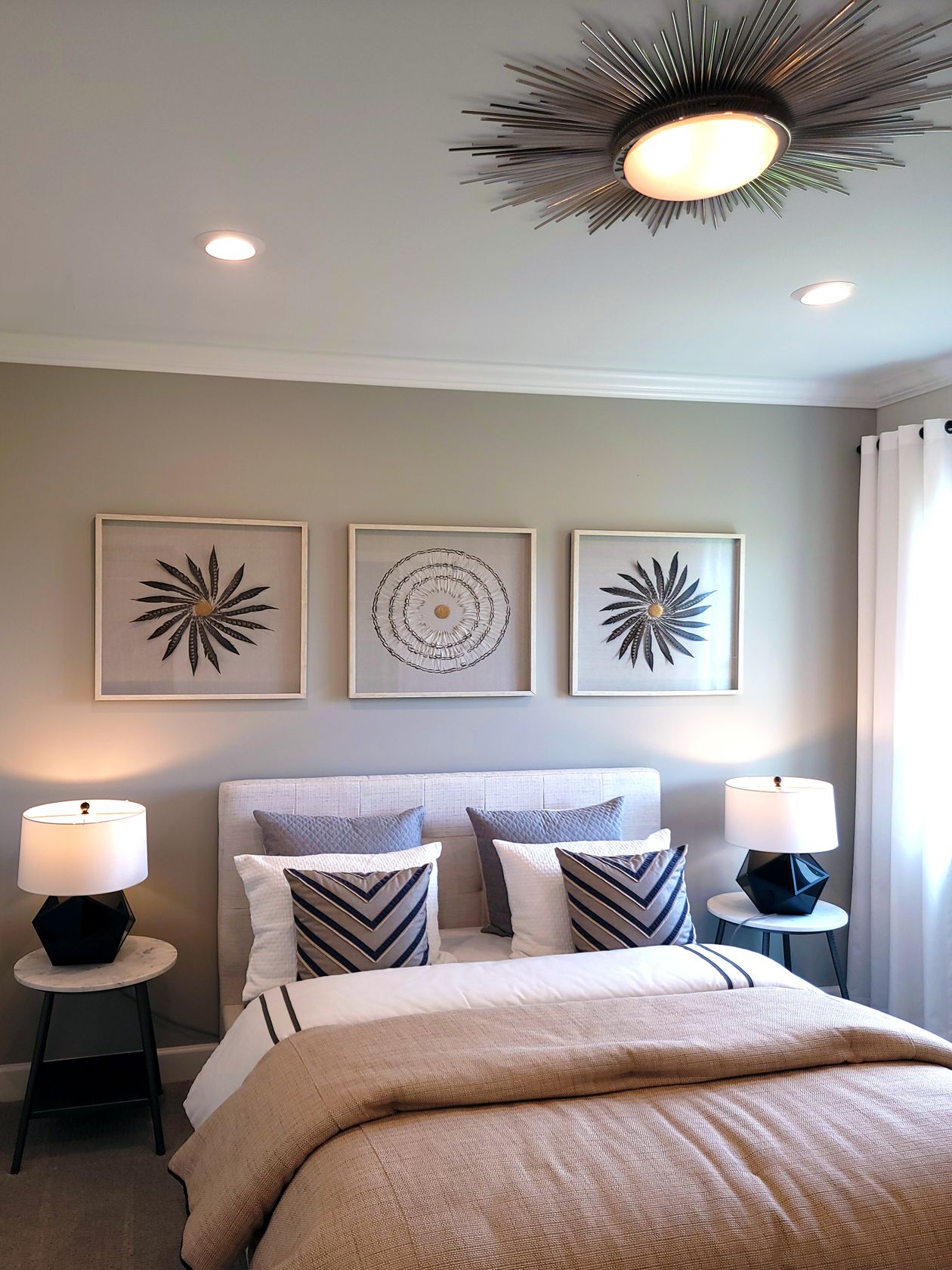
Art is where most neutral bedrooms come alive — and where most people overthink things. A single large piece above the bed almost always beats a cluttered gallery wall in a bedroom (save the gallery wall for the living room or hallway).
Look for pieces that feature your anchor color, even subtly. A landscape with a warm orange sunset. A muted abstract with a wash of blue. A botanical print on a creamy background. The art doesn’t have to scream — it just has to introduce the color you’ve decided to commit to.
If you’re on a budget, here are cheap ways to get good art:
- Print high-resolution images from Unsplash or museum open-access collections
- Frame a textile, like a linen tea towel or a small woven rug
- Hit a thrift store for vintage frames and swap in your own prints
- Order an oversized poster from Society6 or Desenio and frame it in a simple oak frame
5. Use a Rug to Ground the Room
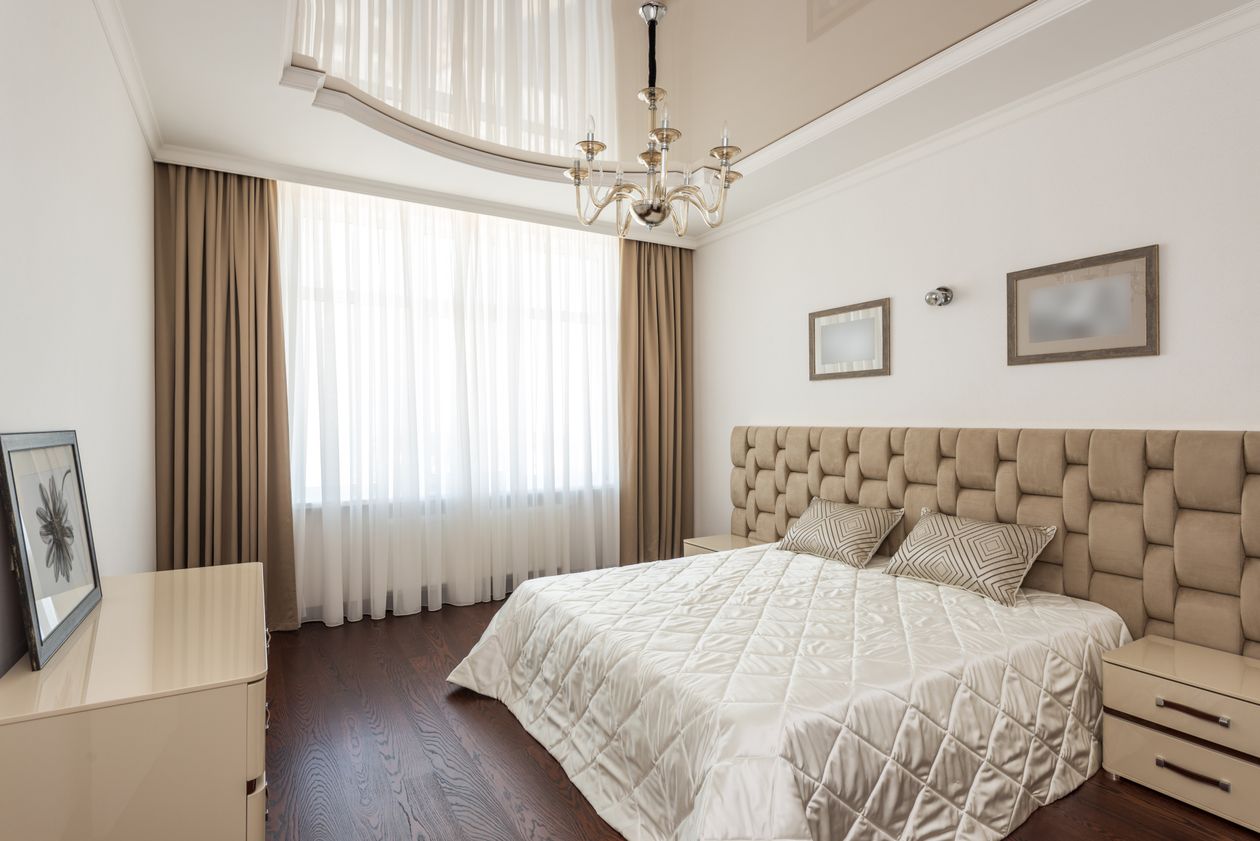
A rug is one of the most underrated ways to introduce color, partly because it covers a huge surface area and partly because it lives at floor level — which means it adds depth without overwhelming your eye line.
For a neutral bedroom, you have two solid options. Option one: a warm-toned vintage-style rug (think faded reds, dusty pinks, soft blues) — this brings instant character and works especially well with a more minimal bed setup. Option two: a textured neutral rug in a slightly different tone than your floor — jute, wool, or a low-pile berber — which adds richness through texture instead of color.
Either way, go bigger than you think. A rug should extend at least 18-24 inches past the sides of your bed. Anything smaller looks like a bath mat that wandered into the wrong room.
6. Don’t Forget the Walls (Even Without Repainting)
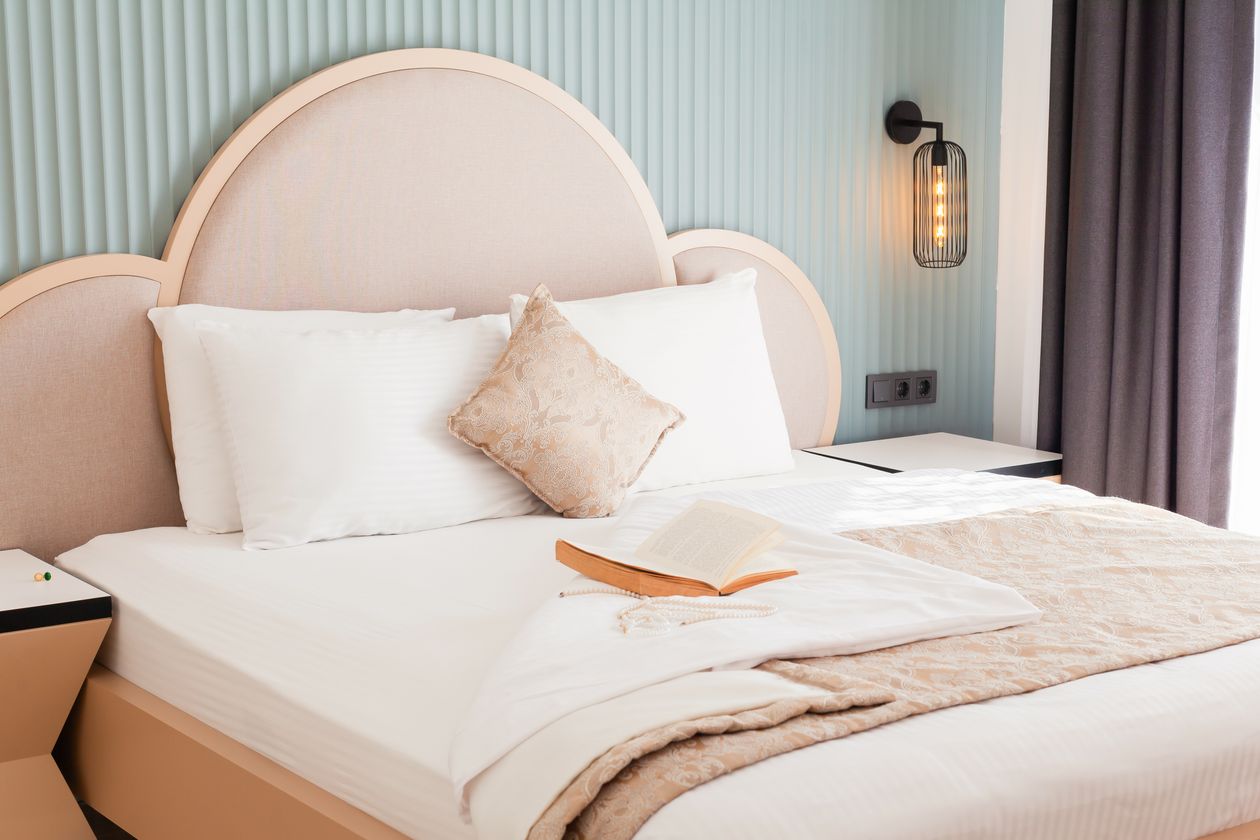
If you’re not ready to commit to colored walls, you don’t have to. But there are a few middle-ground moves that add wall color without a full paint job.
- Paint just the headboard wall in a muted color — sage, dusty plum, soft terracotta. It frames the bed and feels intentional without taking over.
- Hang a textile or tapestry in your anchor color. A vintage kilim or a linen wall hanging adds softness and texture at the same time.
- Add a wide picture ledge and lean a few framed prints — easier than hanging, and you can swap art seasonally.
If you are ready to paint, my tip: avoid stark accent walls in saturated jewel tones. They photograph beautifully and live with you painfully. Muted, dusty, slightly-grayed-down versions of any color age much better in a bedroom.
7. Layer in Smaller Color Moments

Once your big color pieces are in place — bedding, art, rug — the room comes together through smaller details. These are the moments that make it feel like yours instead of a showroom.
Think nightstand styling: a stack of two or three books with colored spines, a ceramic vase in your anchor color, a small piece of pottery. A colored ceramic lamp base. A glass carafe with a faintly tinted hue. A tray to corral your jewelry.
The point isn’t quantity — it’s coherence. Each small object should either echo your anchor color or stay neutral. If it does neither, it’s clutter, and your eye knows even when your brain doesn’t.
8. Mind the Lighting
A color that looks gorgeous in the showroom can look completely wrong in your bedroom — and the reason is almost always lighting. Neutral bedrooms tend to live or die by their light, and color shifts dramatically depending on the bulb temperature.
Stick with warm white bulbs (around 2700K) in bedrooms. Anything cooler will make warm colors like terracotta and mustard look muddy, and even your neutrals will read clinical instead of cozy. If you’ve added a sage green throw and it suddenly looks gray under your overhead light, the problem is the bulb, not the throw.
Also: layer your light sources. One overhead fixture is a recipe for flatness. A bedside lamp, a floor lamp in a corner, and maybe a string of soft fairy lights or a dimmable wall sconce will make every color in the room sing.
Final Thoughts
Adding color to a neutral bedroom isn’t about abandoning the calm — it’s about giving it depth. Pick one anchor color you love. Bring it in through bedding first, then art, then small accents. Add a plant. Get the lighting right. That’s it.
You don’t have to do everything at once. Buy one new pillow this weekend. Move a plant in next week. Hang one piece of art the week after. Bedrooms aren’t built in a day, and the best ones never look like they were.
A neutral bedroom doesn’t need more stuff — it needs one quiet color, repeated with intention. That’s the whole secret.
Image credits: All photos via Pexels— Jean van der Meulen, Taryn Elliott, Cole Keister, Christopher Moon, Polina Semernina, Digital Buggu, and Max Vakhtbovych.