
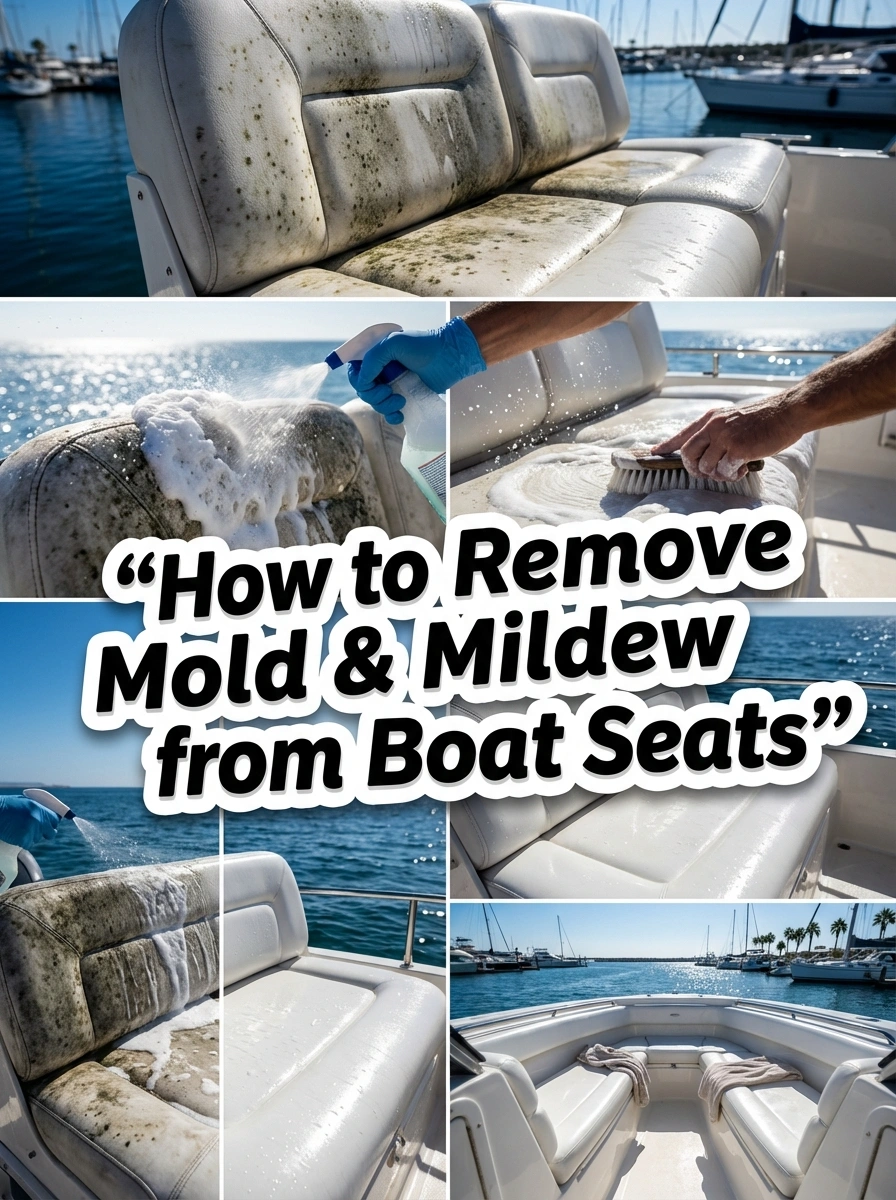
Nothing ruins a perfect day on the water faster than peeling back your boat cover and finding a nasty, spotted surprise waiting for you. Honestly, dealing with fungus is the worst. But before you start panic-scrubbing with whatever you find under the sink, take a breath. Figuring out how to remove mold and mildew from boat seats don’t have to be a nightmare. We are going to walk through some simple, real-life methods to get your marine upholstery looking sharp again. Is it gonna take a little elbow grease? Yes, but your boat deserves it. Let’s get that gross stuff off your seats for good so you can actually enjoy the sunshine.
Step 1: Prep the Area and Protect Yourself
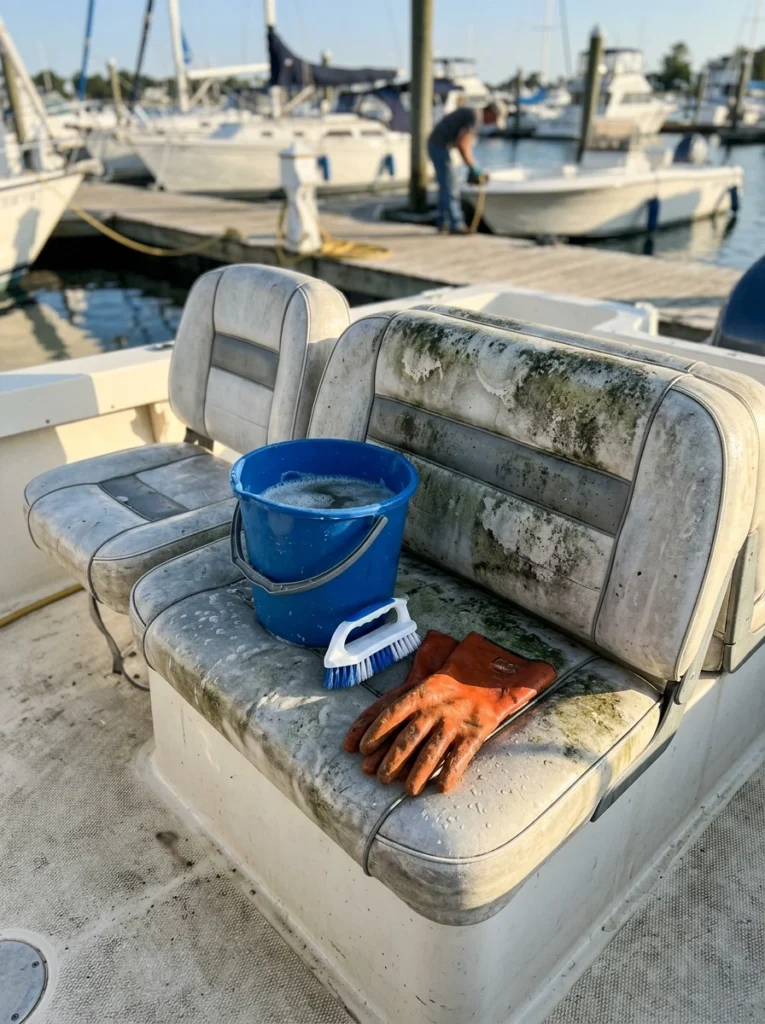
Before you start mixing up your outdoor cleaning solutions, get your boat into a well-ventilated area. Working on the dock or in the driveway is ideal. You really don’t want to be breathing in agitated mold spores inside a stuffy garage. Throw on a pair of rubber gloves and grab a bucket. Setting yourself up right makes the whole process smoother.
Step 2: Know Your Material and What NOT to Use
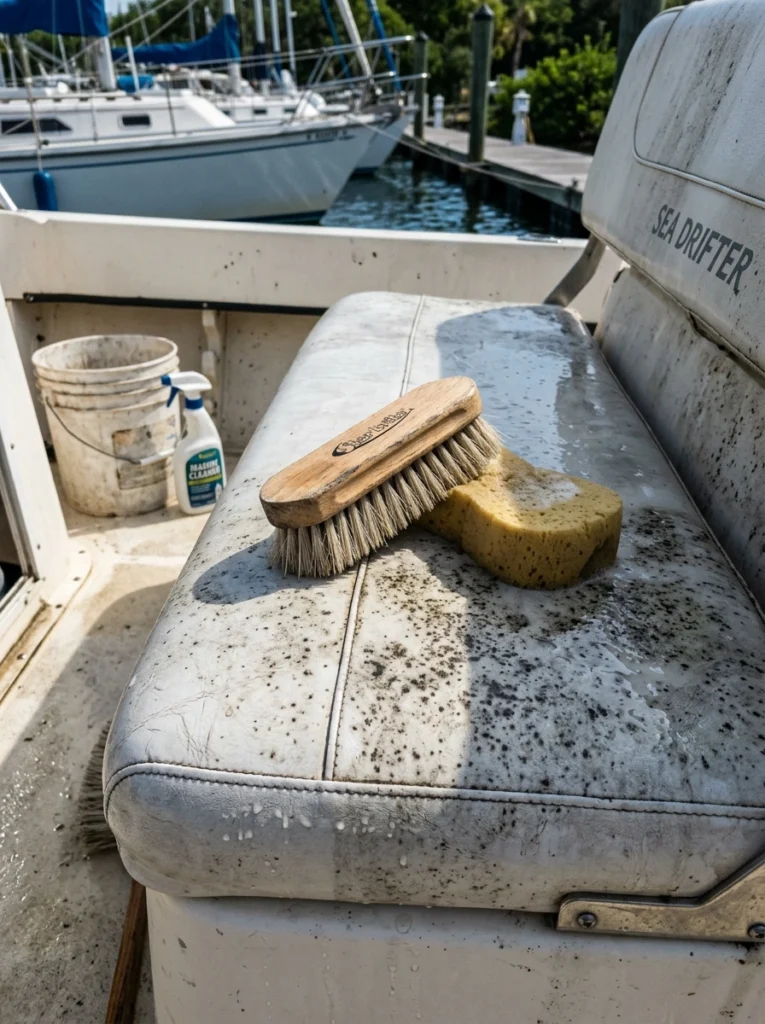
Marine upholstery care changes depending on whether you have vinyl or fabric seats. Fabric needs more soaking, while vinyl is all about surface tension. Whatever you do, drop the bleach! Bleach might strip the color out of the stain, but it weakens the stitching and severely dries out the material. Those harsh chemicals is bad news for marine materials. You’ll end up with cracked seats in a year. Stick to safer alternatives or a dedicated marine-safe vinyl seat cleaner instead.
Step 3: The Vinegar and Mild Soap Soak
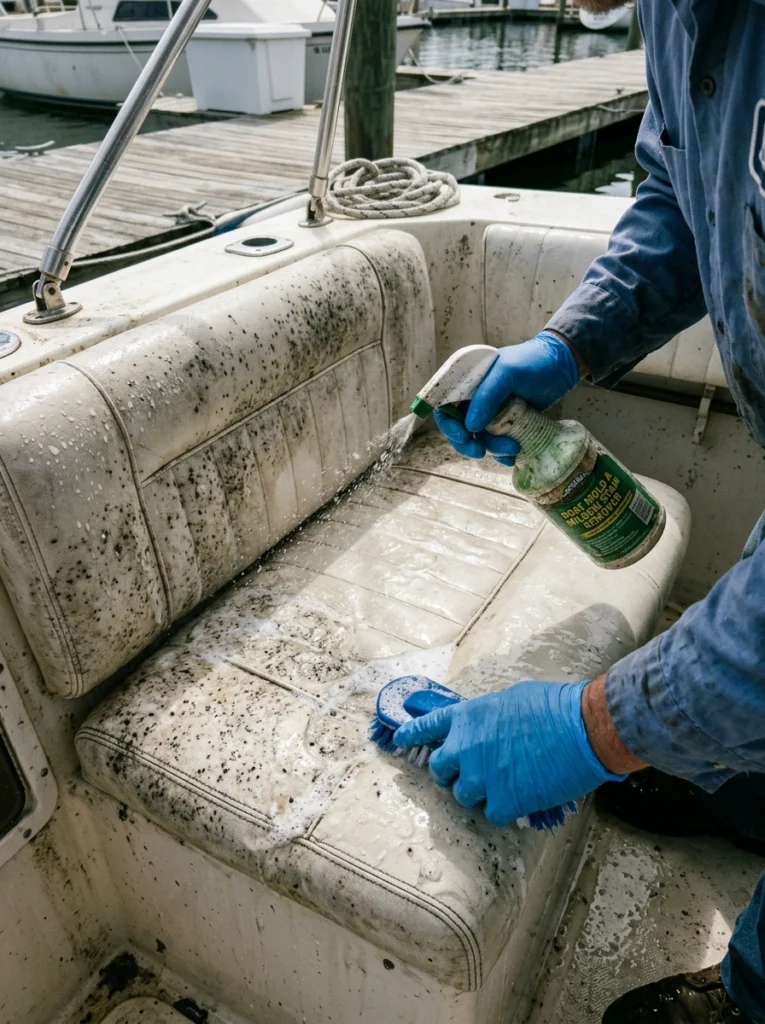
Plain white vinegar is incredibly effective because it actually kills the mold at its root rather than just bleaching it. Mix a 50/50 solution of water and white vinegar in a spray bottle, and add just a few drops of mild dish soap to help cut through the grime. Spray the mixture heavily over the affected areas. Let it sit for about 10 to 15 minutes. This soaking time is non-negotiable—the vinegar needs time to work its magic.
Step 4: Scrubbing Techniques for Stubborn Spots
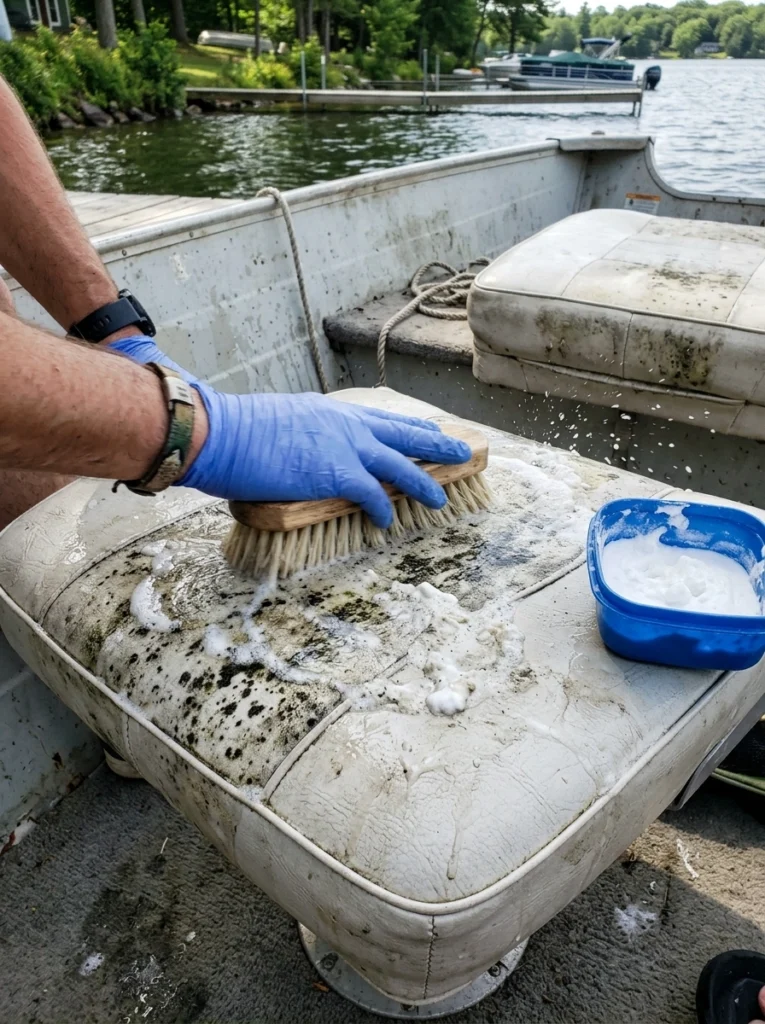
Once the soak is done, it’s time to scrub. Grab a soft-bristled brush. Do not use stiff nylon or wire brushes; they will scratch the vinyl clear coat. Scrub in gentle, circular motions to lift and remove mold stains. If you are dealing with really aggressive mildew on vinyl seats, make a paste out of baking soda and water. Rub the paste gently into the stubborn spots with a microfiber cloth or sponge. The baking soda acts as a mild abrasive that won’t ruin the finish.
Step 5: Rinsing and Serious Drying
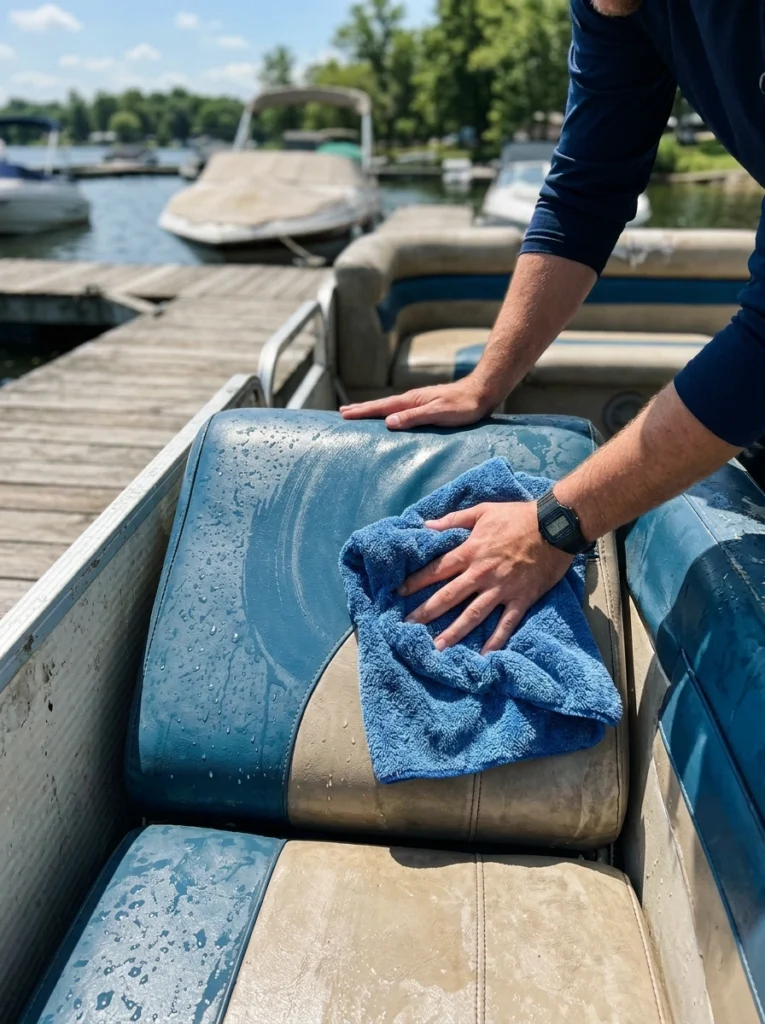
After you’ve scrubbed the grime away, wipe everything down with a clean, damp cloth to remove the dirty residue. Now comes the most important part of these boat cleaning tips: drying. Mold thrives in damp, dark places. Make sure you leaves the seats out in the sun to dry completely before you even think about putting the cover back on. If water got into the seams, press down on the cushions with a dry towel to force the moisture out.
Final Thoughts on Lasting Results
Getting your boat clean is only half the battle. If you just throw the cover back on while there’s still moisture trapped inside, you will be doing this all over again next month. Proper mildew prevention comes down to airflow and smart storage habits. Always use a vented boat cover, and consider tossing some moisture-absorbing buckets into the cabin or storage compartments during the off-season. Furthermore, wiping down your cushions with a high-quality UV protectant every few weeks will seriously extend the life of your upholstery. When you protect boat seats from the start, the material doesn’t break down or become porous, giving fungus absolutely nowhere to hide.