
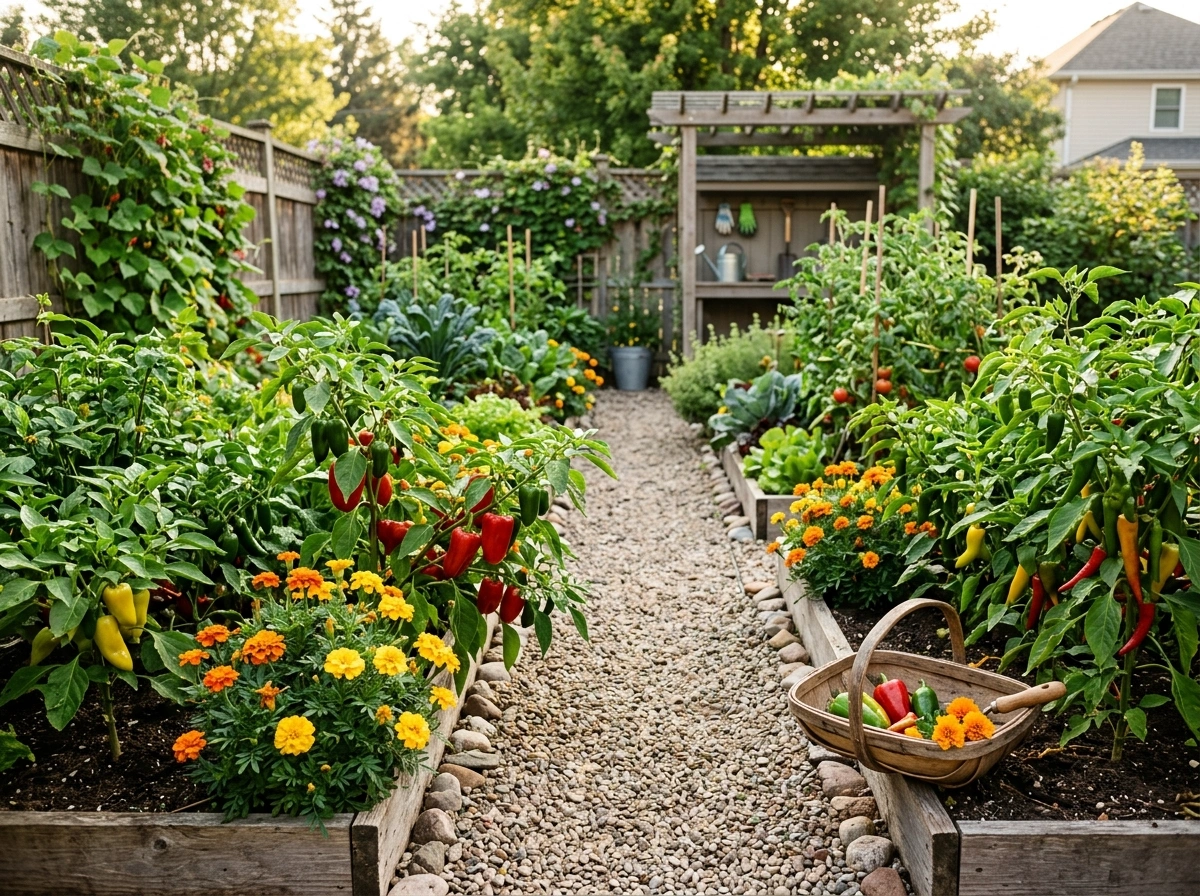
Have you ever looked at a tiny patch of dirt and wondered if you could actually feed your family from it? The truth is, smart design beats sprawling acreage everytime. When you plan around your sunlight hours, soil quality, water access, and budget, you unlock massive potential.
Its not about having endless land; it’s about layout efficiency, vertical growing, and smart access paths that increase harvests without overcrowding. Ready to ditch the generic advice? Here are 16 Vegetable Garden Designs That Grow More Food in Less Space (Even in a Tiny Backyard). With a little maintenance time and the right climate conditions, these setups easily outperform large, poorly planned plots.
1. The U-Shaped Intensive Raised Bed
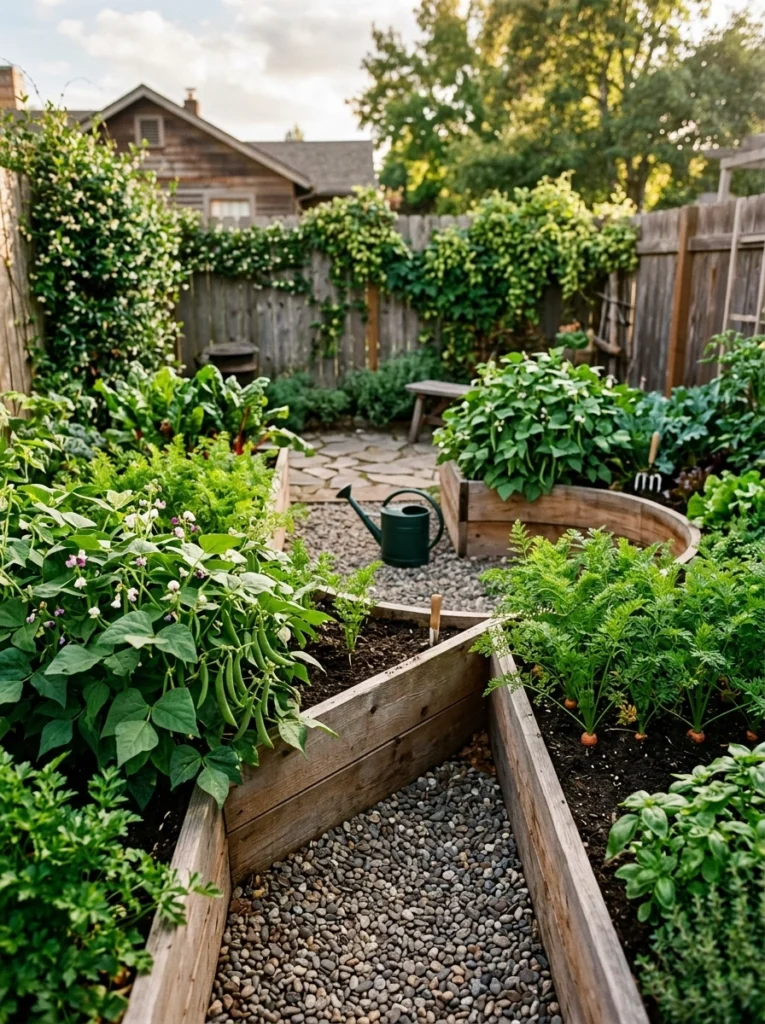
This layout maximizes your reach in a raised bed vegetable garden without stepping on soil. Perfect for a standard backyard, it boosts yields by allowing dense planting of bush beans and carrots alongside pollinator strips. Never make beds too wide to reach; keep them under 3 feet!
2. Square Foot Grid System
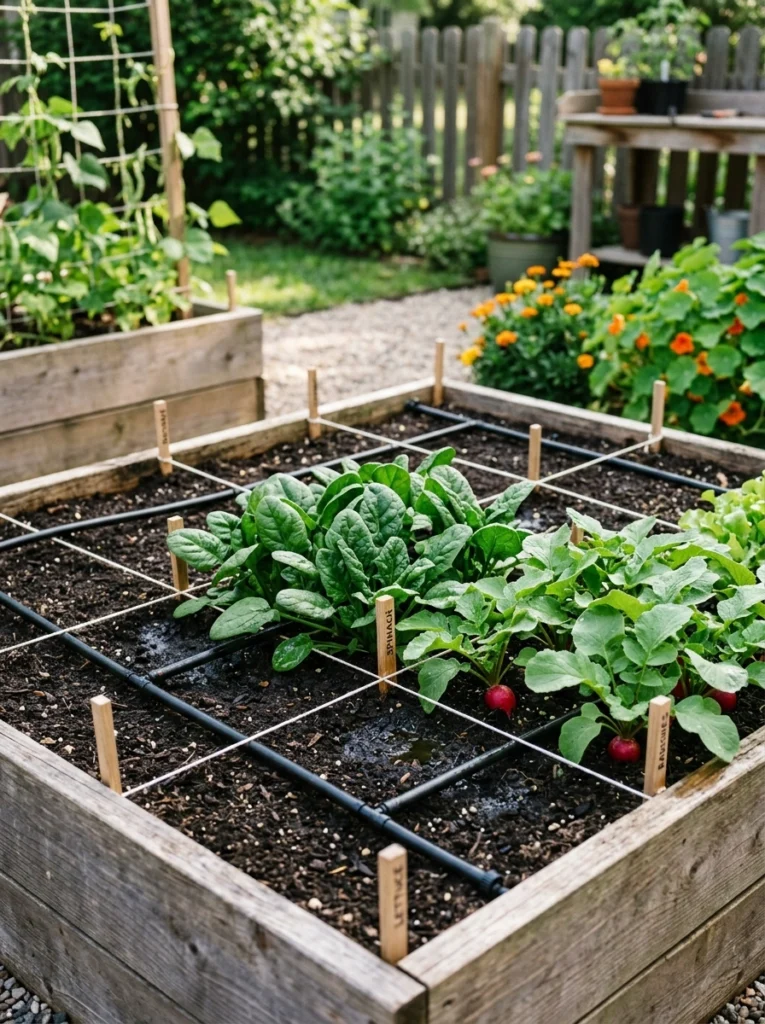
Dividing your productive garden layout into 1-foot grids allows for intense succession sowing. Great for low-cost DIY food garden setups, you can pack radishes and spinach tightly with a drip irrigation line. Avoid planting too close without airflow to prevent mildew.
3. Narrow Side-Yard Edible Alley
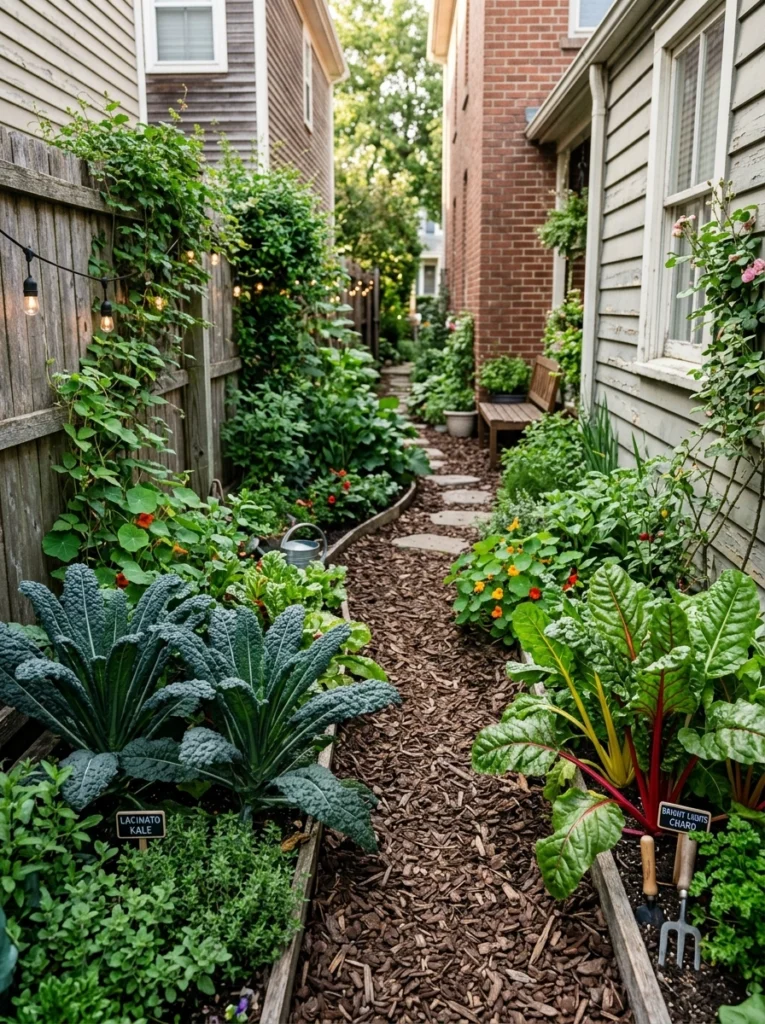
Turn dead space into narrow side-yard edible gardens using heavy mulching and string garden lighting. Ideal for shade-tolerant kale and Swiss chard, it adds growing zones to previously ignored areas. Just be careful not to overshade crops.
4. Central Path Productive Plot
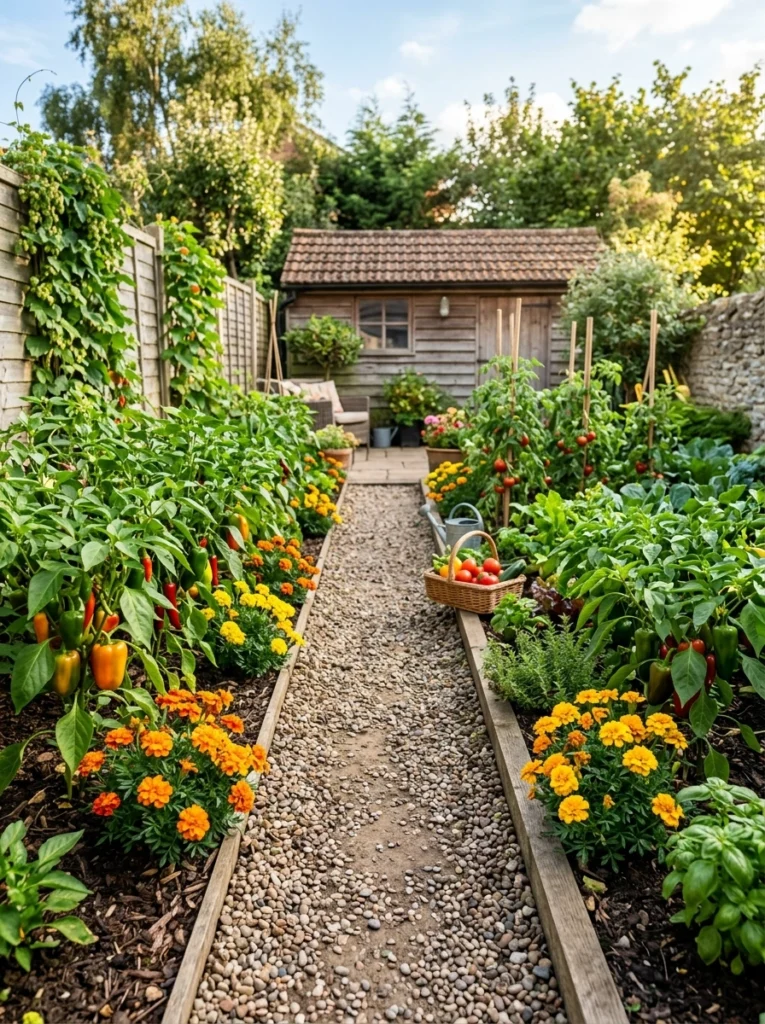
Central path productive gardens feature easy harvest paths down the middle, ensuring you never trample roots. Perfect for zucchini and peppers mixed with pest control flowers. Never block movement paths with untamed vines!
5. Corner Edible Oasis
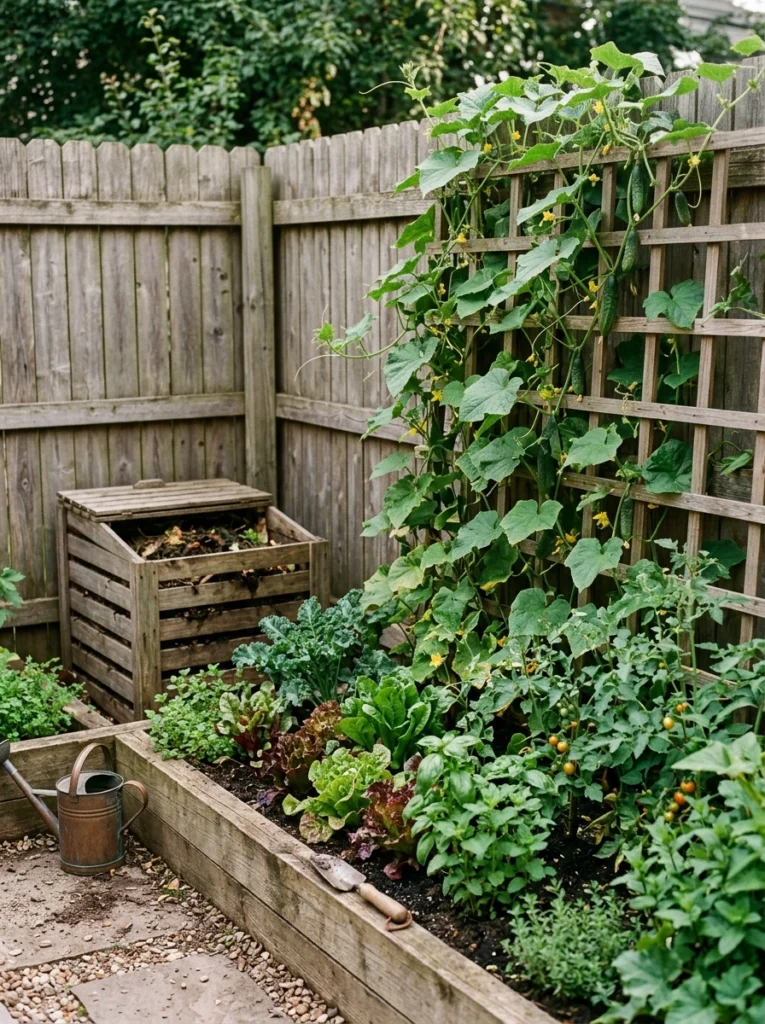
Corner edible gardens utilize existing fencing for support. A perfect tiny backyard vegetable garden feature, use trellises for cucumbers and add a compost station corner. Wasting vertical space here is a huge mistake!
6. Balcony Railing Farm
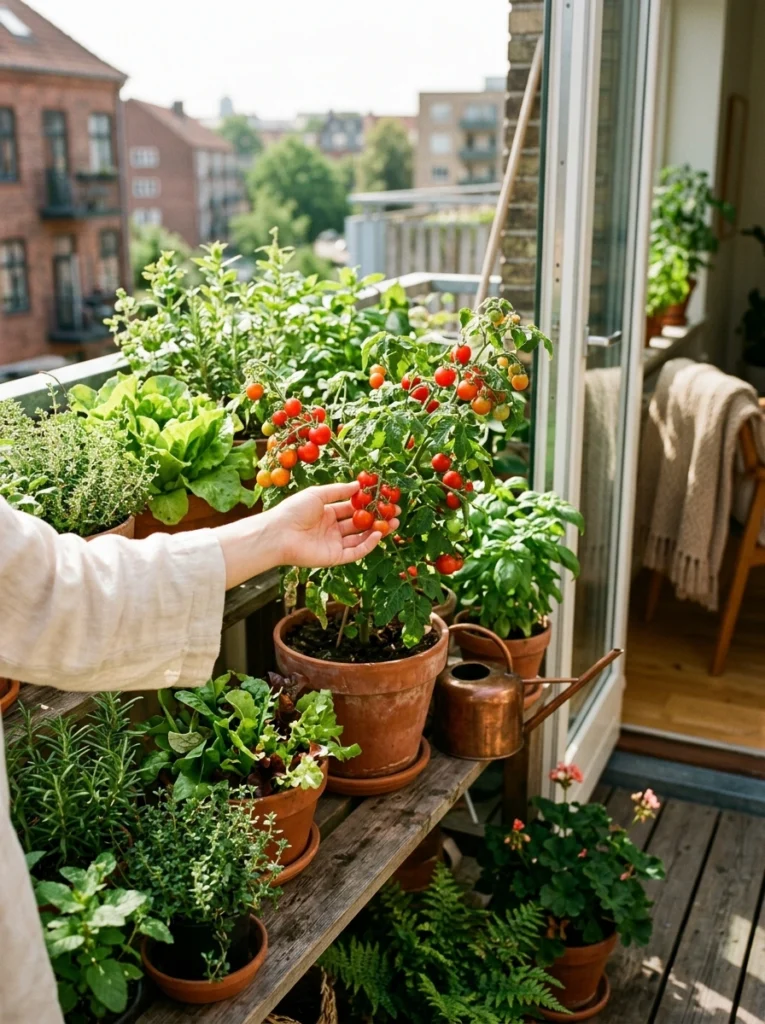
Balcony vegetable layouts bring compact edible garden vibes to apartments. Using window boxes and hanging baskets for cherry tomatoes and herbs utilizes empty air space. Don’t forget succession planting to keep yields continuous!
7. Courtyard Kitchen Garden
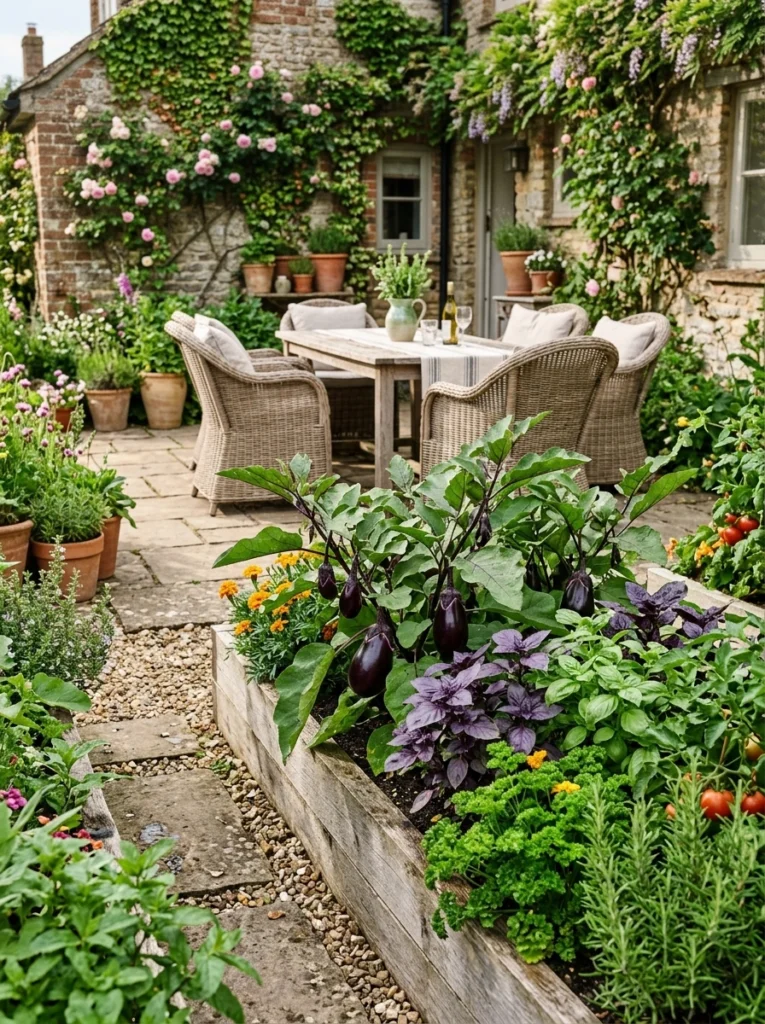
Courtyard kitchen gardens blend aesthetics with high yields near the house. Mix ornamental-edible layouts like eggplant and basil around outdoor dining spaces. Growing random crops with no plan will ruin the designer edible garden look.
8. The Archway Trellis System
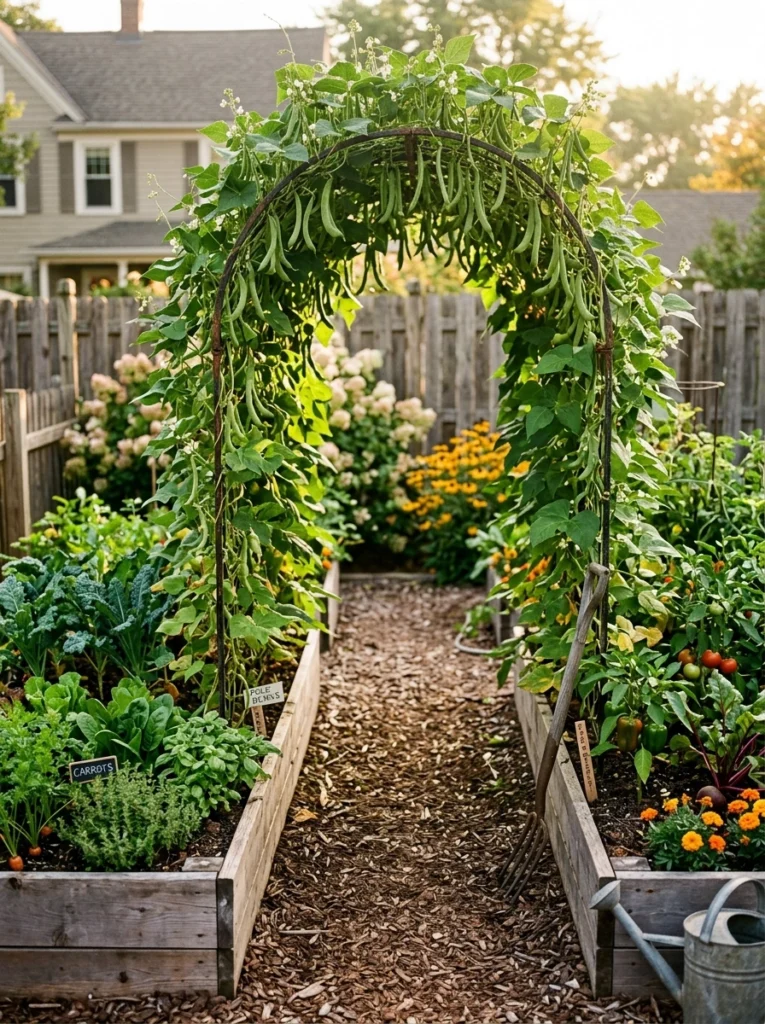
Connecting two beds with an arch doubles your vertical space for vining squash. These make fantastic backyard food garden ideas, visually stunning and highly productive. Leaving heavy vines untied will snap the stems, so tie them well.
9. Fence-Line Tomato Towers
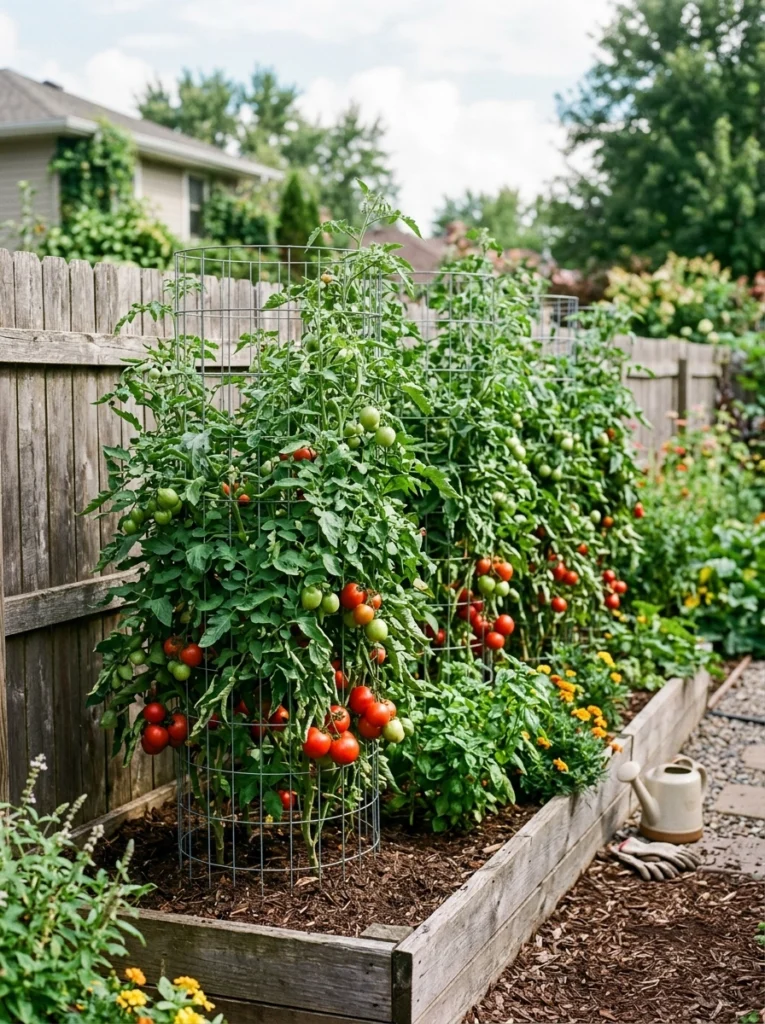
Fence-line growing beds keep chaotic vines contained. Use heavy-duty tomato towers for indeterminate tomatoes, placing a water barrel area nearby for easy access. Don’t let vines sprawl on the wet ground.
10. Spiral Herb + Veg Garden
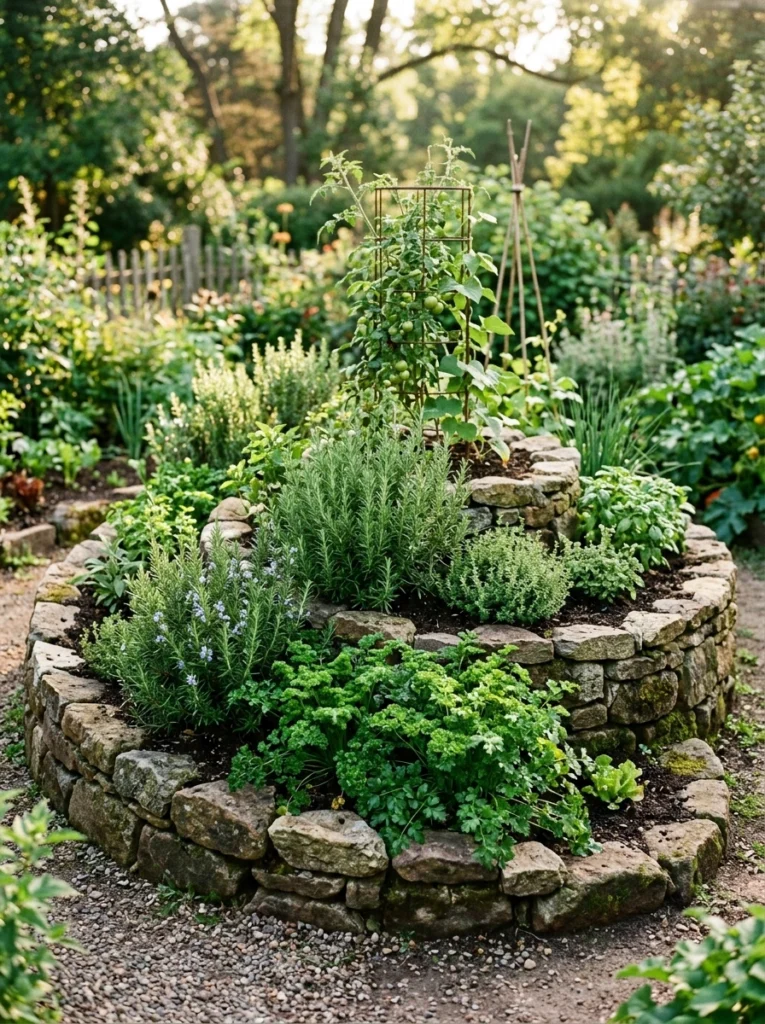
Spiral herb + veg gardens create microclimates (dry on top, moist at bottom) in a compact 3-foot circle. Plant rosemary up top and parsley below. Overwatering the top tier will drown your drought-tolerant herbs!
11. Greenhouse Mini Layout
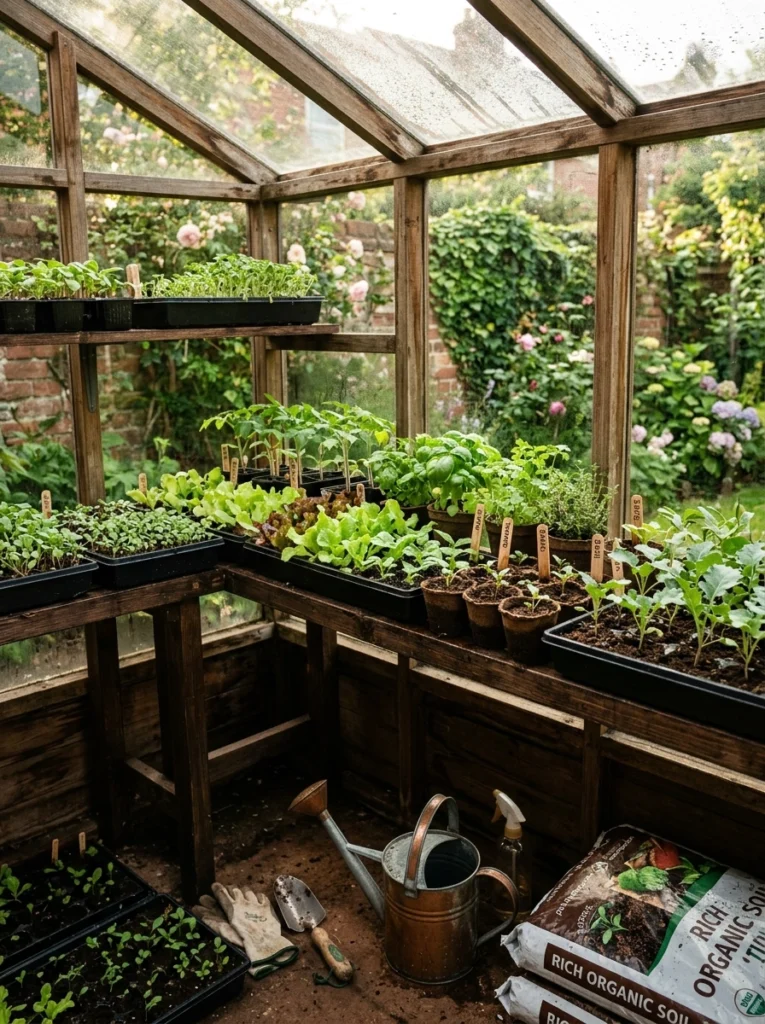
Greenhouse mini layouts extend seasons and protect crops. Add a seed starting shelf and a potting bench corner for early greens. Zero ventilation is a rookie mistake that will cook your seedlings.
12. Tiered Patio Planter System
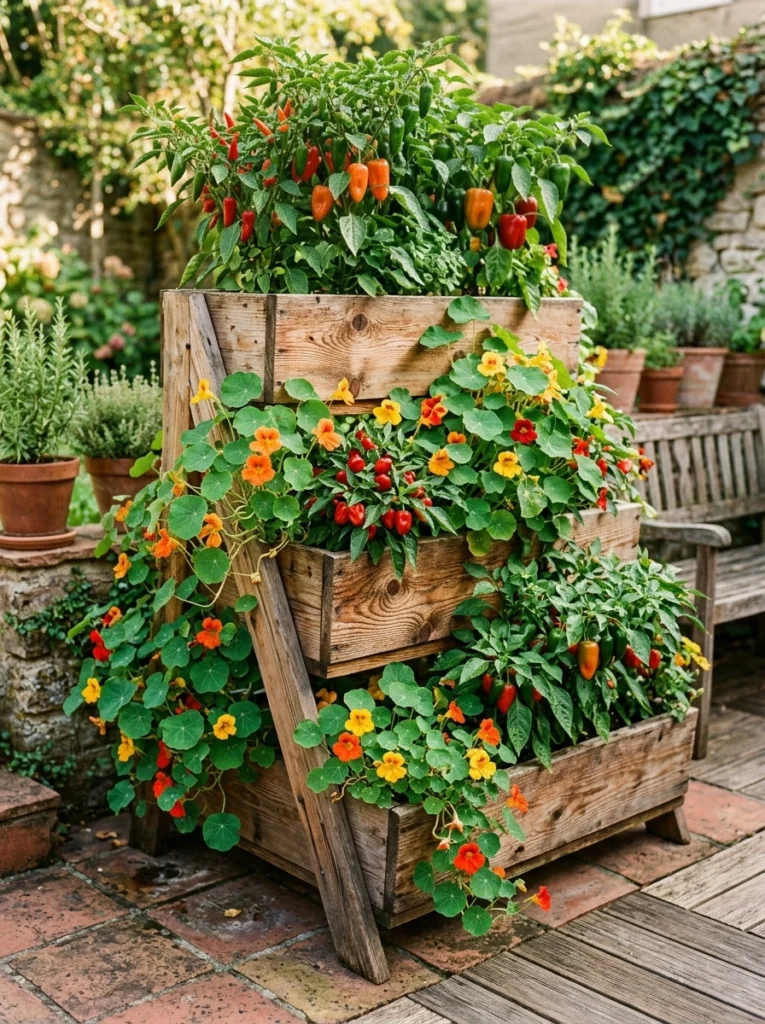
Tiered planter systems offer a premium look that stacks crops for max sun exposure. Use companion planting with peppers and nasturtiums. Avoid using shallow, cheap pots that dry out in hours.
13. The Kid-Friendly Grazing Zone
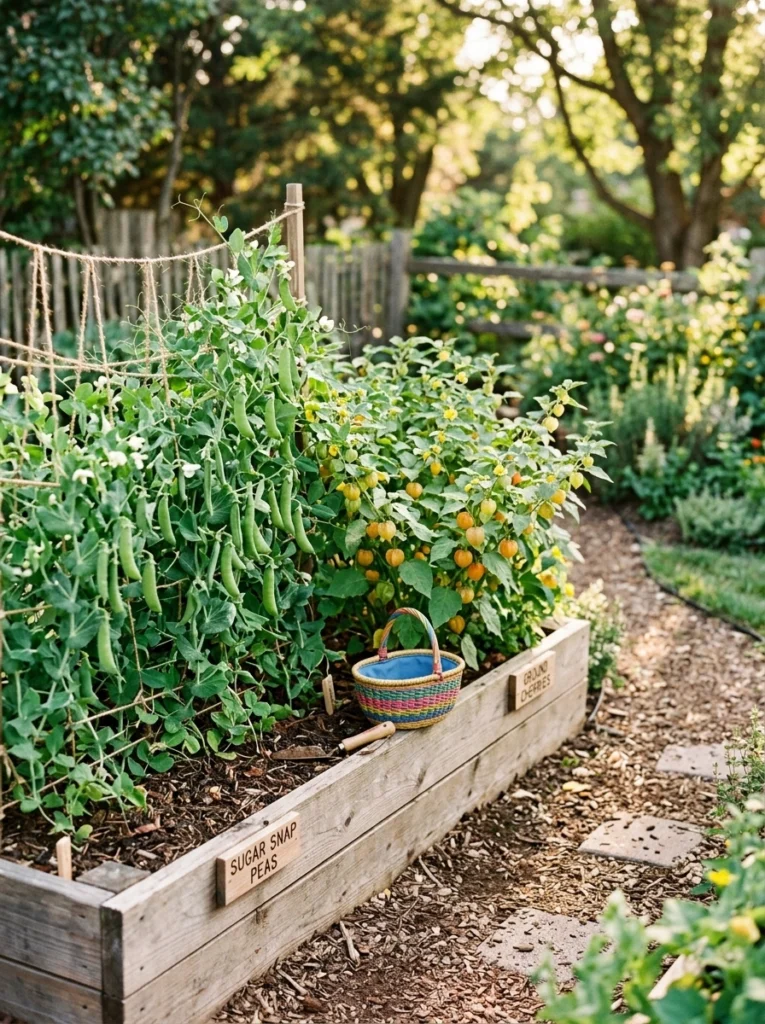
Design a low bed as a kid-friendly harvest zone with sweet sugar snap peas. It encourages family food goals and gets kids outdoors. Never plant thorny or toxic ornamentals near this specific area.
14. The Elevated Trough Garden
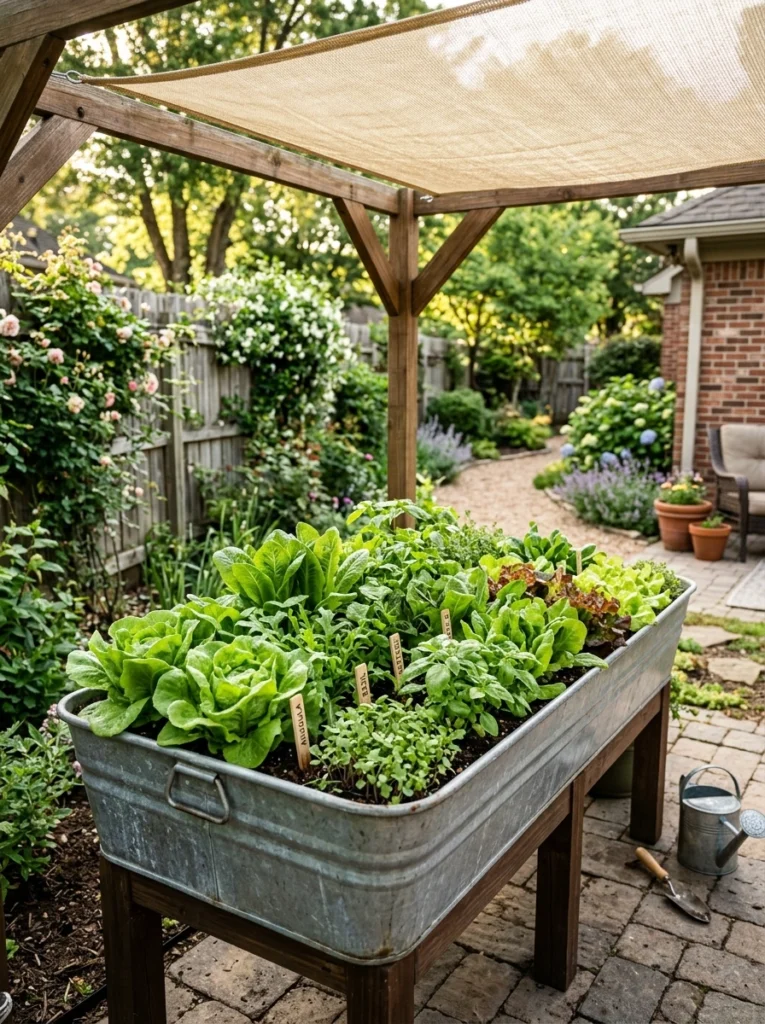
Galvanized steel troughs look incredible and save your back. Combine salad greens with shade cloth zones for crisp summer harvests. Ensure you drill drainage holes, or you’ll create a swamp!
15. Keyhole Composting Bed
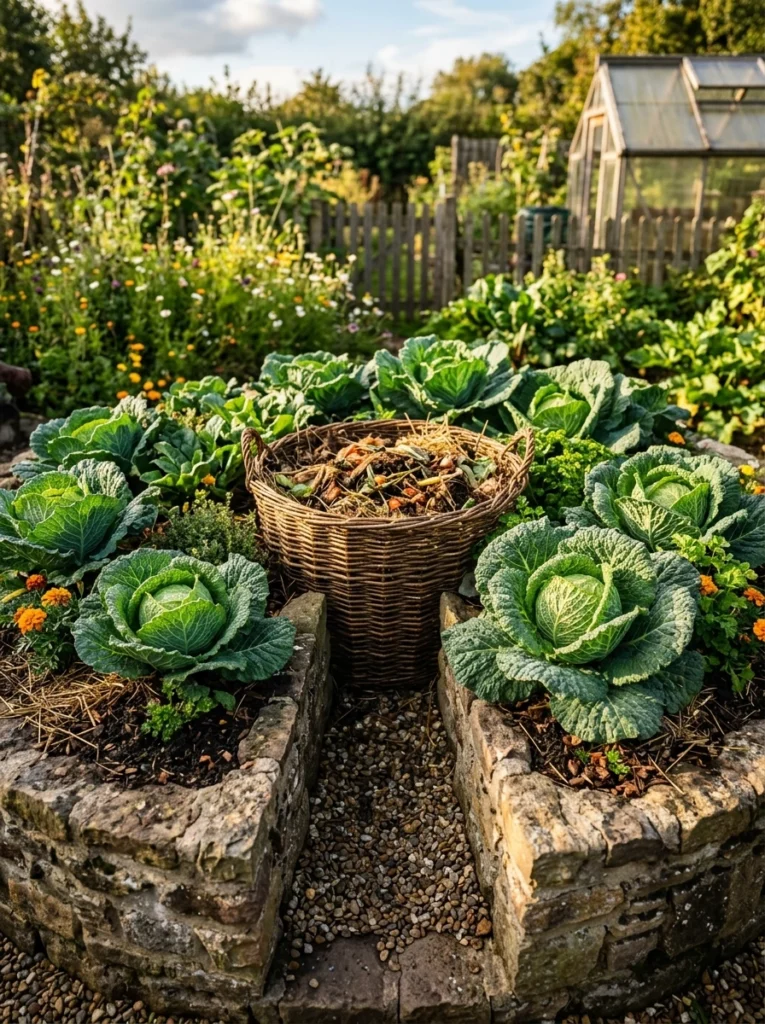
This circular bed features a central compost basket to feed heavy feeders like cabbage continuously. It’s the ultimate way to grow more food in less space. Letting the center compost dry out stops the nutrient flow.
16. Food Forest Edges
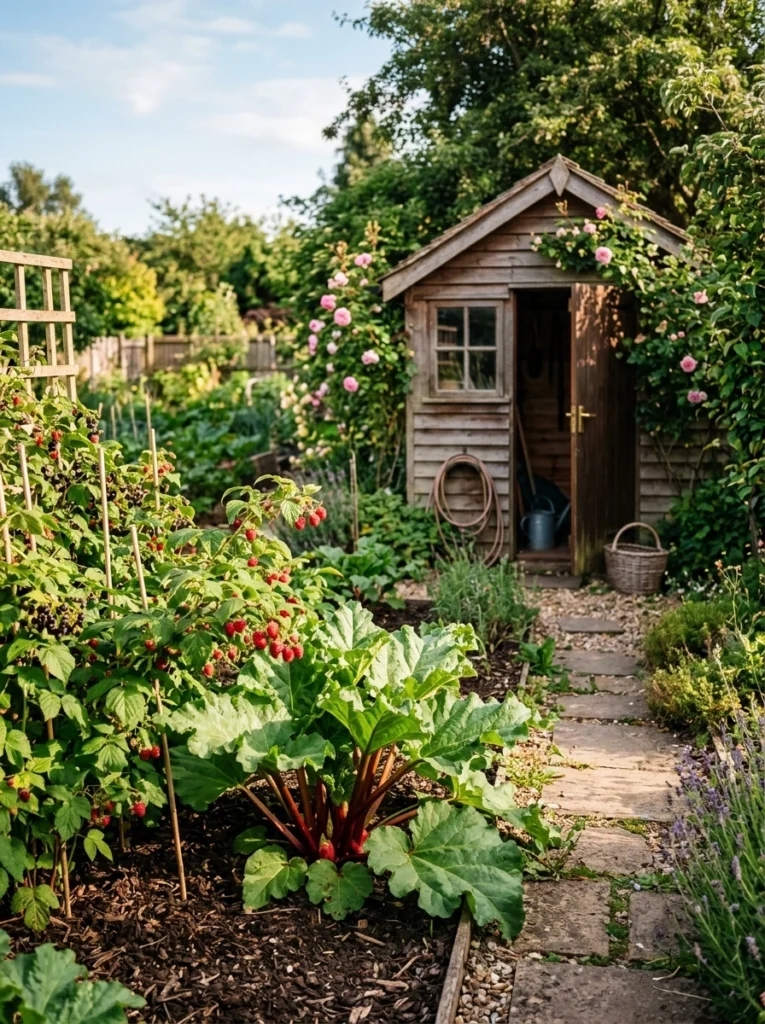
Mimic nature by planting low-maintenance berry bushes along your fence, integrating tool storage and netting. It requires low maintenance time while yielding year after year. Avoid overcrowding the roots when first planting.
Final Thoughts
Let’s be honest: your family’s food production comes down to planning, timing, and intelligent layout—not just how much land you own. A well-managed compact edible garden with tight succession planting and vertical elements will out-produce a messy half acre plot everytime. Start by evaluating your specific goals and observing your yard’s microclimates. Build up, use trellises, and never let a square foot sit empty. By combining these small vegetable garden ideas, you transform a tiny space into a gorgeous, high-yield sanctuary. Happy planting! Keep your tools sharp, your compost wet, and remember that even patio container food gardens can make a huge dent in your grocery bill.