
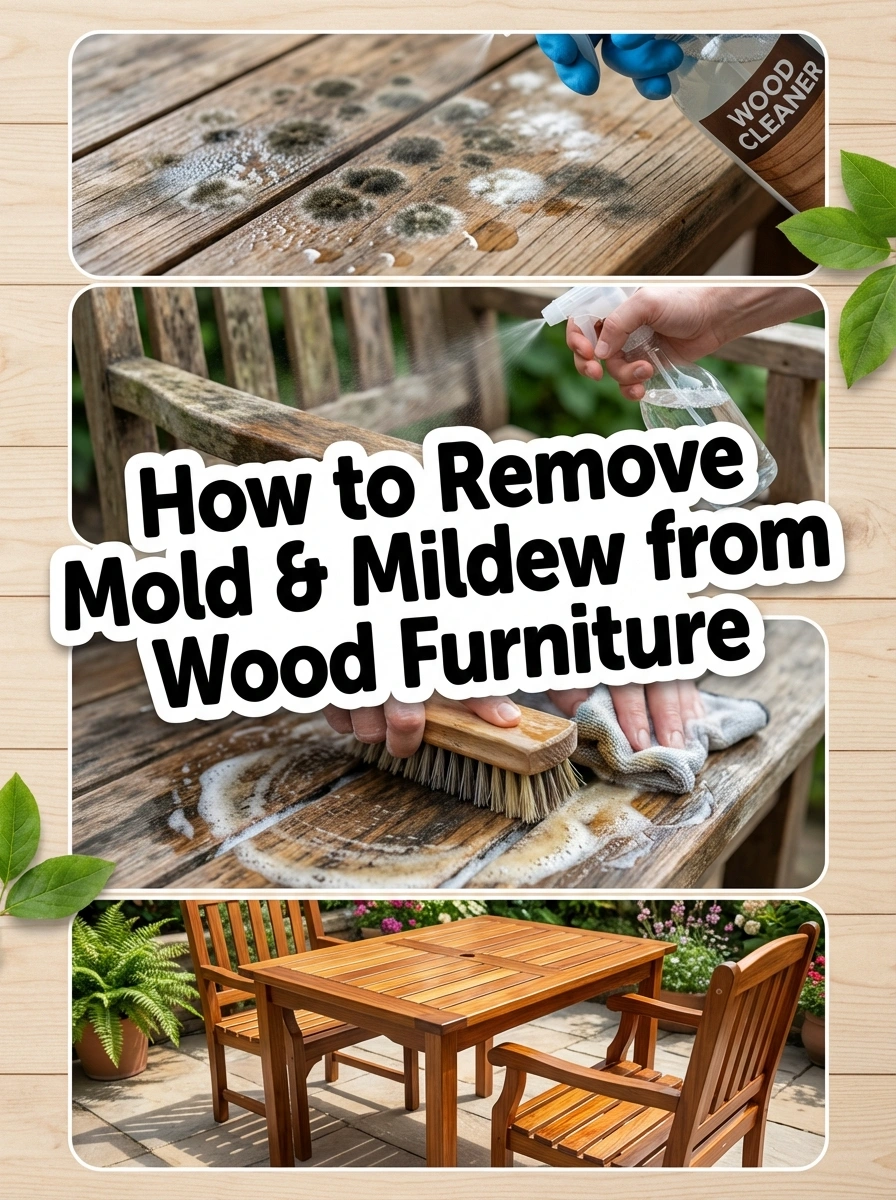
You scored an amazing vintage dresser at a garage sale, or maybe you just pulled an old chair out of the basement. But wait—what are those fuzzy, dark patches creeping along the grain? Finding spores on your favorite pieces is a total buzzkill. If you are trying to figure out how to remove mold and mildew from wood furniture without stripping away the beautiful finish, you are in exactly the right spot. We are going straight into the trenches to save your timber. Throw away the heavy bleach bottle for a second. We’re going to talk about real, practical solutions that won’t accidentally warp or destroy your prized possessions. Ready to get dusting?
Step 1: Prep the Zone and Do a Safety Check
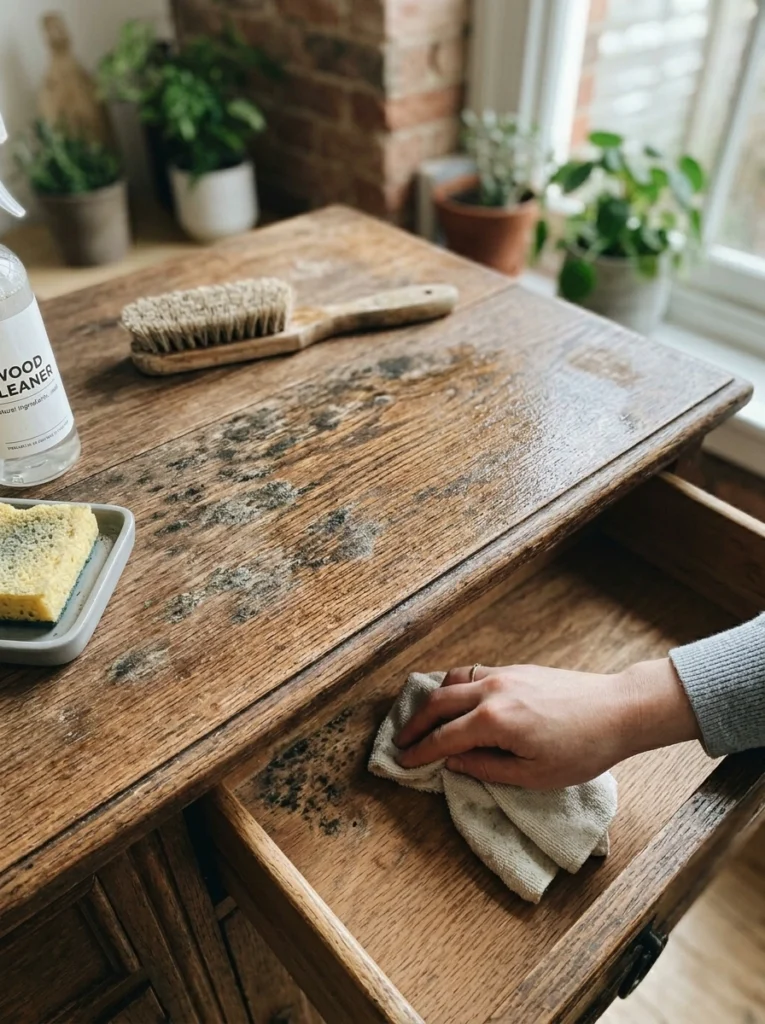
Before you start splashing liquids around, let’s talk setup. Move the piece outside if you possibly can. Mold spores love to float away and land on your carpets, so outdoor ventilation is a massive lifesaver. Slip on a pair of rubber gloves and grab a mask. Now, figure out what kind of material you are dealing with. Solid oak can handle a bit more elbow grease, but thin veneers will warp if they gets too wet. Always do a quick patch test with your chosen cleaner on the back leg or underneath the tabletop. You want to make sure the finish doesn’t strip off along with the gunk.
Step 2: The Dry Sweep to Evict Surface Spores
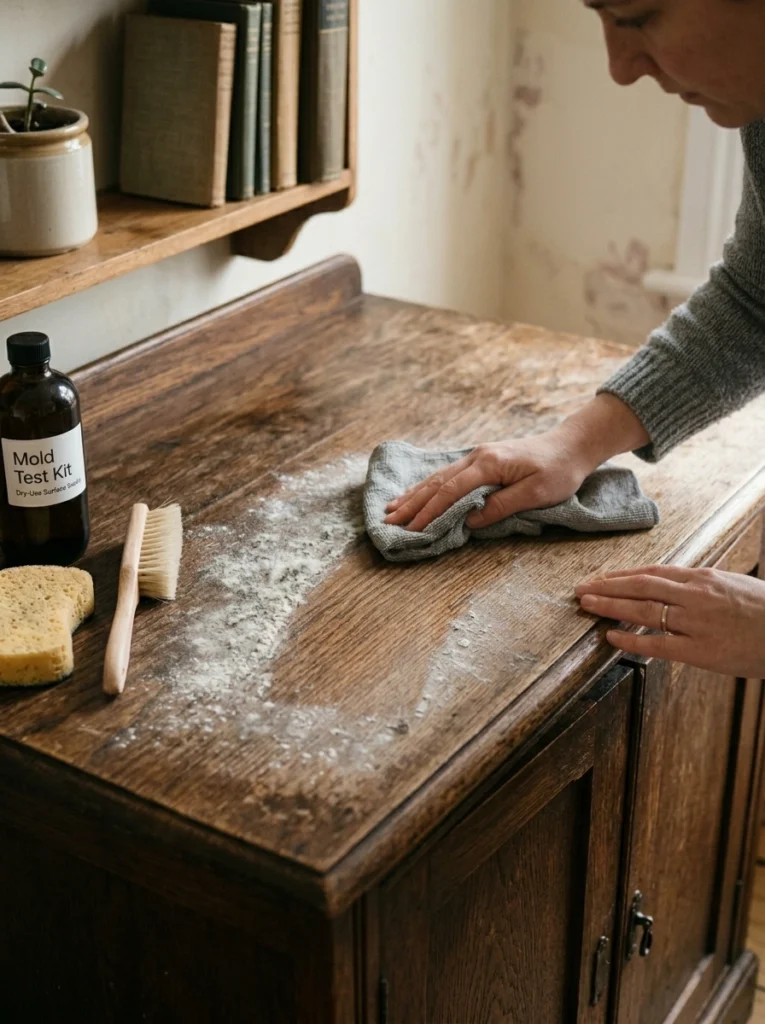
Never hit dry mold with a wet rag right out the gate. That’s just asking for the spores to smear directly into the wood grain! Instead, take a vacuum with a soft brush attachment and gently suck up the loose, dusty mildew on wood. If you don’t have a vacuum handy, a dry microfiber cloth works just fine. Lightly whisk the fuzzy debris away from you. The goal here is to remove as much of the dry surface junk as possible before we introduce any moisture. Wood is highly porous, so keeping the initial sweep dry stop the problem from penetrating deeper into the core.
Step 3: Gentle Attack with Mild Soap or Vinegar
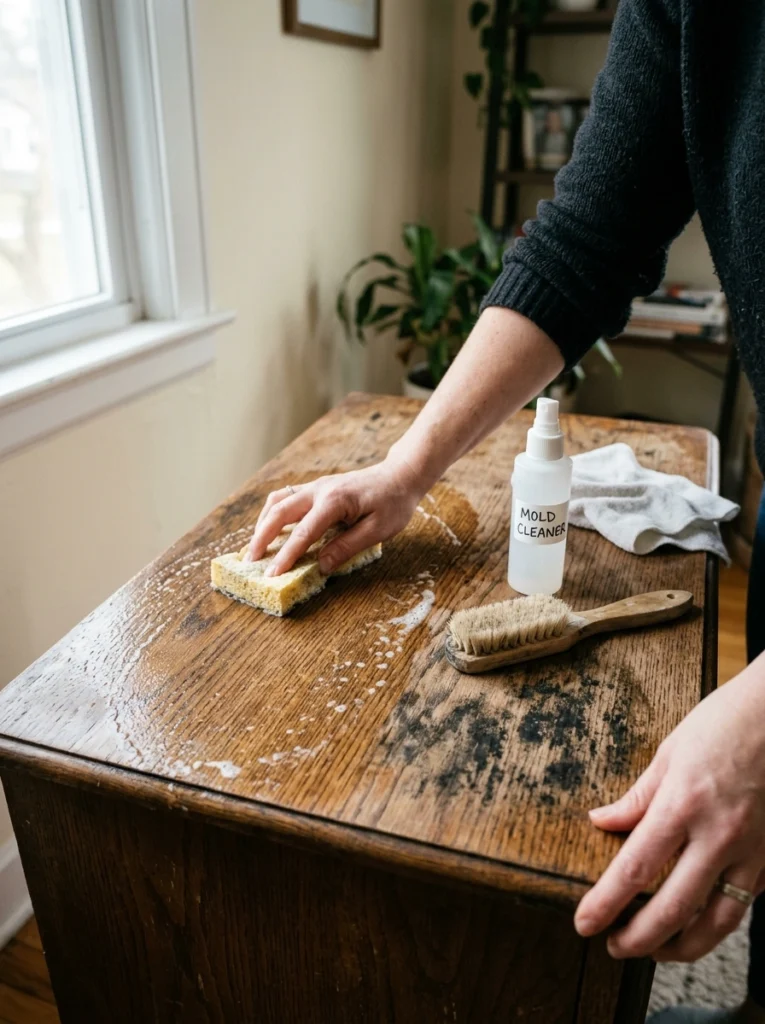
Now for the actual deep clean wooden surfaces phase. For light mold, a simple squirt of mild dish soap mixed into warm water is your best friend. Dip a sponge in, wring it out until it’s barely damp, and gently wipe. Remember, standing water is wood’s worst enemy. For more stubborn or smelly patches, mix up a DIY vinegar wood cleaner. White vinegar is one of those incredible natural cleaning solutions that easily penetrates the surface to kill the fungus at its roots. Spritz a 50/50 mix of vinegar and water onto your cloth—not directly onto the furniture—and gently rub along the grain.
Step 4: Breaking Out Baking Soda and Peroxide for Stubborn Spots
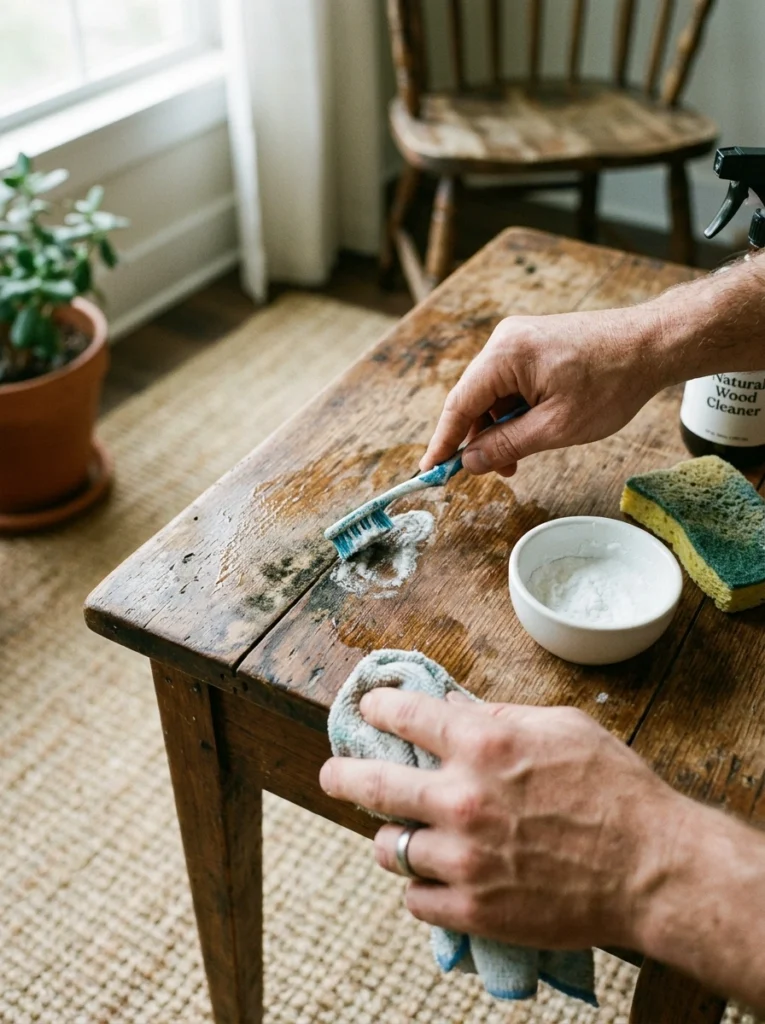
What if the stains are stubbornly clinging for dear life? Time to level up your mold removal for furniture strategy. If the vinegar didn’t cut it, make a thick paste using baking soda and a few drops of water. Gently dab it onto the dark spots using a soft-bristled toothbrush. Do not scrub like you are sanding a floor! Abrasive scrubbing will ruin the clear coat. For deeper, darker stains on lighter wood, hydrogen peroxide is a safer alternative to bleach. Dab a little 3% peroxide on the stain, wait a few minutes, and wipe it clean. Just be careful, because peroxide can sometimes lightens darker stains slightly. Always wipe away any residue immediately.
Step 5: The Crucial Drying Phase
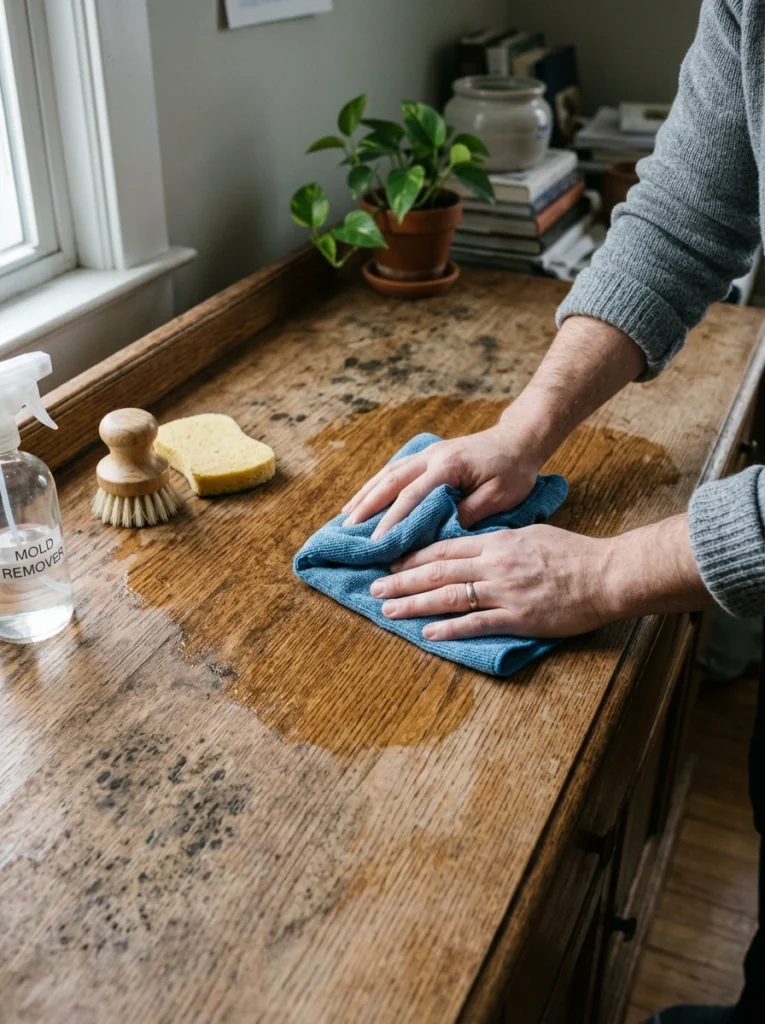
Cleaning is only half the battle. If you pack the piece away while it’s still damp, the fuzzy monsters will literally be back by next Tuesday. Take a clean, dry microfiber cloth and buff the entire surface to absorb every last drop of leftover moisture. Wood cleaning tips always emphasize drying, but people constantly skip it! If it’s a sunny day, leave the furniture outside for a few hours. The fresh air pulls moisture out of the microscopic crevices, and the natural UV rays act as a final, invisible zap to any lingering spores. If you’re stuck indoors, point a small desk fan directly at the piece.
Final Thoughts
Saving a beautiful vintage piece feels amazing, but true furniture maintenance is all about being proactive. To prevent mold on wood from making a comeback, you have to manage your indoor climate. High humidity is the ultimate playground for spores, so invest in a dehumidifier for damp basements or stuffy rooms. Keep ambient humidity below 50 percent. Additionally, consider rubbing a high-quality protective furniture wax or specialized wood oil into the grain twice a year. This creates a brilliant, water-resistant barrier that seals those vulnerable pores shut, leaving no room for moisture to hide. With just a little consistent climate control and occasional waxing, your favorite pieces will stay beautifully spotless for generations.