
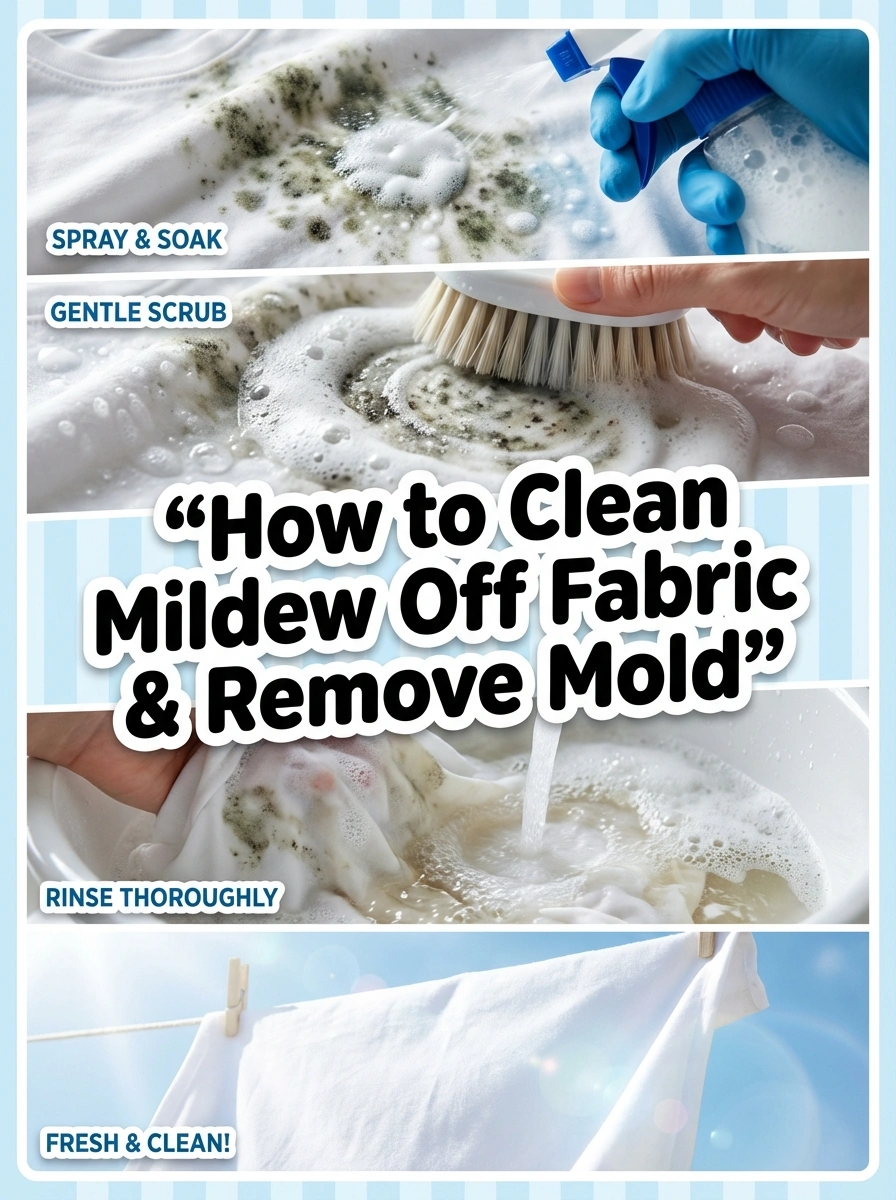
We’ve all been there. You pull a favorite shirt or a patio cushion out from winter storage, and bam—dark, fuzzy spots are staring right back at you. Mold and mildew don’t just look visually gross; they smell exactly like a damp basement. If you are sitting there wondering how to clean mildew off fabric remove mold without completely ruining the material, you’re in the right place. Most guides just tell you to bleach everything, but that’s a fast track to ruined clothes. We are going to look at real, practical ways to save your textiles. Grab some gloves, and let’s get into the nitty-gritty of fabric rescue.
Step 1: Prep Your Workspace and Protect the Piece
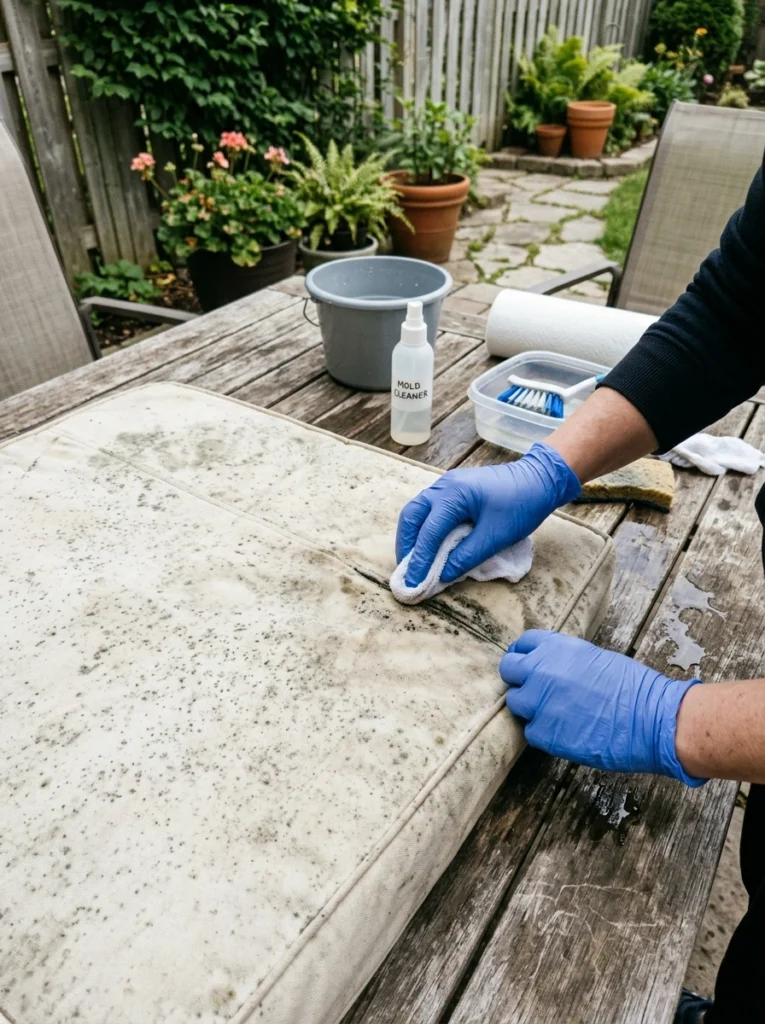
Let’s kick off these fabric cleaning tips by preparing the environment. Stop and think about where you are right now. Taking the item outside prevent the spores from blowing all over your living room. You definitely don’t want those invisible nasty things taking up residence in your carpets or couch cushions! Wear a mask if you’re sensitive to dust or mold. Also, always do a quick patch test on a hidden seam with your chosen cleaner. What if the dye aggressively bleeds? It’s much better to find that out on the inside hem rather than the front collar.
Step 2: The Dry Brush Method
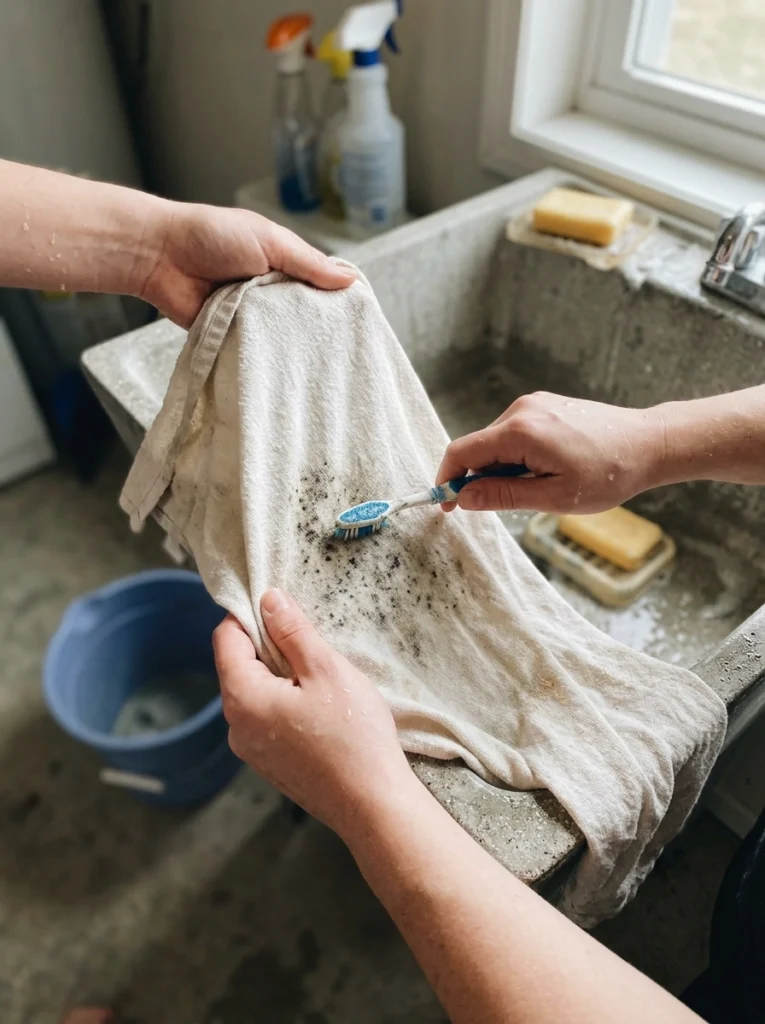
Don’t reach for the water just yet. Grab a stiff-bristled brush—an old toothbrush works absolute wonders for smaller, concentrated spots. Gently scrub the visible, dry fungus off the material. Why do we do this dry? Because hitting the fabric with water immediately just drives the fungal roots deeper into the threads. You want to physically sweep away as much surface debris as possible first. Just make sure to flick the dust away from you.
Step 3: Soaking with Natural Cleaning Solutions
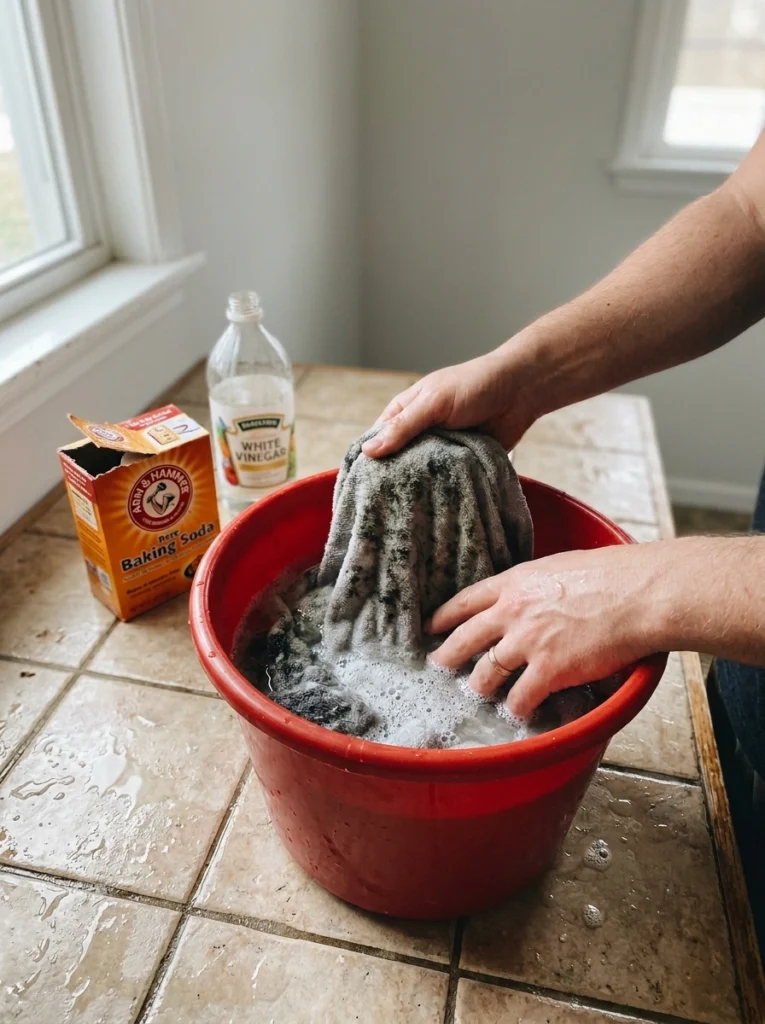
Now it’s time for some deep cleaning fabric magic. Forget harsh chemicals for a minute; plain white vinegar is a powerhouse for mildew stains removal. It penetrates deep into the fibers to kill the underlying fungi while simultaneously tackling that funky, lingering smell. Mix equal parts warm water and white vinegar in a bucket, then submerge the item completely. Let it sit for at least an hour. If the damp stench is aggressively strong, sprinkle a half-cup of baking soda directly into the soak. This bubbly combo physically lifts the dead spores and handles odor removal like an absolute champion. Your clothes is going to thank you later when they smell fresh again.
Step 4: Targeting the Stain with Peroxide and Detergent
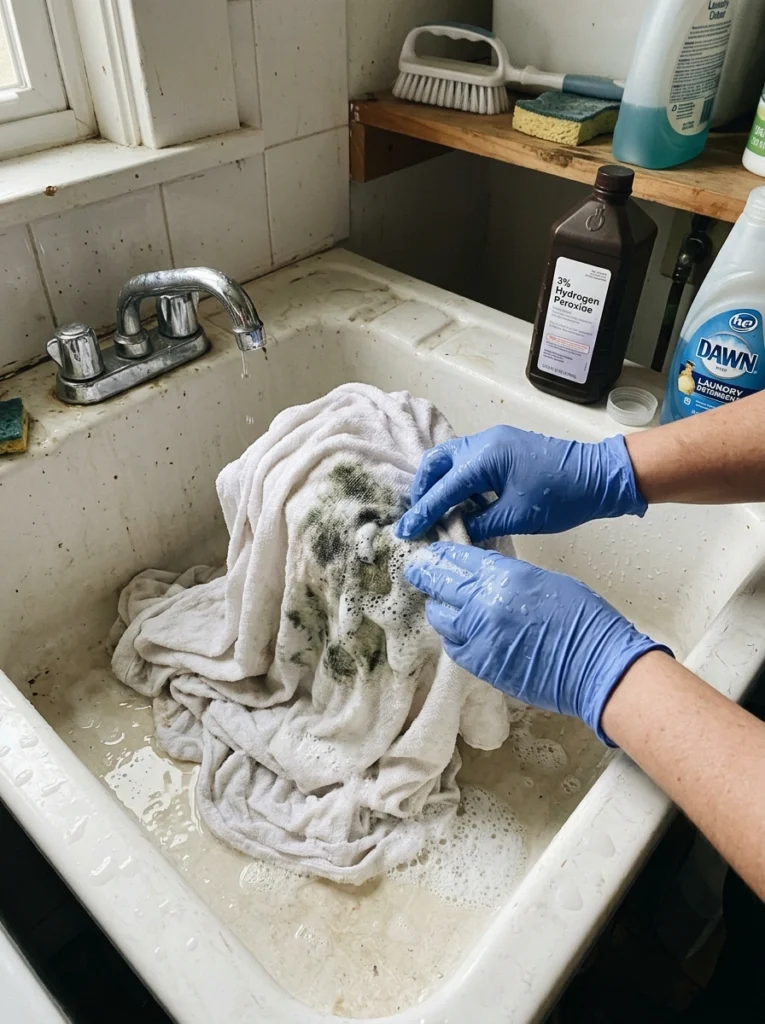
Sometimes vinegar kills the mold, but it isn’t quite enough for the stubborn discoloration left behind. This is where hydrogen peroxide steps up for ultimate stain removal. It acts exactly like a color-safe bleach. Dab a standard 3% household peroxide solution directly onto the damp spots and let it fizz for about ten minutes. Next, rub in a few drops of heavy-duty liquid laundry detergent. Gently massage the soapy mixture into the weave using your thumbs. Don’t scrub frantically! Aggressive, angry friction tears the fibers and creates permanent fuzzy patches on your garments.
Step 5: Fabric-Specific Rules and the Final Wash
Not all materials play by the exact same rules. Durable cottons, denim, and canvas can handle hot water and vigorous washing. But if you’re dealing with silk, wool, or delicate synthetics, you need to back off. Never use chlorine bleach or enzyme-heavy detergents on protein-based delicates—it will literally eat holes through the fabric. For the actual machine wash, use the warmest water setting safely allowed by the item’s care label. Wash the piece entirely alone so spores don’t migrate. Once the cycle finishes, check the spots. If they’re completely gone, hang the piece to dry in direct, bright sunlight. UV rays act as a natural bleaching agent. The sun do an amazing job at finishing the sanitation process.
Final Thoughts
Getting those dark splotches out is a huge victory, but you definitely don’t want to repeat this frustrating chore next month. Mold spores are opportunistic little hitchhikers that entirely depend on trapped humidity to survive. To keep them away permanently, you have to strictly control the moisture in your closets and storage bins. Toss a few silica gel packets or charcoal bags into your seasonal containers before sealing them up. Never fold and pack away garments that feel even slightly damp from the dryer. Leave adequate breathing room on your hangers instead of jamming shirts tightly together. Excellent airflow is basically your best defense. By rethinking your everyday laundry care and storage habits, you can stop the fungus long before it starts.