
Have a tiny outdoor space and feel like you can’t do much with it? I get it. When you’re staring at a cramped patio or a narrow strip of dirt, dreaming of a lush oasis feels kinda impossible. But honestly, size isn’t the issue—it’s all about how you arrange things.
Smart planning can actually make the tightest spots feel airy, calm, and incredibly useful. Whether you’re working with a tiny balcony, a weirdly shaped side yard, or a basic square box, I’ve put together 18 Small Garden Layout Ideas That Maximize Every Inch. Ready to rethink your space and finally get that dreamy, spacious-feeling garden? Let’s dive into some space-saving garden design magic.
1. The Diagonal Illusion
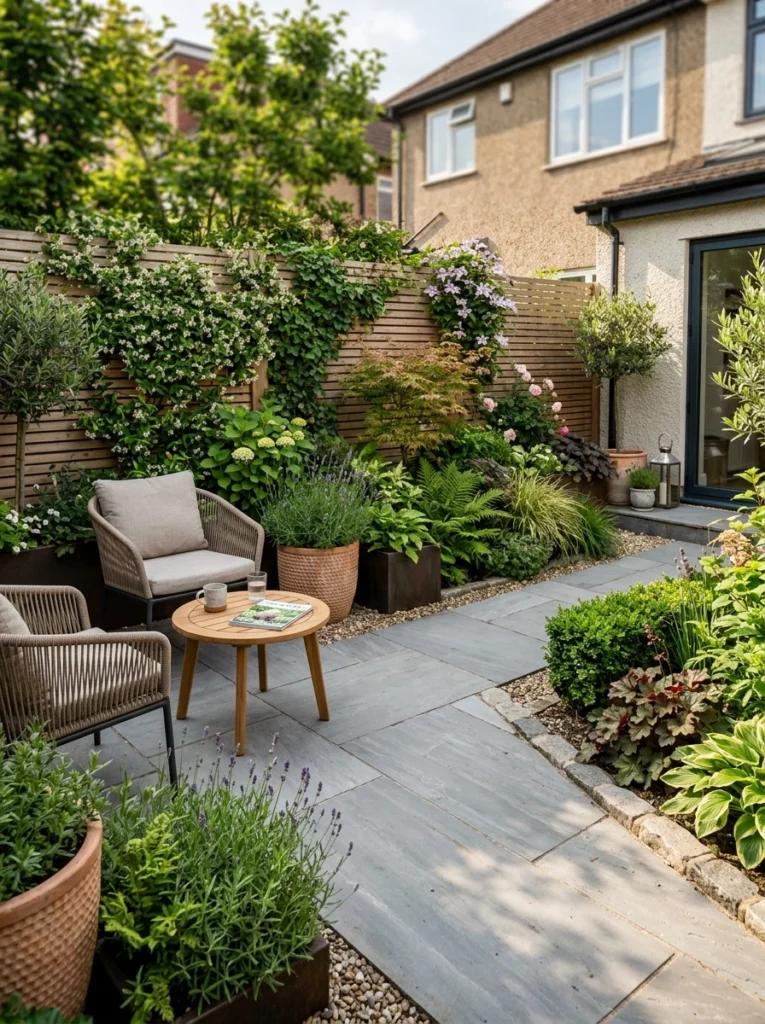
- Practical explanation: Instead of laying paving or decking straight against the house, angle your hardscaping at 45 degrees.
- Why the layout works: This draws the eye along the longest dimension of the yard (the diagonal), tricking the brain into seeing a much wider area.
- Best use case: Basic square backyard layouts that feel overly boxy.
- Styling tips: Use sleek, modern paving stones and frame the angled edges with lush climbing plants to soften the borders.
- Common mistakes to avoid: Using oversized furniture that disrupts the geometric flow of the angled lines.
- Space-saving benefits: Visually stretches the footprint without requiring any extra physical space.
2. The Stepped Courtyard
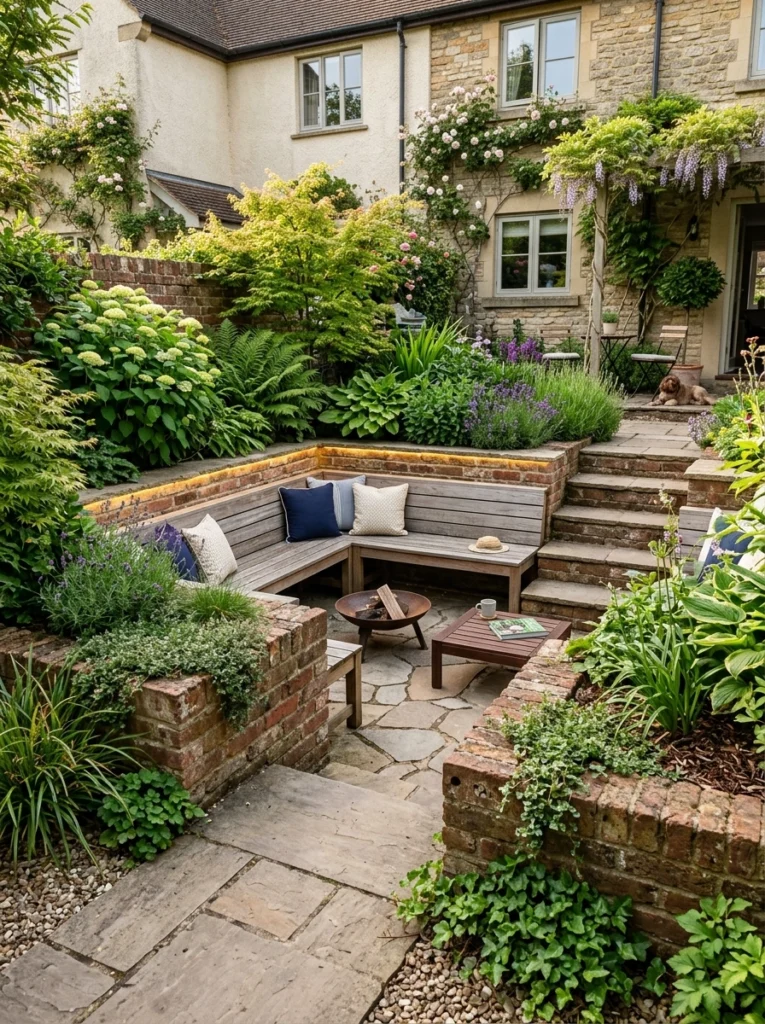
- Practical explanation: Build multi-level raised beds out of brick or timber around a central flat patio area.
- Why the layout works: Tiered planting adds massive vertical depth and interest, turning a flat area into a dynamic amphitheater of green.
- Best use case: Urban garden layout inspiration for concrete-heavy enclosed spaces.
- Styling tips: Integrate warm LED lighting under the lips of the raised beds and add built-in wooden bench seating to the lower tiers.
- Common mistakes to avoid: Using too many materials. Stick to one type of stone and one type of wood to keep it cohesive.
- Space-saving benefits: Built-in seating eliminates the need for bulky patio chairs.
3. The L-Shaped Lounge & Grow
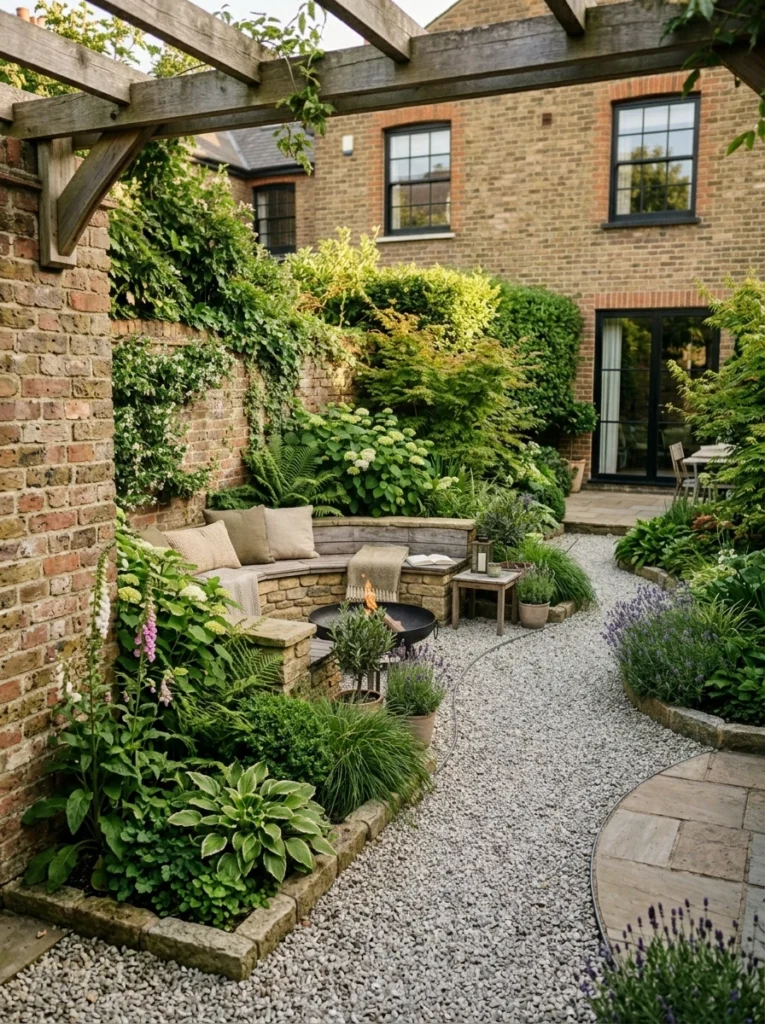
- Practical explanation: Tuck a cozy seating area deep into the “L” corner of the yard, leaving the longer strip entirely for a meandering path and plants.
- Why the layout works: It neatly separates the living zone from the nature zone, making the yard feel like two distinct rooms.
- Best use case: Awkward, L-shaped tiny backyard design.
- Styling tips: Lay sweeping gravel paths in the long section, leading up to a cozy fire pit nook in the lounge area.
- Common mistakes to avoid: Overcrowding plants at the “pinch point” where the yard bends, which blocks the visual flow.
- Space-saving benefits: Maximizes the dead corner while leaving the thoroughfare completely open.
4. The Green Gallery Balcony
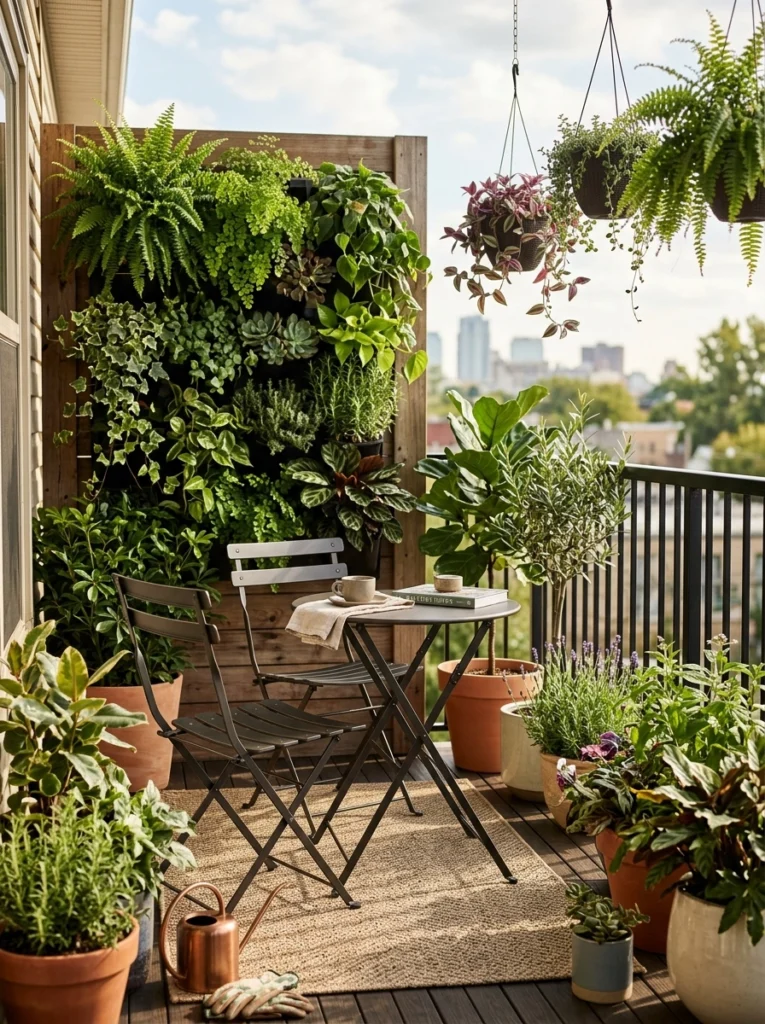
- Practical explanation: Push all planting to the walls using vertical gardens and hanging planters, leaving the floor entirely clear.
- Why the layout works: It brings nature to eye level and surrounds you with green, while keeping precious floor real estate open for seating.
- Best use case: High-rise balcony garden layouts.
- Styling tips: Use elegant slatted privacy screens as the base for your vertical planters, and add a folding bistro set.
- Common mistakes to avoid: Ignoring sunlight direction. Make sure your vertical wall actually gets enough light for the plants you choose!
- Space-saving benefits: Zero footprint required for a massive amount of foliage.
5. The Narrow Side-Yard Stroll
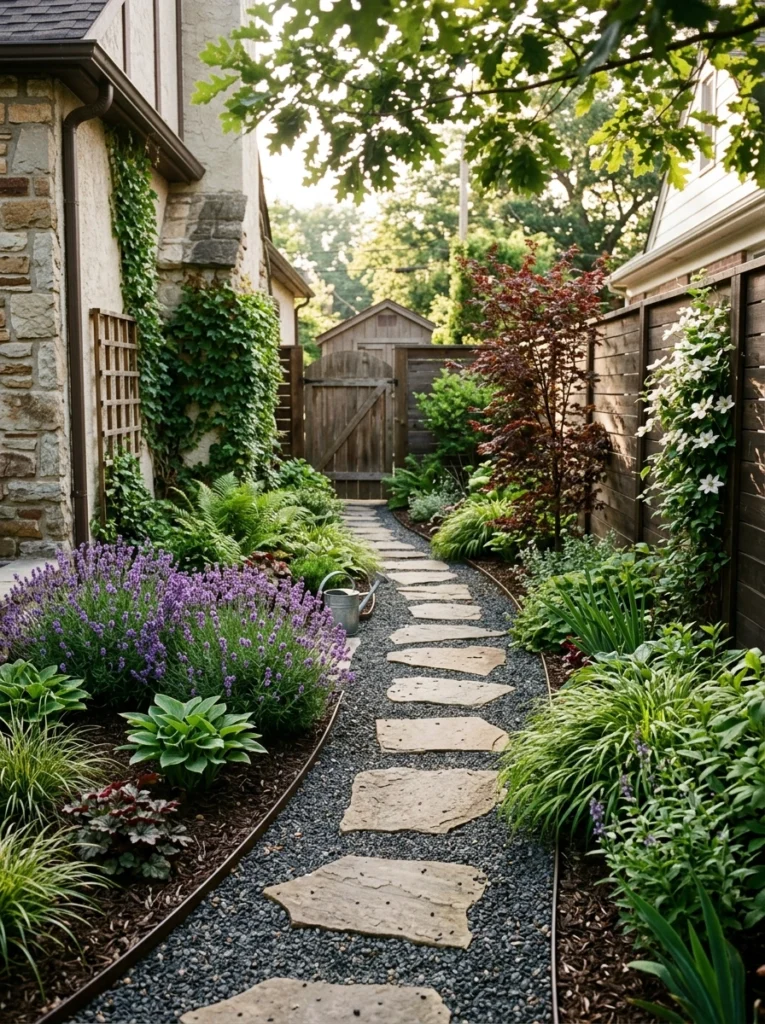
- Practical explanation: Lay a central path out of stepping stones or brick, flanked tightly on both sides by low, neat planting.
- Why the layout works: It breaks up the “bowling alley” look, giving purpose to a transitional space.
- Best use case: Narrow side-yard layouts leading from front to back.
- Styling tips: Frame the path with crisp decorative edging and use compact shrubs like boxwood or lavender to keep things neat.
- Common mistakes to avoid: Blocking pathways. Don’t plant anything that will spill over and make walking difficult.
- Space-saving benefits: Turns dead space into a highly functional, beautiful thoroughfare.
6. The Secret Garden Corner
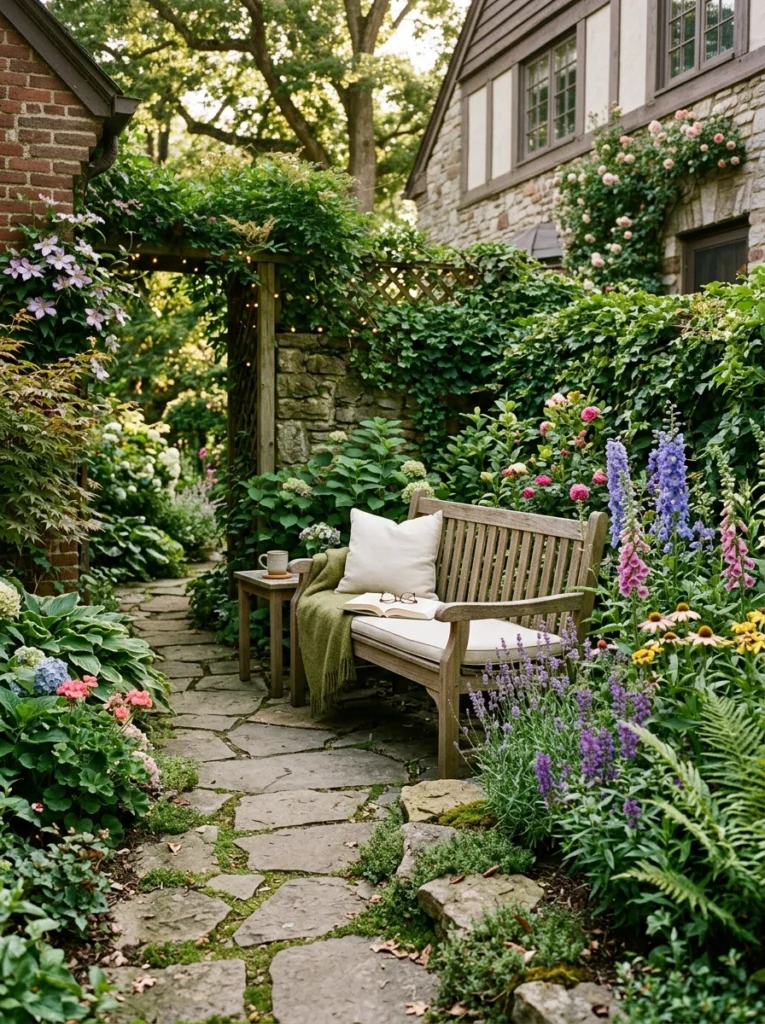
- Practical explanation: Place a standalone reading bench corner deep in the furthest point of the garden, angled back toward the house.
- Why the layout works: It forces you to look across the entire yard to see the focal point, making the whole area feel instantly larger.
- Best use case: Triangular or oddly shaped corner garden plans.
- Styling tips: Plant vibrant, tall pollinator beds around the bench to create a private, immersive canopy. Add soft fairy lighting.
- Common mistakes to avoid: Having no focal point at all—empty corners just look like wasted space.
- Space-saving benefits: Gives a reason to use the extreme edges of the garden, maximizing usable area.
7. The Grid Planter Matrix
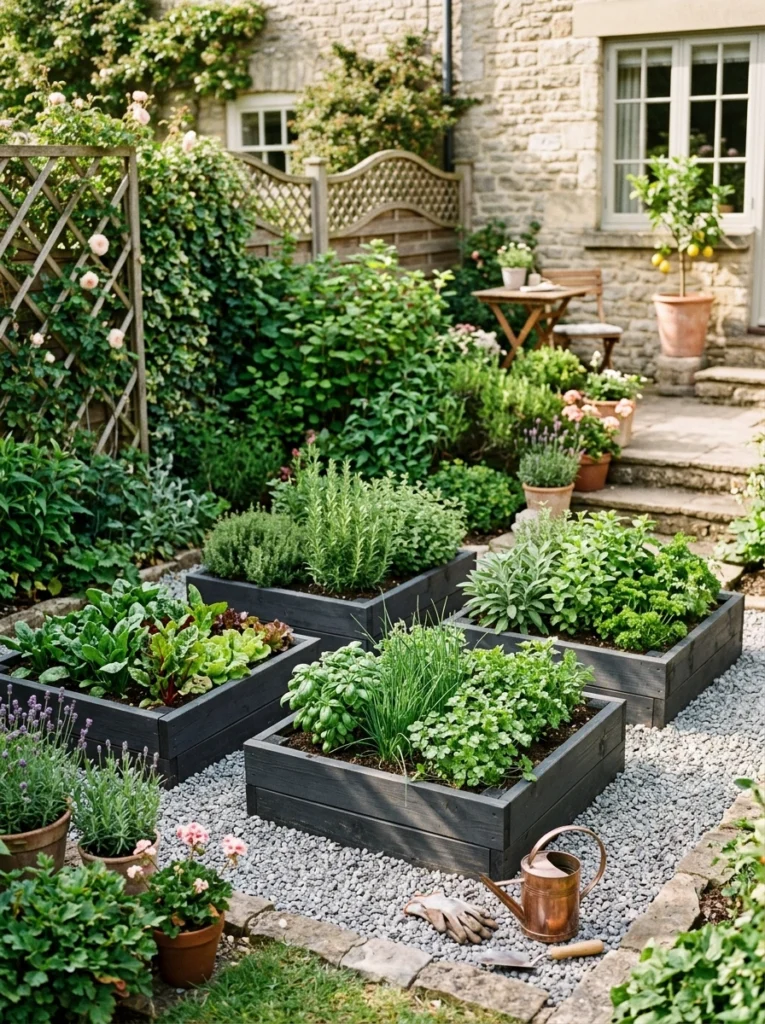
- Practical explanation: Build a highly organized geometric grid (like a 2×2 square) of raised planter boxes with crisp paths in between.
- Why the layout works: It embraces order. The clean lines make the space feel intentionally designed rather than just tiny.
- Best use case: Affordable DIY layout ideas for productive herb corners and veggie patches.
- Styling tips: Fill the paths between beds with crunching gravel, and paint the wooden boxes a uniform dark charcoal or natural stain.
- Common mistakes to avoid: Poor drainage planning. Ensure water can escape the paths and boxes so it doesn’t become a swamp.
- Space-saving benefits: Highly concentrated growing zones with minimal wasted walking space.
8. The Dual-Zone Divider
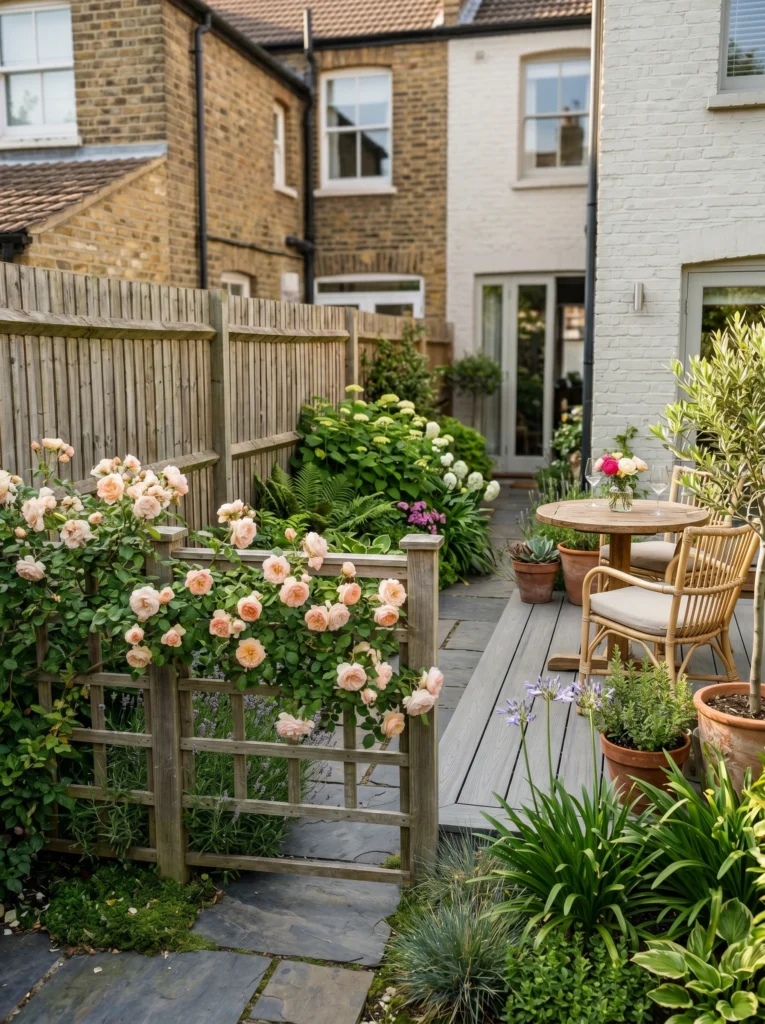
- Practical explanation: Split the yard right down the middle with a low open-slat fence or trellis to create two totally separate rooms.
- Why the layout works: Counterintuitively, dividing a small space makes it feel bigger because you can’t see everything in one glance—it creates mystery.
- Best use case: Long, narrow backyard zoning ideas.
- Styling tips: Put a tiny dining nook on a deck on one side, and a soft lawn or lounge on the other. Train climbing roses over the divider.
- Common mistakes to avoid: Making the divider completely solid, which blocks light and feels claustrophobic.
- Space-saving benefits: Allows for two distinct activities (eating and relaxing) without them overlapping clumsily.
9. The Espalier Fruit Wall Oasis
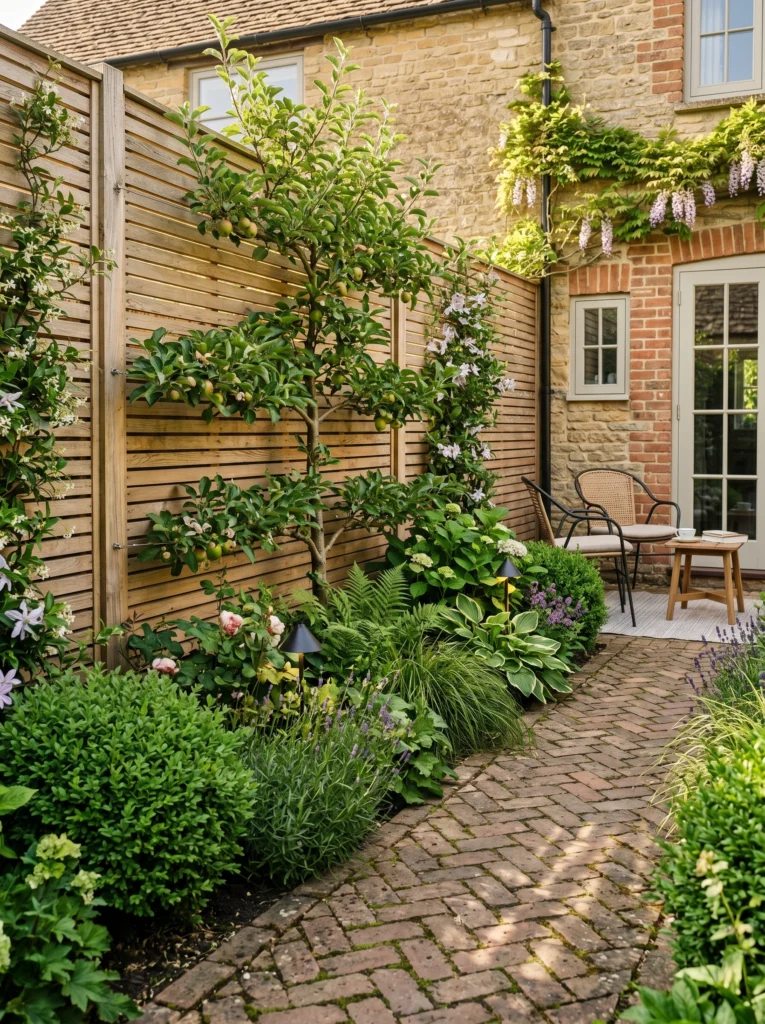
- Practical explanation: Plant fruit trees and train their branches to grow completely flat along the boundary fencing (espalier).
- Why the layout works: It provides the lushness and height of trees without encroaching on the horizontal walking space of the yard.
- Best use case: Sunny, south-facing walls in compact garden planning.
- Styling tips: Lay classic brick paving at the base and use dramatic uplighting to highlight the structural branches at night.
- Common mistakes to avoid: Letting the trees grow out of control. They require regular pruning to stay perfectly flat.
- Space-saving benefits: Delivers an orchard feel in literally inches of depth.
10. The Hidden Storage Bench
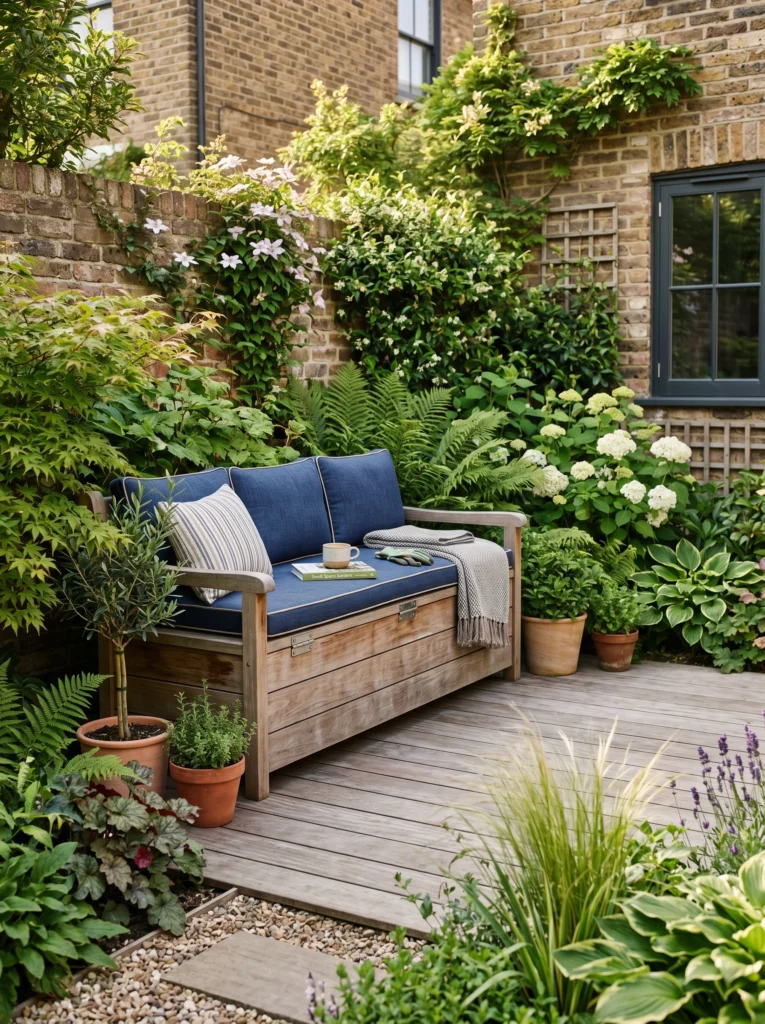
- Practical explanation: Build a custom L-shaped or straight seating bench against a wall where the seat lifts up on hinges to reveal a hollow inside.
- Why the layout works: Every small garden needs a place for soil, tools, and cushions, but sheds eat up too much room. This blends utility with comfort.
- Best use case: Tiny patios needing a hidden storage zone.
- Styling tips: Clad the bench in sleek timber decking that matches your floor, and top it with plush, tailored outdoor cushions.
- Common mistakes to avoid: Forgetting to add ventilation holes—moisture buildup will ruin your stored items!
- Space-saving benefits: Gives you heavy-duty storage with zero extra footprint.
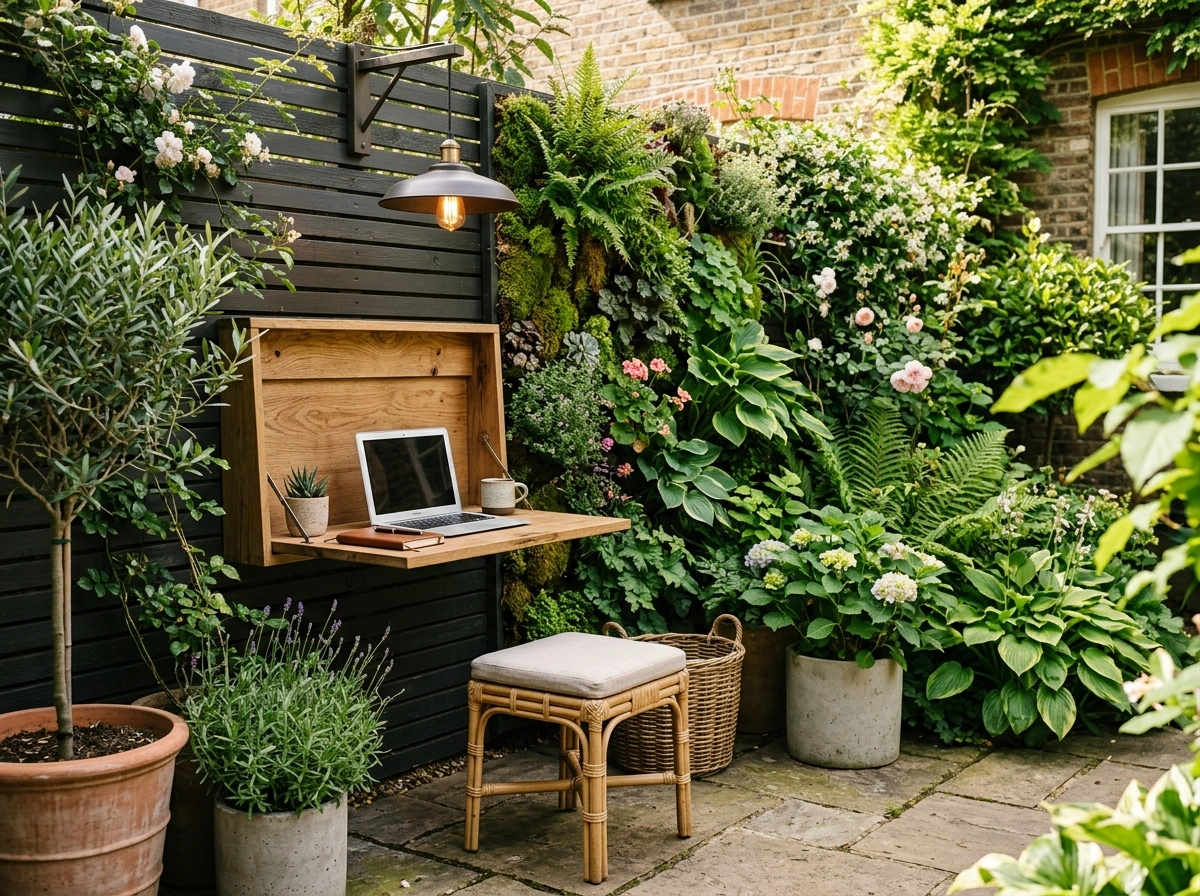
11. The Living Wall Workspace
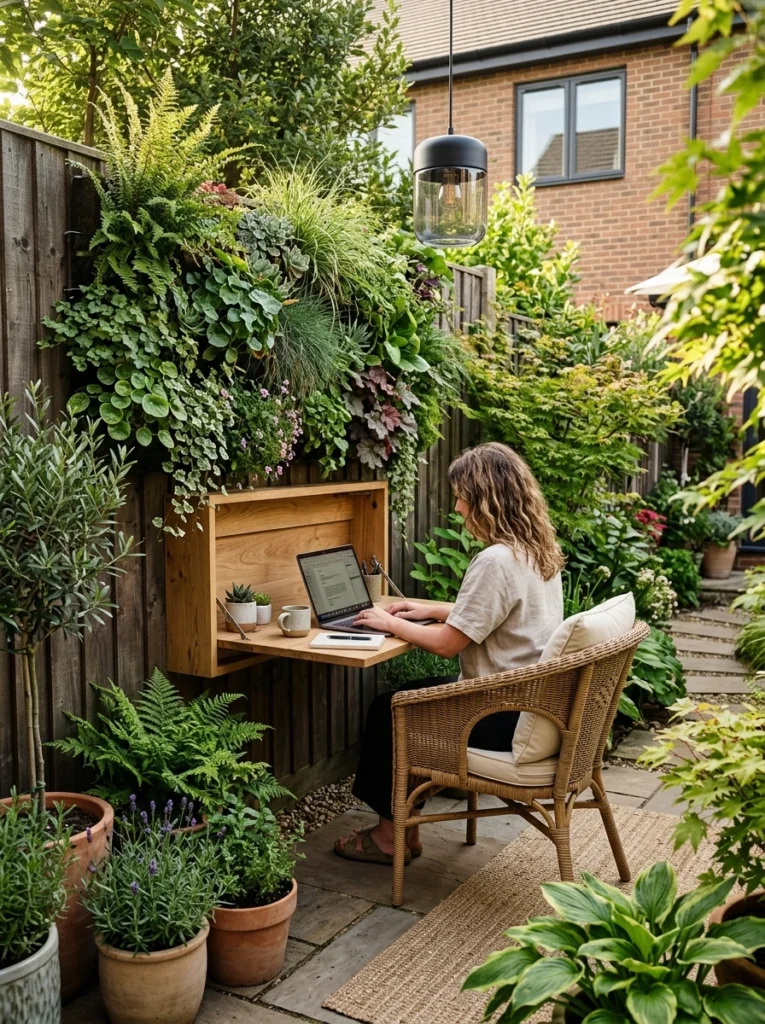
- Practical explanation: Install a drop-down wooden desk on a sturdy fence or wall, flanked entirely by a dense vertical garden.
- Why the layout works: It transforms a useless blank wall into an inspiring outdoor workspace that simply folds flat when cocktail hour starts.
- Best use case: Small yard landscaping ideas for remote workers.
- Styling tips: Use rich, trailing vines around the desk frame and suspend a modern outdoor pendant light above it.
- Common mistakes to avoid: Positioning the screen right in the path of glaring midday sun.
- Space-saving benefits: A home office that demands zero square footage when not in use.
12. The Water Feature Focal Point
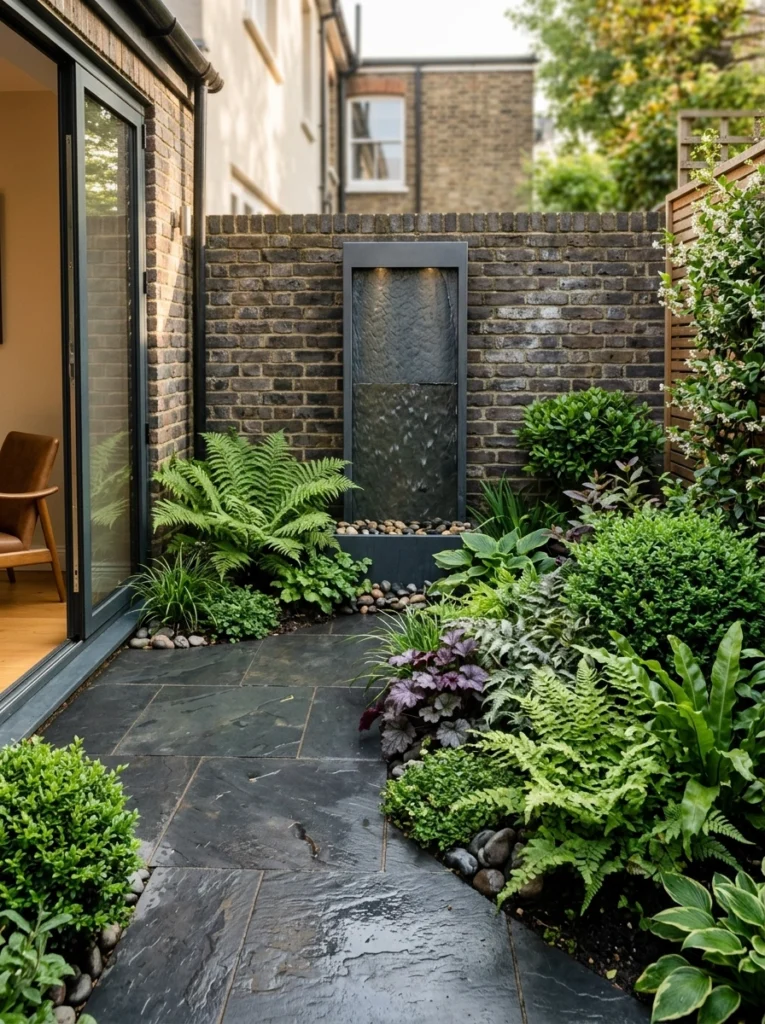
Practical explanation: Install a sleek, narrow water rill or a wall-mounted cascading fountain at the very back of the garden.
Why the layout works: The gentle sound masks traffic noise, and the reflection of water instantly bounces light around, making the area feel open.
Best use case: Shady, enclosed spaces wanting a water feature corner.
Styling tips: Frame the water with dark slate tiles and moisture-loving compact shrubs like dwarf ferns.
Common mistakes to avoid: Choosing an oversized, bulky fountain that commands too much walking space.
Space-saving benefits: Enhances the sensory experience of the yard without taking up more than a few inches of depth.
13. The Tiered Container Cluster
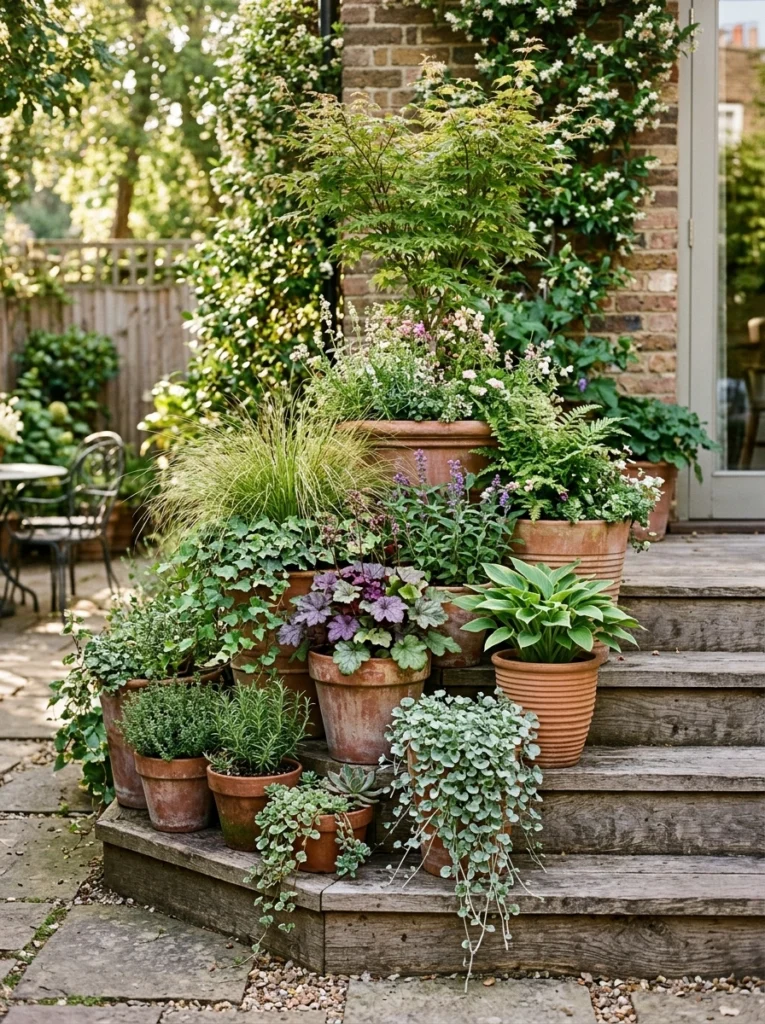
- Practical explanation: Group large, medium, and small pots together closely on a set of corner stairs or a tiered plant stand.
- Why the layout works: It mimics the look of lush, layered borders but completely on a hardscape patio where digging isn’t an option.
- Best use case: Renters looking for space-saving garden design that they can pack up and take with them.
- Styling tips: Stick to a single material for the pots (like all terracotta or all concrete) to keep it chic, and mix trailing vines with tall grasses.
- Common mistakes to avoid: Spreading single pots out thinly across the yard—it looks cluttered. Grouping them creates impact!
- Space-saving benefits: Concentrates the visual drama into one tidy corner.
14. The Playful Pocket
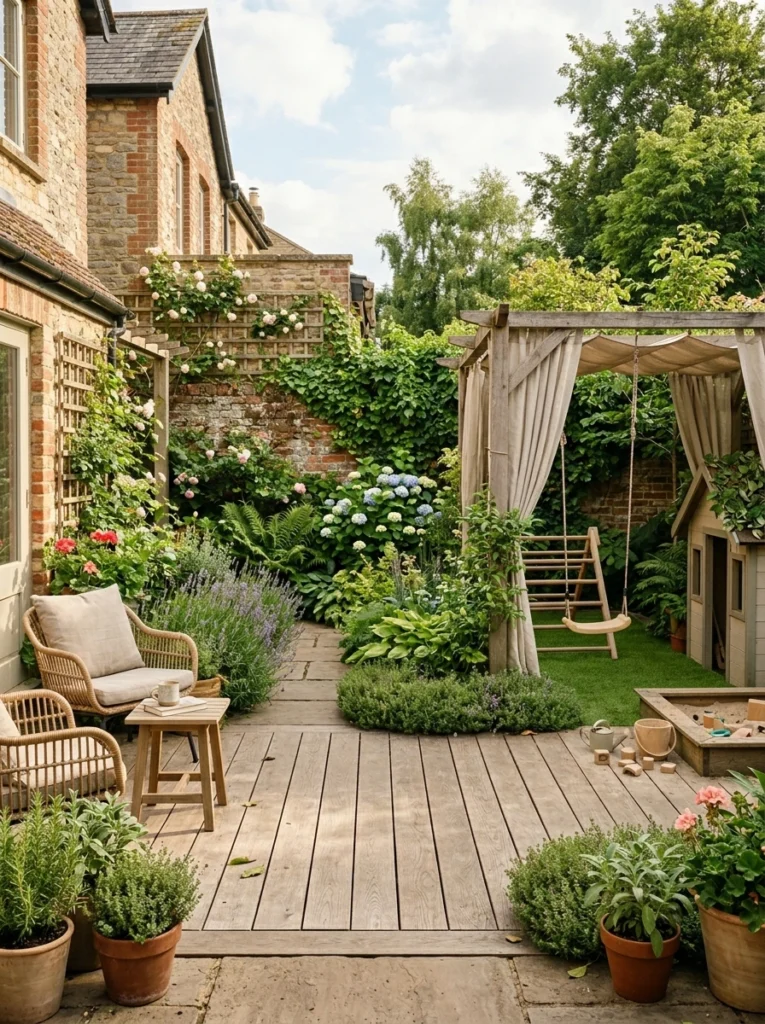
- Practical explanation: Sink a small sandbox or play zone flush into the ground or deck, covering it with a sturdy, matching lid when the kids are done.
- Why the layout works: It gives children a dedicated spot to play, but easily converts back to adult entertaining space in seconds.
- Best use case: Family-friendly square backyard layouts.
- Styling tips: Surround the play area with a tough, sensory herb corner (like creeping thyme) that smells great when stepped on.
- Common mistakes to avoid: Leaving the kids’ play area uncovered permanently, which can make a tiny yard feel messy.
- Space-saving benefits: Dual-purpose floor space that adapts to the time of day.
15. The Floating Deck Island
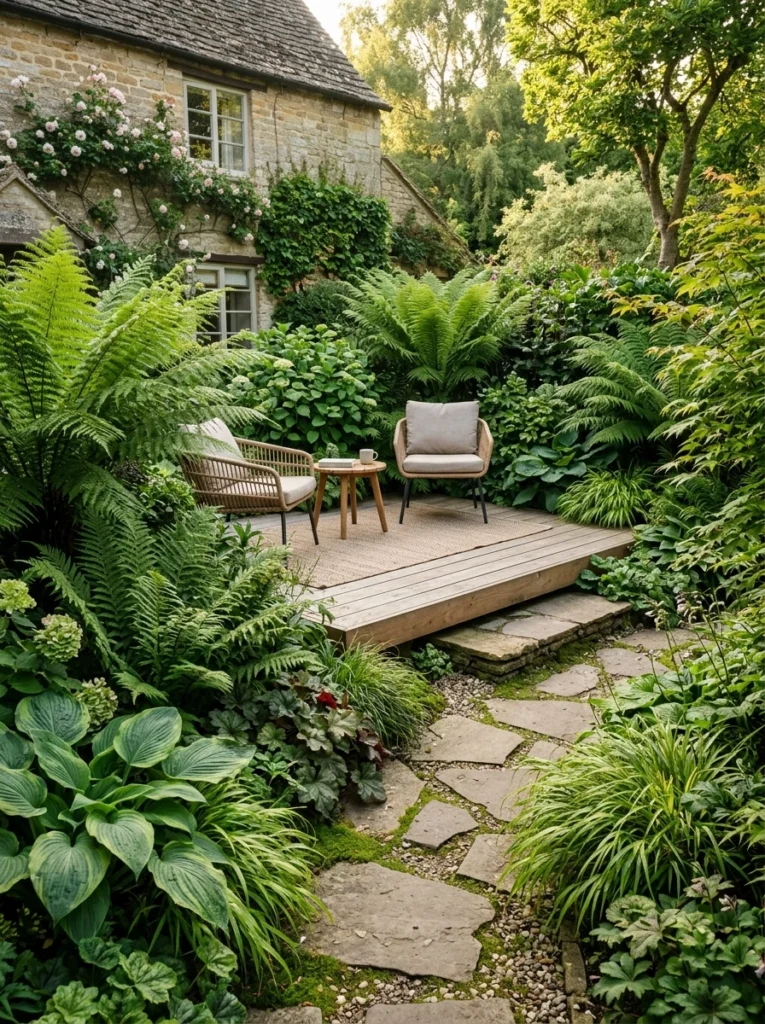
- Practical explanation: Instead of pushing the patio against the house, place a small, low-profile deck dead in the center of the yard, surrounding it 360 degrees with dense planting.
- Why the layout works: It immerses you. You aren’t just looking at the garden; you are sitting inside it.
- Best use case: Premium landscaped garden concepts for square plots.
- Styling tips: Use rich, deep layered borders with oversized tropical leaves or woodland ferns to create a “jungle” feeling.
- Common mistakes to avoid: Skimping on the border depth. The borders must be deep and lush for the island effect to work.
- Space-saving benefits: Removes the need for perimeter fencing decorations, as the plants act as the walls.
16. The Minimalist Dining Strip
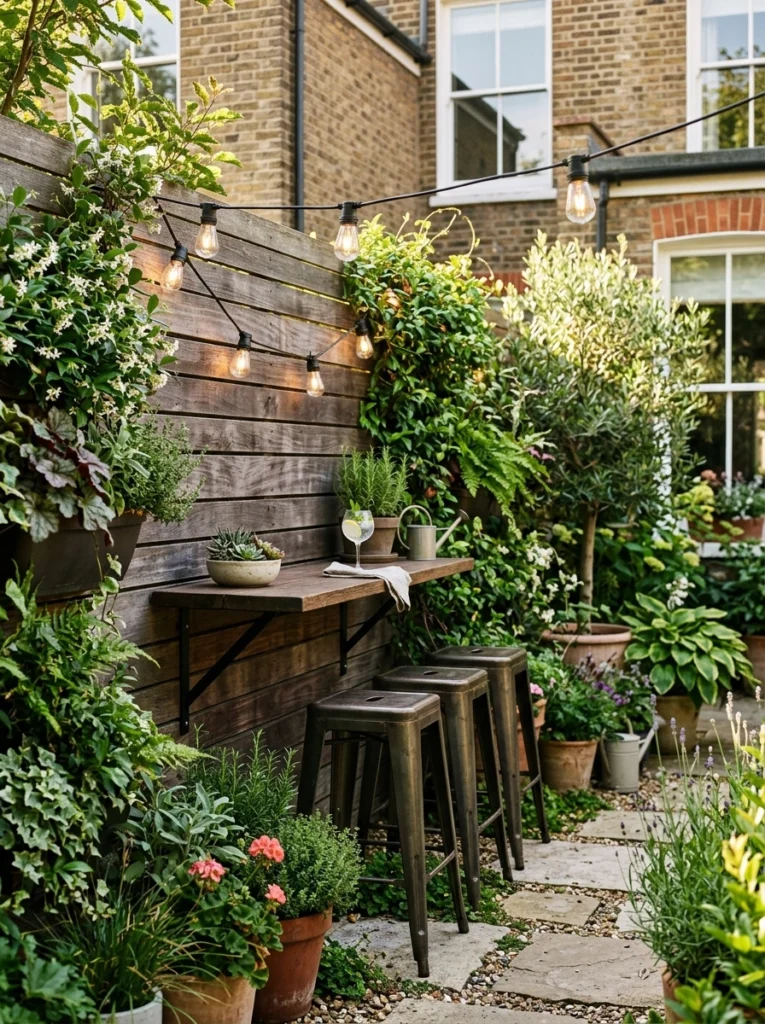
- Practical explanation: Mount a long, narrow plank to the balcony railing or boundary fence to act as a bar table, paired with slender backless stools.
- Why the layout works: Standard round dining tables eat up the middle of a space. A bar setup keeps the center totally unobstructed.
- Best use case: Ultra-narrow side-yard layouts or tiny balconies.
- Styling tips: Hang warm festoon lighting directly above the bar, and keep the stools sleek and metallic.
- Common mistakes to avoid: Buying stools that are too wide to tuck completely under the bar when not in use.
- Space-saving benefits: Seats two to four people in just a foot of depth.
17. The Paved Pathway to Nowhere
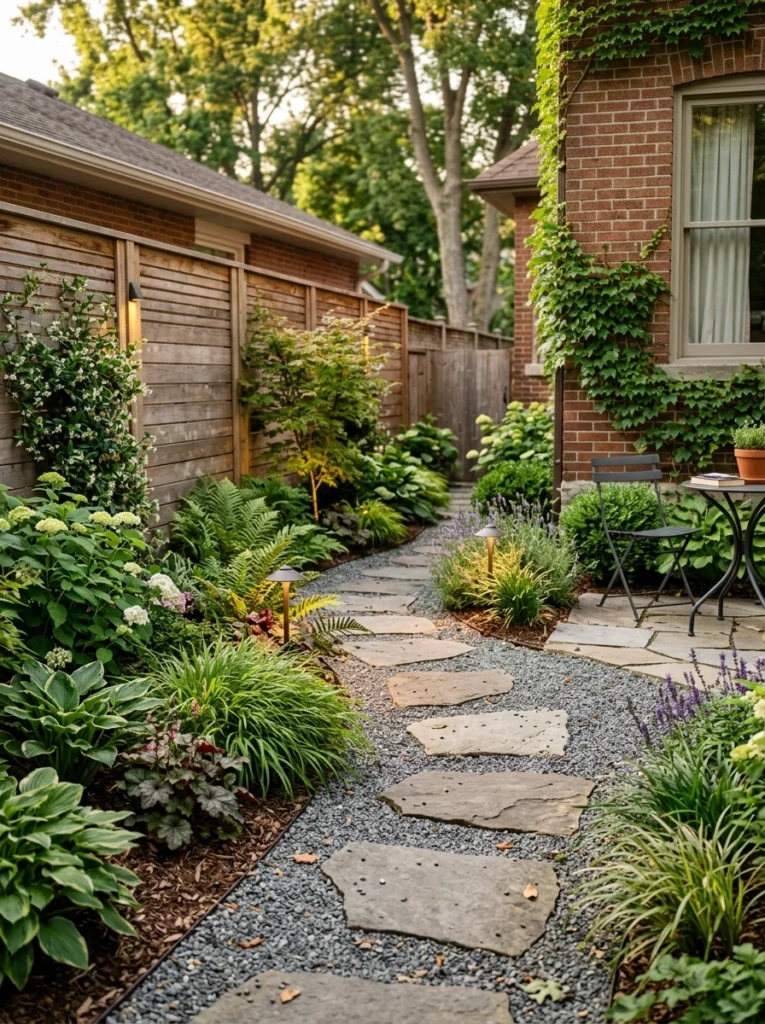
- Practical explanation: Create a gravel path with large stepping stones that gently curves and disappears behind a strategically placed privacy screen or tall shrub.
- Why the layout works: It sparks imagination. The brain assumes the garden continues far beyond what can actually be seen.
- Best use case: Short, stubby central path layouts needing visual extension.
- Styling tips: Use large, premium pavers set into crunching gravel, and add a single, dramatic spotlight at the curve.
- Common mistakes to avoid: Making the hidden area behind the screen a dumping ground for junk!
- Space-saving benefits: Enlarges the psychological footprint of the yard.
18. The Sunken Fire Pit Nook
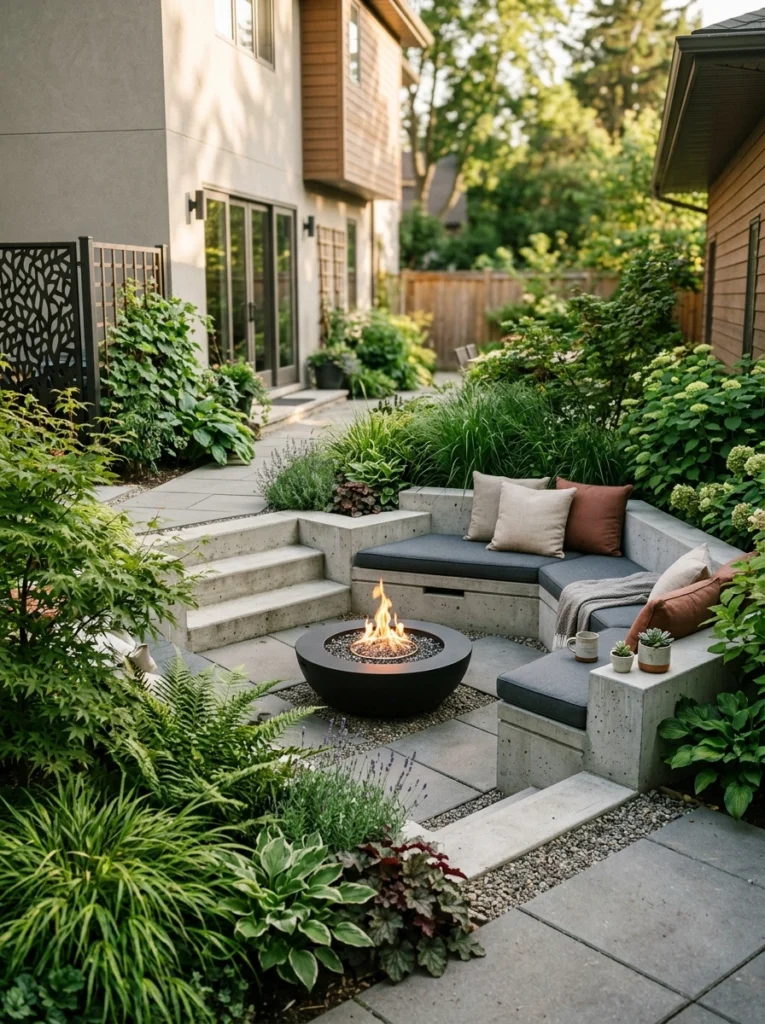
- Practical explanation: Excavate slightly to lower the main seating area by just one or two steps, dropping it below ground level.
- Why the layout works: Changing elevation creates distinct zones without having to build walls that would otherwise block your view.
- Best use case: Luxury garden designs wanting a cozy fire pit nook without visual clutter.
- Styling tips: Use sleek, built-in concrete seating around the pit, softened with tailored outdoor cushions.
- Common mistakes to avoid: Ignoring drainage. A sunken area without a soakaway or drain will become a swimming pool in winter.
- Space-saving benefits: Built-in seating and lowered sightlines make the whole garden above feel expansive and uncrowded.
At the end of the day, an incredible outdoor retreat isn’t about massive square footage; it’s all about intention. The best small gardens succeed through smart planning first. When you map out your zones, respect the sunlight, and choose properly scaled furniture, you completely shift how the area feels and functions. It proves that limited space can still deliver immense beauty, comfort, productivity, and everyday joy. You don’t need a sprawling estate to enjoy a morning coffee surrounded by nature or to host friends around a fire pit. Pick a layout that resonates with your lifestyle, start sketching it out, and watch your tiny plot transform into your favorite room “in” the house.