
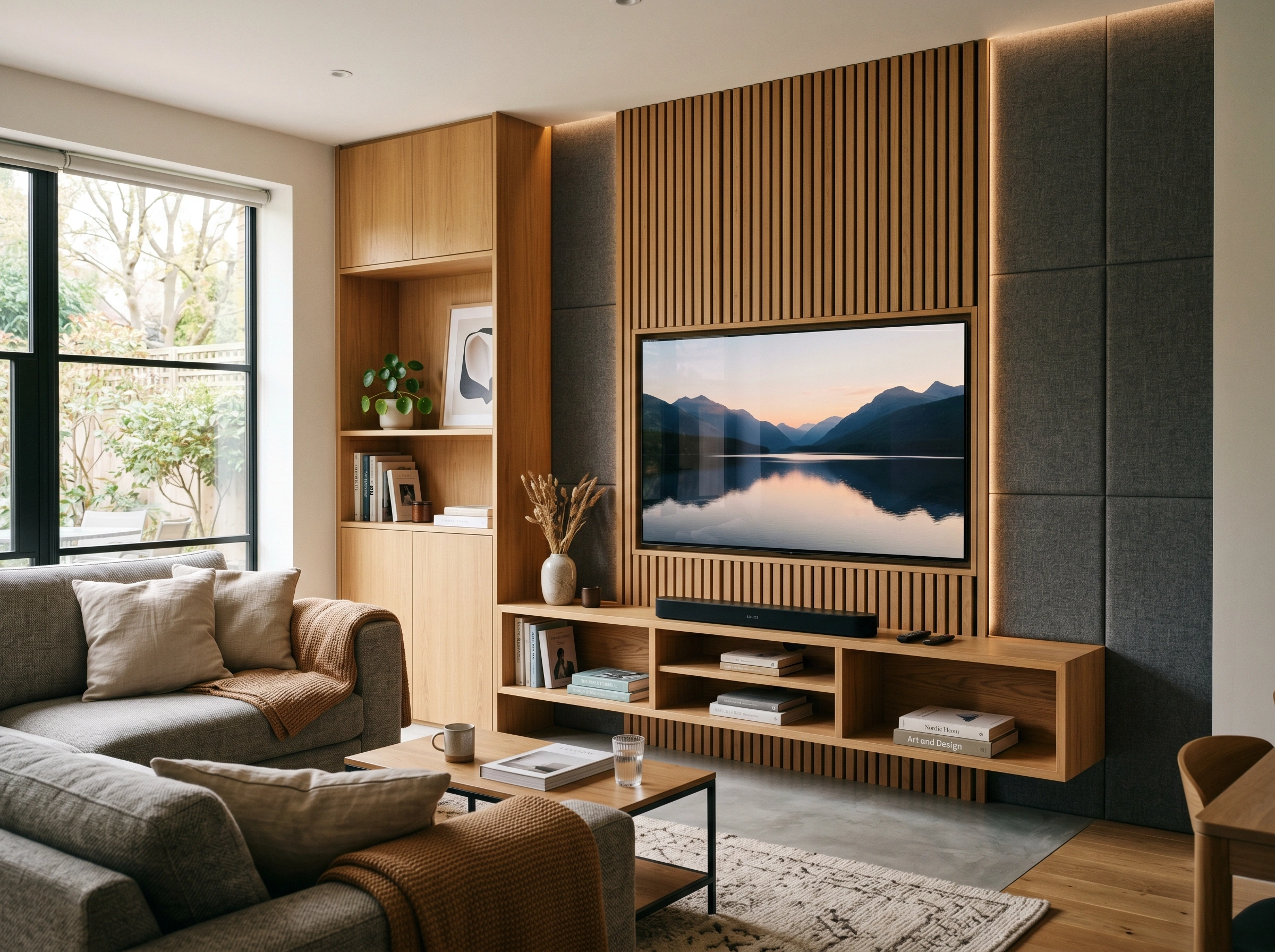
Let’s talk about the focal point of your home. You sit down after a long day, and where do your eyes naturally go? Straight to the TV. But slapping a screen on a bare wall just doesn’t cut it anymore. If you want to transform that blank canvas into a seamless blend of technology, storage, and modern style, you are in the right place. We are going to dive deep into 17 Media Wall Designs That Upgrade Your Living Room.
This isn’t just about hiding cords—it’s about crafting a whole new atmosphere. Ready to ditch the clutter and find some stylish TV wall inspiration that completely changes your room’s vibe? Let’s get into the details.
1. Floating TV Panels for Small Spaces
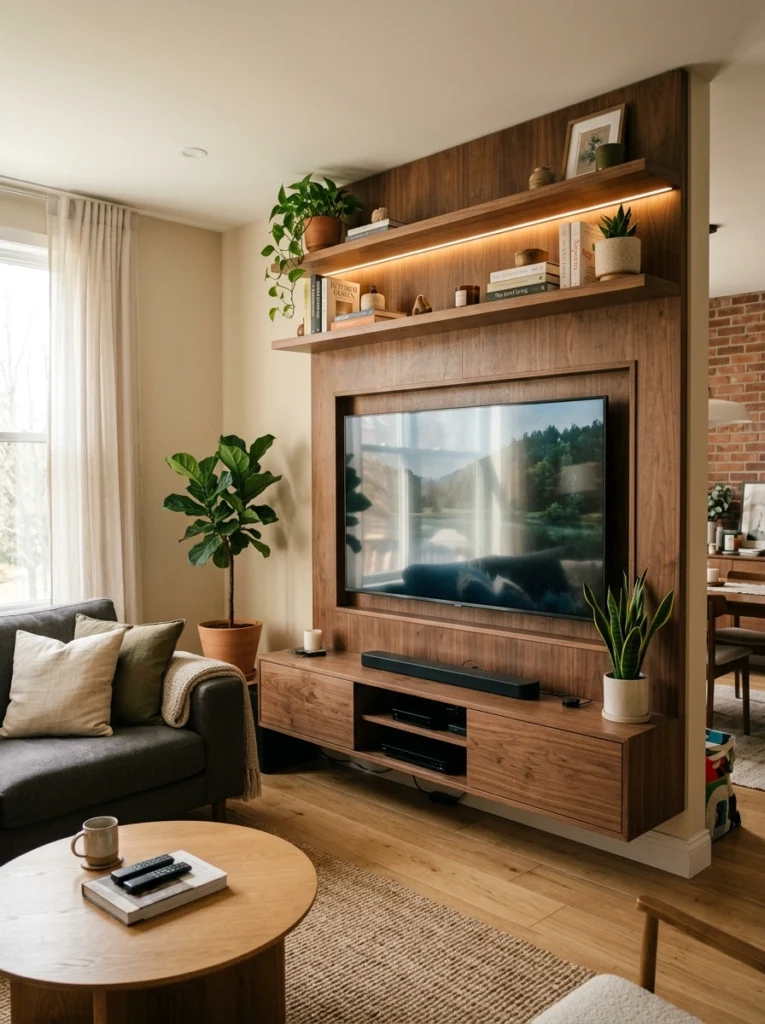
When you looking at small living rooms, floor space is an absolute premium. Instead of a bulky console, floating TV panels draw the eye upward and create an illusion of a larger room. You can mount a sleek, shallow panel slightly off the wall, providing just enough depth to tuck away cables.
- Design Tip: Match the panel finish to your flooring to create visual continuity.
- What NOT to do: Avoid the classic oversized TV mismatch. A massive screen on a tiny floating panel looks top-heavy and awkward. Keep the screen width at least a few inches narrower than the panel itself.
2. The Full-Height Feature Wall
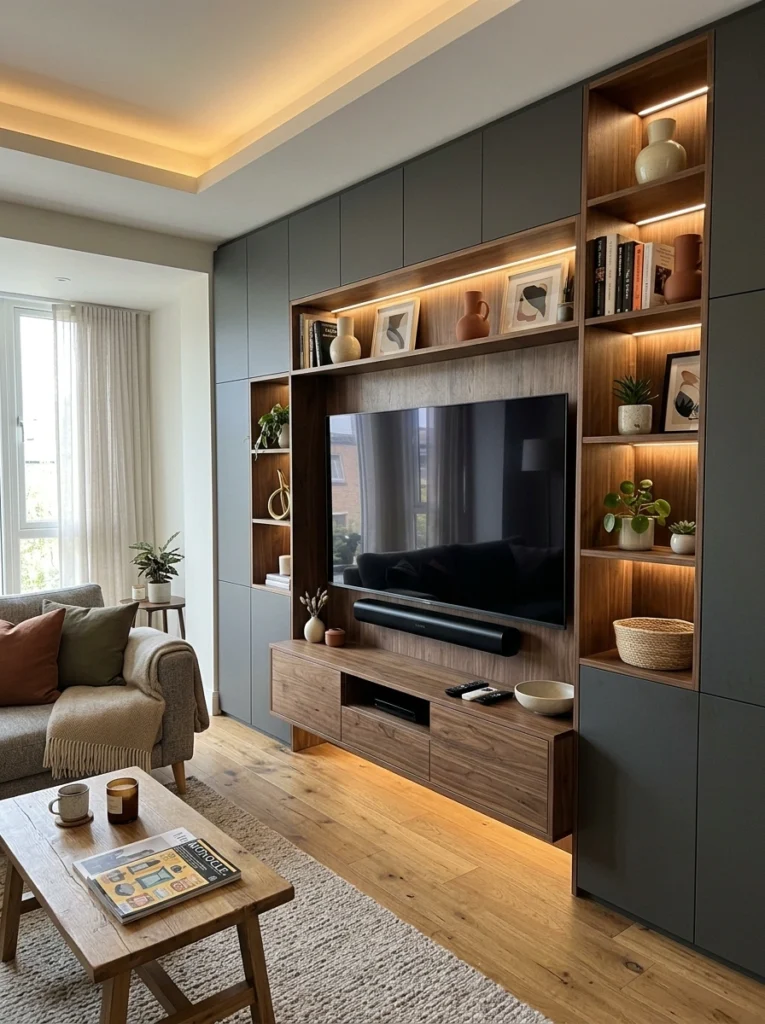
To make a room feel grand, take your design all the way to the ceiling. Full-height feature walls act as the backbone of modern living rooms because they establish immediate proportion and symmetry. This design naturally anchors your seating arrangement.
- Styling Integration: Pair a towering feature wall with a low-profile, modular sofa and a plush, oversized rug. This contrast in heights makes the living room feel incredibly grounded.
3. Warm Wood Slat Media Walls
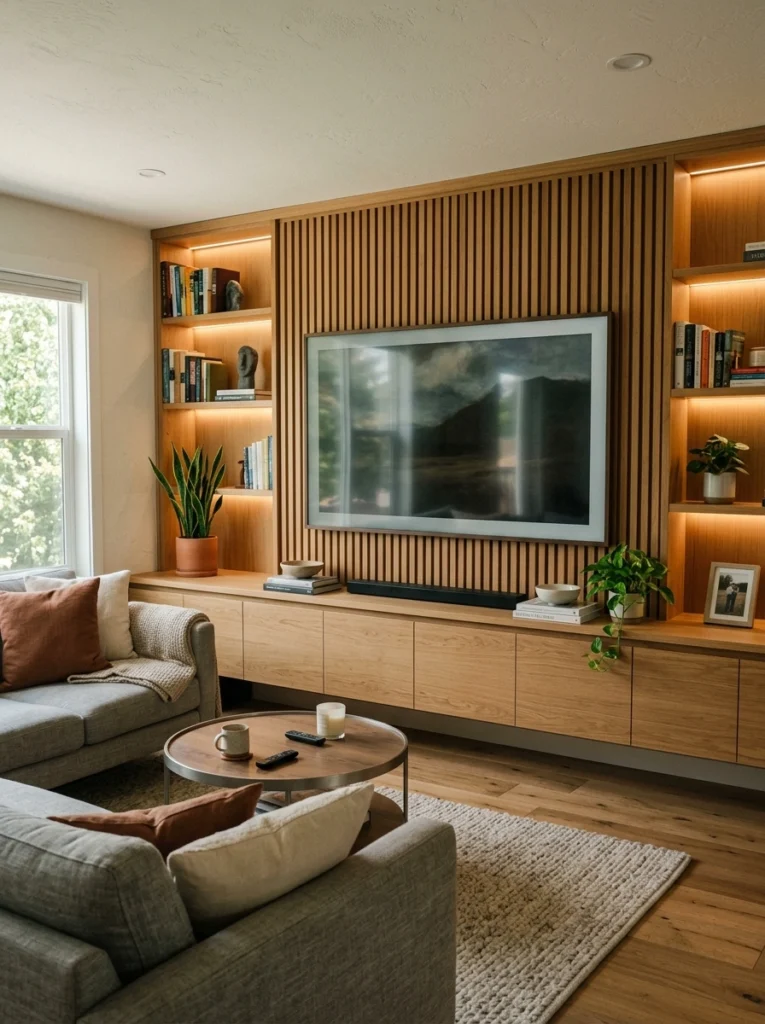
Wood slats bring incredible texture and acoustic benefits to a space. They are also fantastic for budget-friendly DIY media wall upgrades because pre-made acoustic wood panels are relatively cheap and easy to install over a weekend.
- Lighting Integration: Run thin LED strips vertically between the slats or along the outer edges to highlight the 3D texture. The result is a gorgeous, cozy living room entertainment wall.
4. Marble Luxury Backdrops
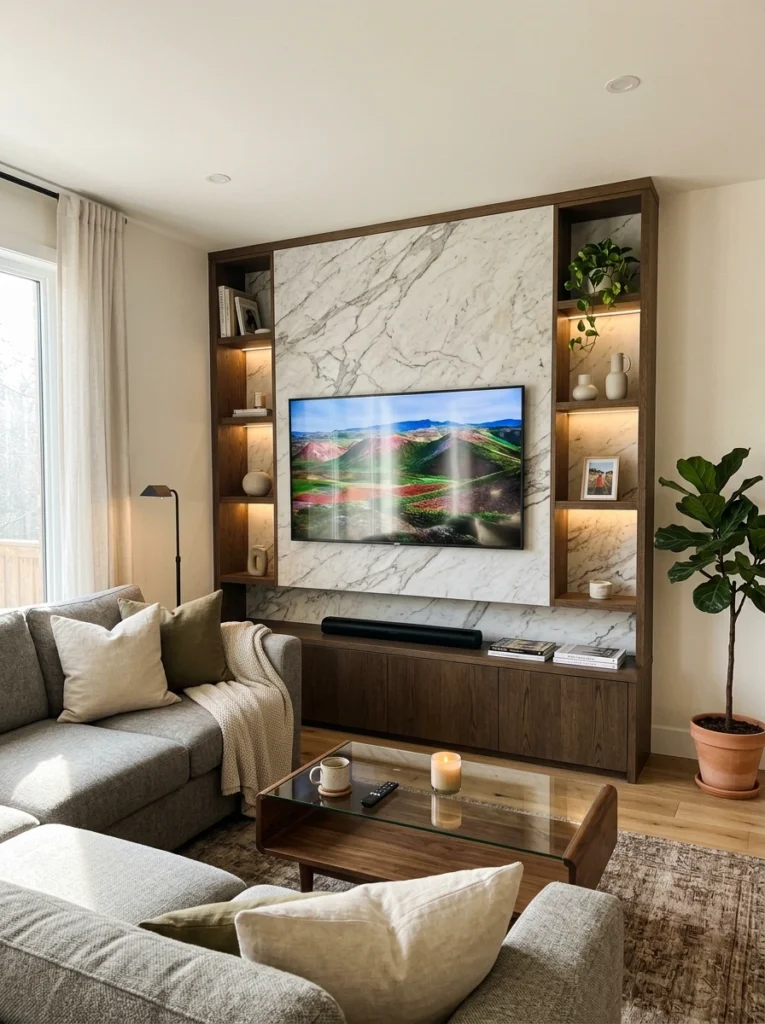
If you want undeniable elegance, look into premium custom-built solutions featuring large-format porcelain or real marble slabs. A marble luxury backdrop turns a standard TV area into a high-end architectural statement.
- Lighting Integration: Use ceiling-mounted wall washers directed at the marble. This highlights the natural veining in the stone and provides a sophisticated hotel-lobby vibe.
5. Matte Black Entertainment Units
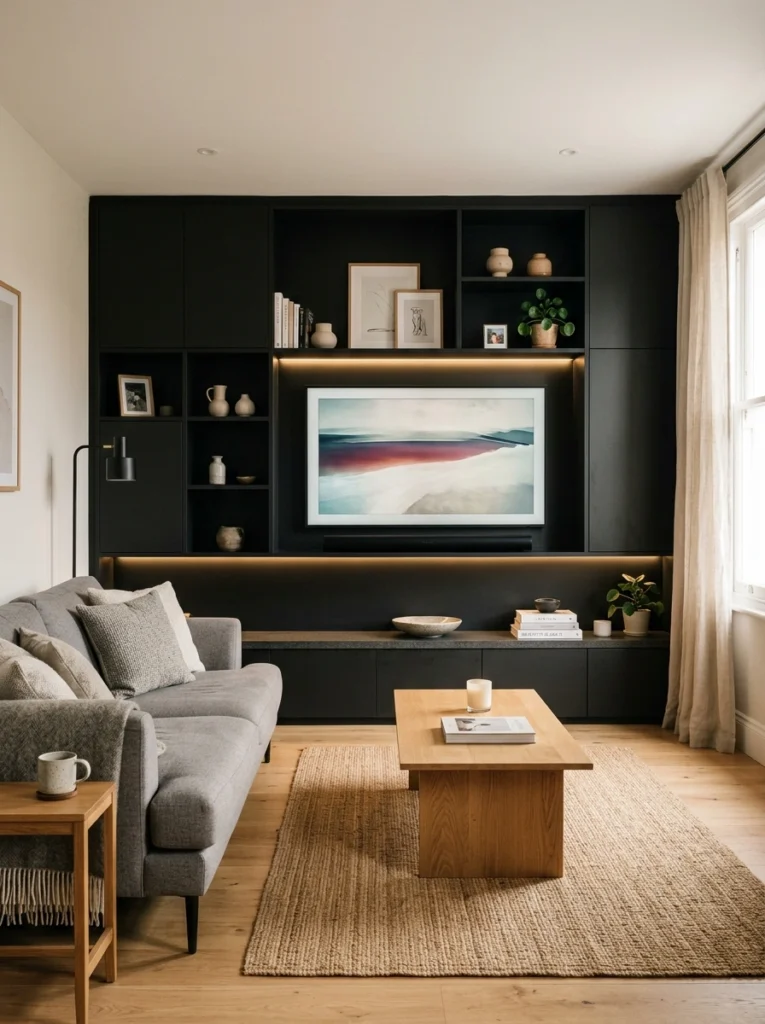
Dark walls recede, making the TV practically disappear when it’s turned off. Matte black entertainment units are incredibly stylish, especially when contrasted with warm leather sofas and rich walnut flooring.
- What NOT to do: Avoid harsh screen glare. Matte finishes are excellent because they absorb light instead of bouncing it around the room. Don’t ruin this effect by placing a bright, unshielded lamp directly opposite the screen.
6. Minimalist White Built-Ins
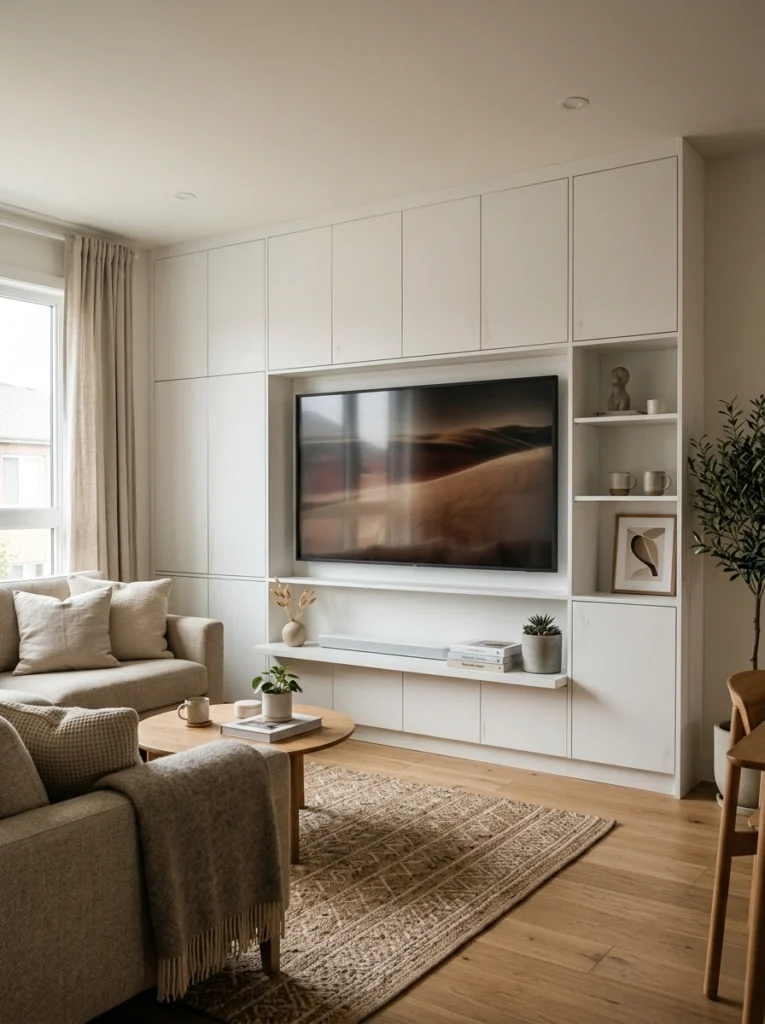
Sometimes, less really is more. Minimalist white built-ins offer a pristine, airy look. The visual impact of these sleek built-ins are huge, especially in rooms that get plenty of natural sunlight.
- Storage Focus: Emphasize closed cabinetry on the lower half. By hiding your gaming consoles and kids’ toys behind push-to-open flat white doors, you maintain that flawless, contemporary media unit aesthetic.
7. Industrial Concrete Media Walls
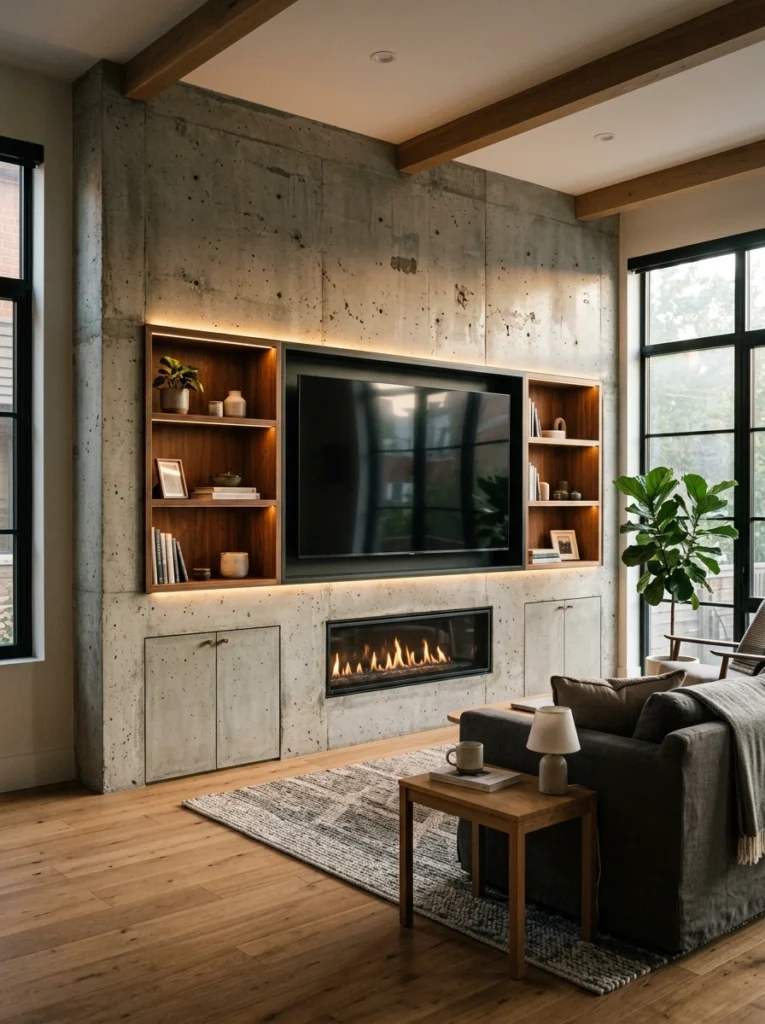
For a more urban, loft-inspired look, industrial concrete media walls deliver fantastic raw texture. You can achieve this with micro-cement or textured concrete wallpaper.
- Styling Tip: Concrete can feel a bit cold. Soften the room by integrating heavy, textured fabrics—like a thick wool rug and linen drapery—right next to this built-in TV wall design.
8. Glass Shelving Systems
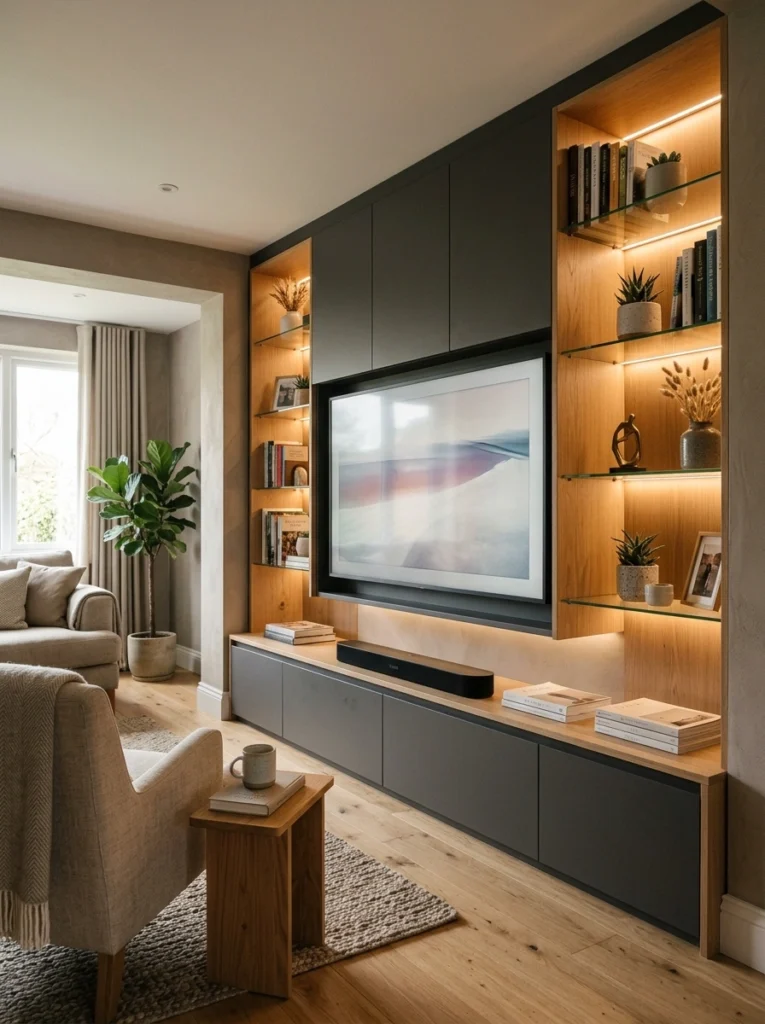
Integrating glass brings a sense of lightness to heavy cabinetry. Glass shelving systems flanking the central TV area look incredibly chic, especially when displaying curated art or glassware.
- What NOT to do: Do not fall victim to cluttered shelves. Glass offers zero hiding spots. Use these shelves strictly as display niches for a few select items, not as a dumping ground for remote controls and mail.
9. Hidden Cabinet Walls
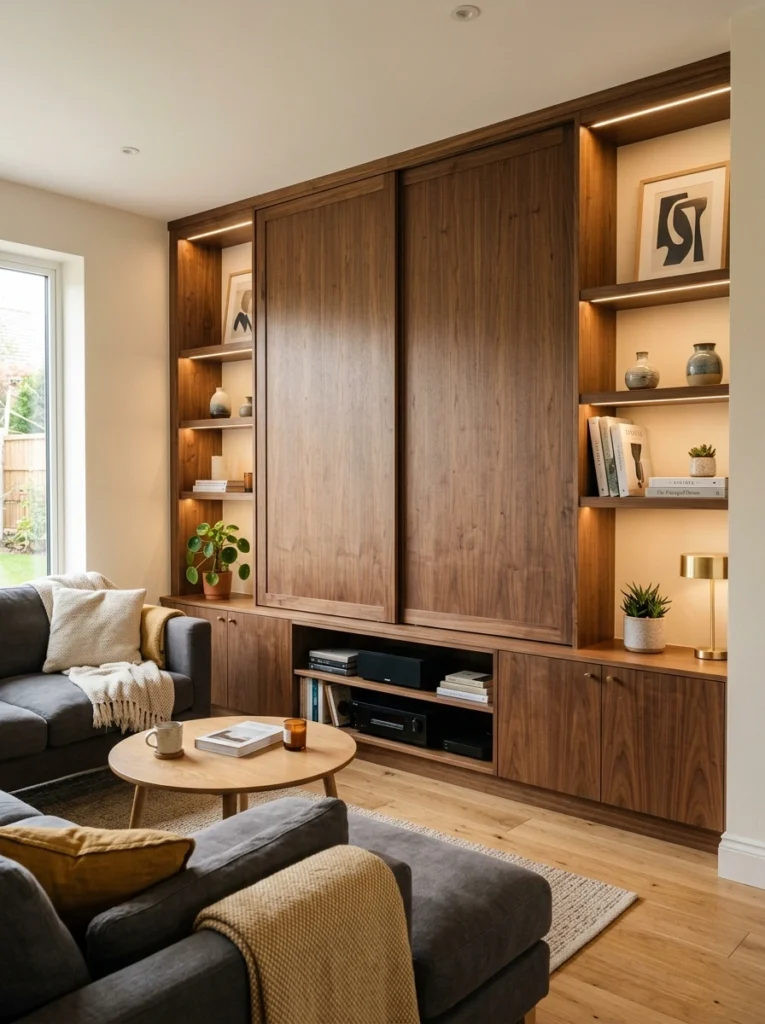
Love technology but hate looking at it? Hidden cabinet walls use sliding panels or pocket doors to completely conceal the TV and media equipment when not in use.
- Storage Focus: The magic here is the internal cable management systems and concealed wiring. Everything needs a dedicated channel so the sliding doors don’t catch on tangled cords. It is the ultimate sleek media storage wall.
10. Backlit Display Walls
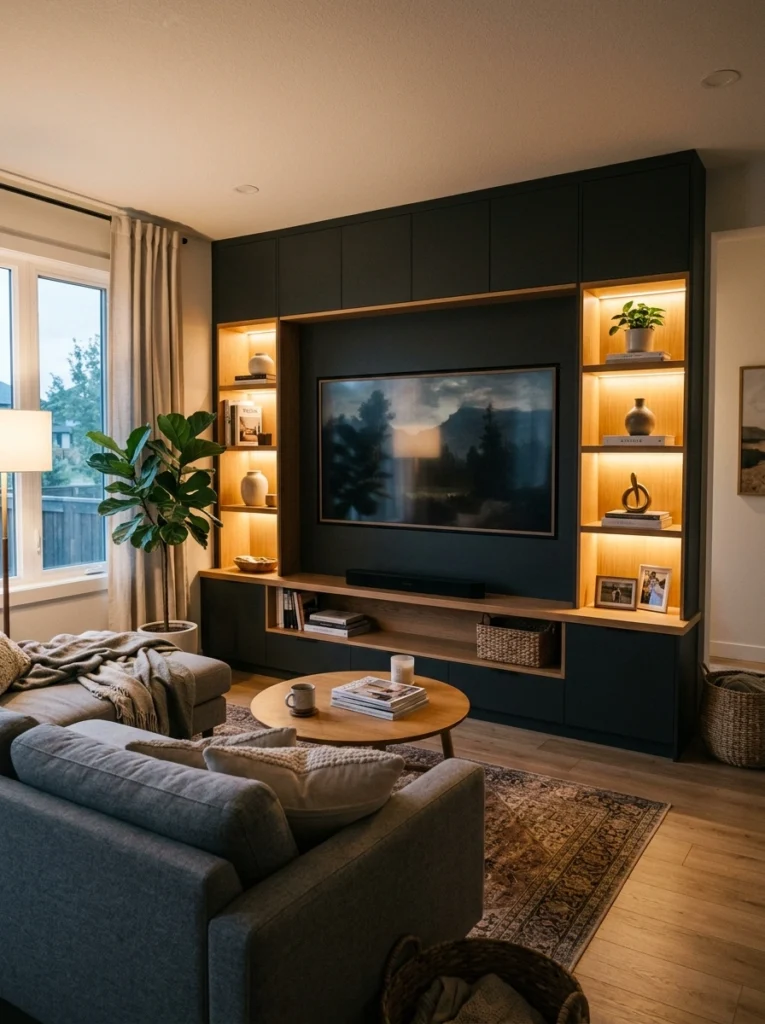
Lighting shouldn’t be an afterthought—it should be part of the architecture. Backlit display walls use frosted acrylic or stretched translucent fabric behind the TV to create a massive, soft light box.
- Lighting Integration: Incorporate backlit panels that provide ambient glow effects. This reduces eye strain during movie nights and adds a futuristic, moody vibe to the room.
11. Modular Shelving Hybrids
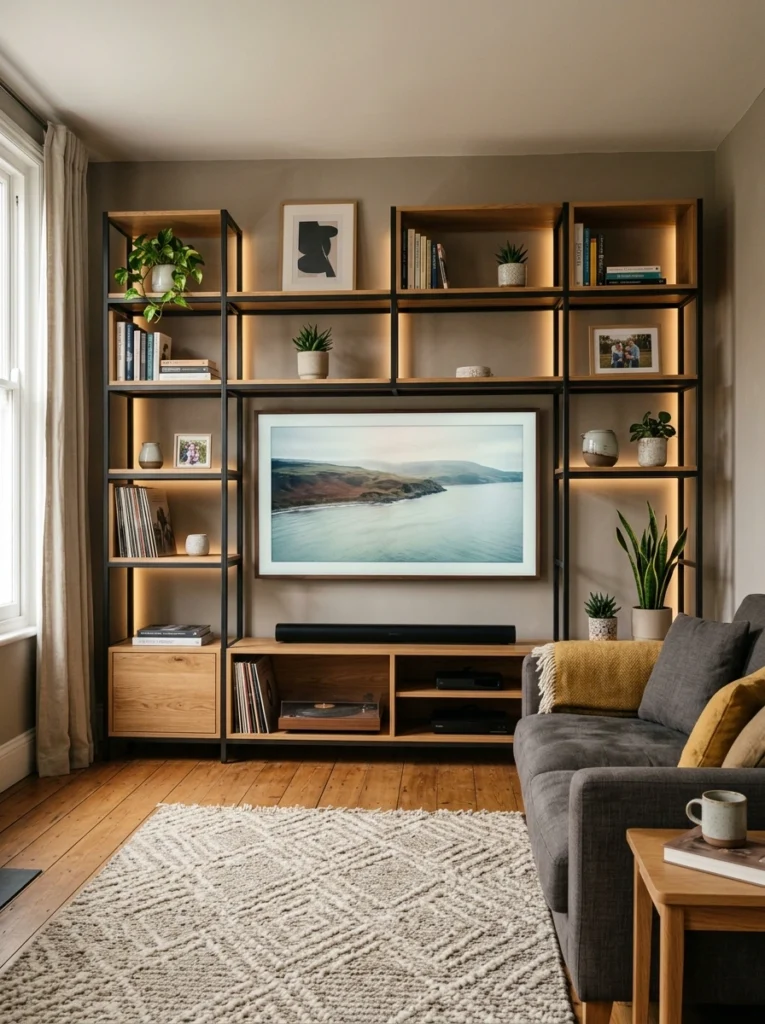
If you like to change your mind, modular shelving is the way to go. These systems use a fixed wall-mounted grid where you can swap out shelves, cabinets, and the TV bracket as your needs evolve.
- Large Room Strategy: In a large open-plan space, modular systems are perfect because they can stretch horizontally across a massive wall, seamlessly transitioning from a modern TV feature wall into a home library or workspace.
12. The Asymmetrical Art Wall
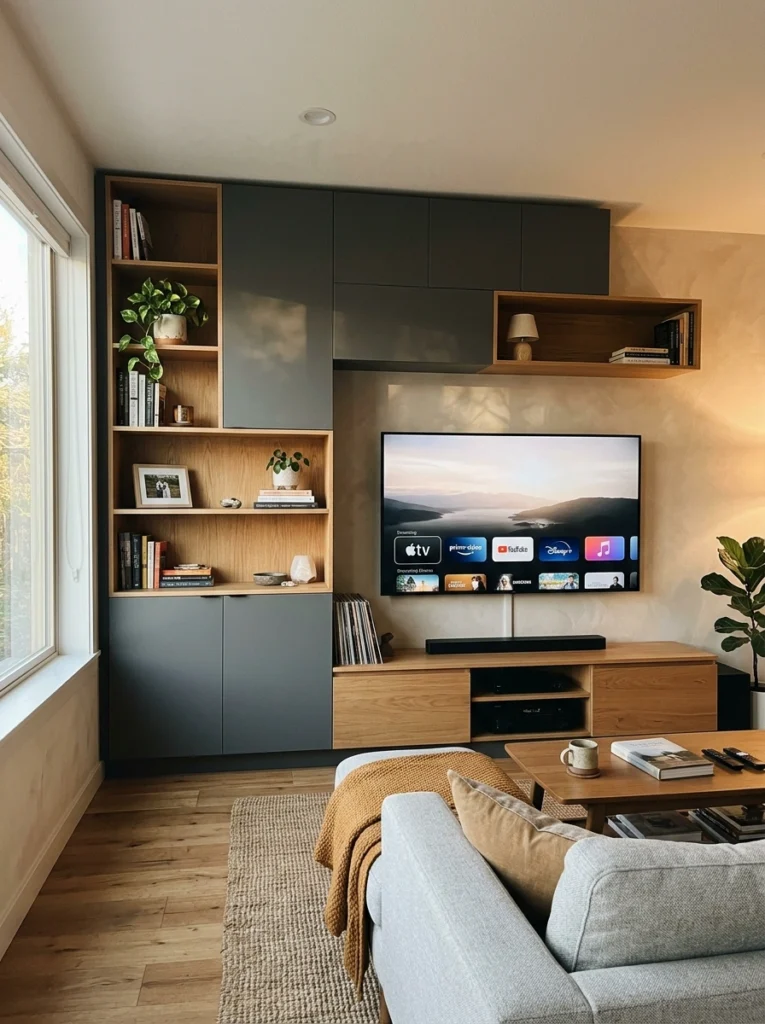
Who says the TV has to be dead center? An asymmetrical layout places the TV to one side, balanced by a bold piece of art or a tall plant on the other. Even adding just one asymmetrical shelf make a huge difference in breaking up a boring, boxy room.
- Design Tip: This look works best when integrated with low, long sofas that stretch past the TV zone, tying the whole uneven arrangement together beautifully.
13. Acoustic Panel Integrations
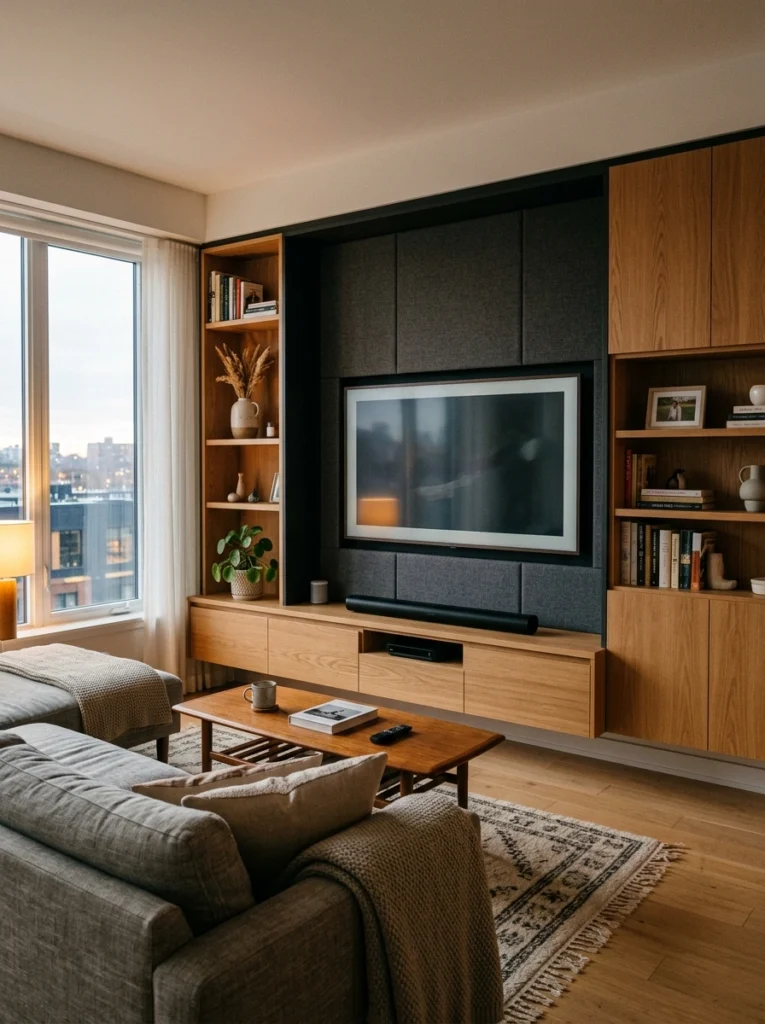
Audiophiles, this one is for you. Integrating fabric-wrapped acoustic panels into your media wall design ideas doesn’t just look luxurious; it radically improves the sound quality of your soundbar or home theater system by dampening echoes.
- Styling Trick: Match the fabric of the acoustic panels to your window treatments or throw pillows for a highly customized, decorator-finished look.
14. Budget-Friendly Faux Chimney Breast
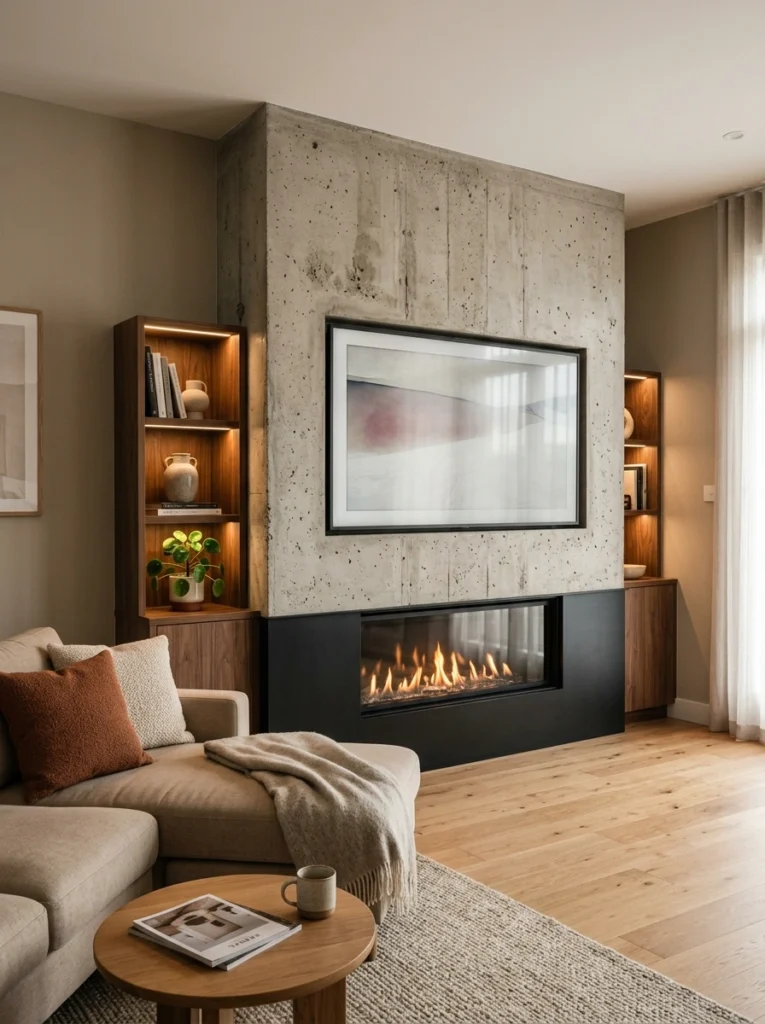
You don’t need a real fireplace to get that classic hearth feel. Building out a faux chimney breast using standard drywall and timber framing gives your TV a dedicated structural home. Add an electric linear fireplace below for ambiance.
- What NOT to do: Avoid poor viewing height alignment. The biggest mistake people make with fireplaces (real or faux) is mounting the TV too high. Keep the center of the screen as close to seated eye level as possible!
15. The Wrap-Around Corner Unit
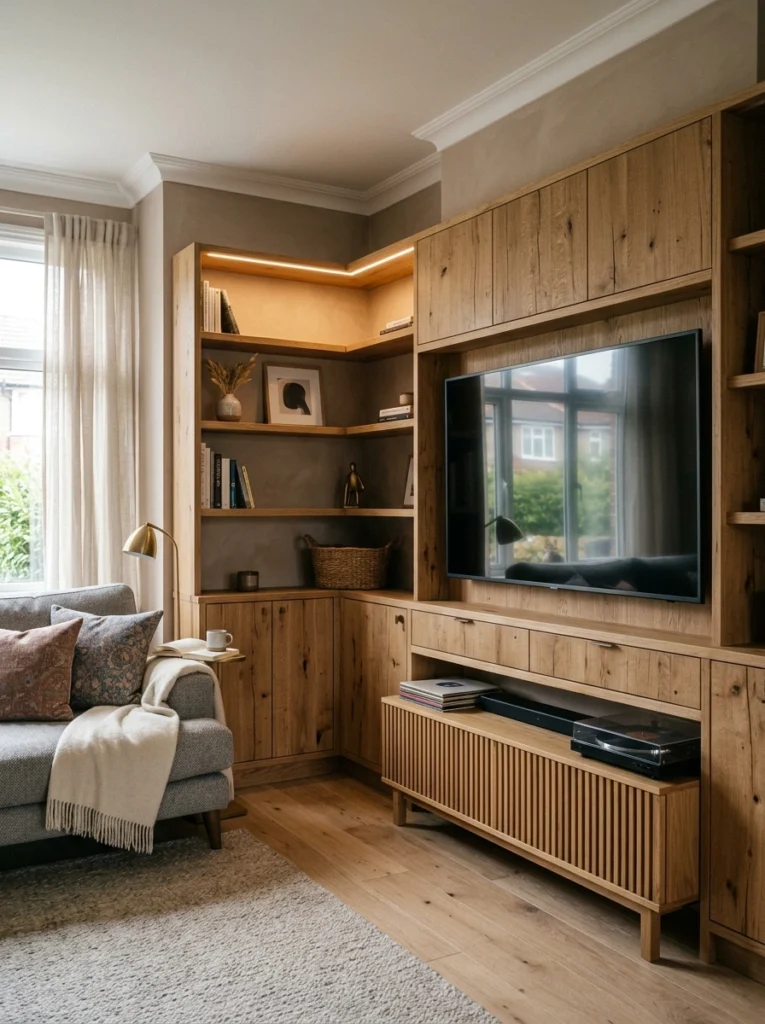
Have an awkward L-shaped living room? Don’t fight the corner—embrace it. A wrap-around unit curves or angles around the corner, utilizing dead space for extra storage.
- Open-Plan Strategy: This is genius for open-concept homes. The media wall can face the living area, while the shelving wraps around into the dining area, visually connecting the two zones.
16. Two-Tone Contrast Walls
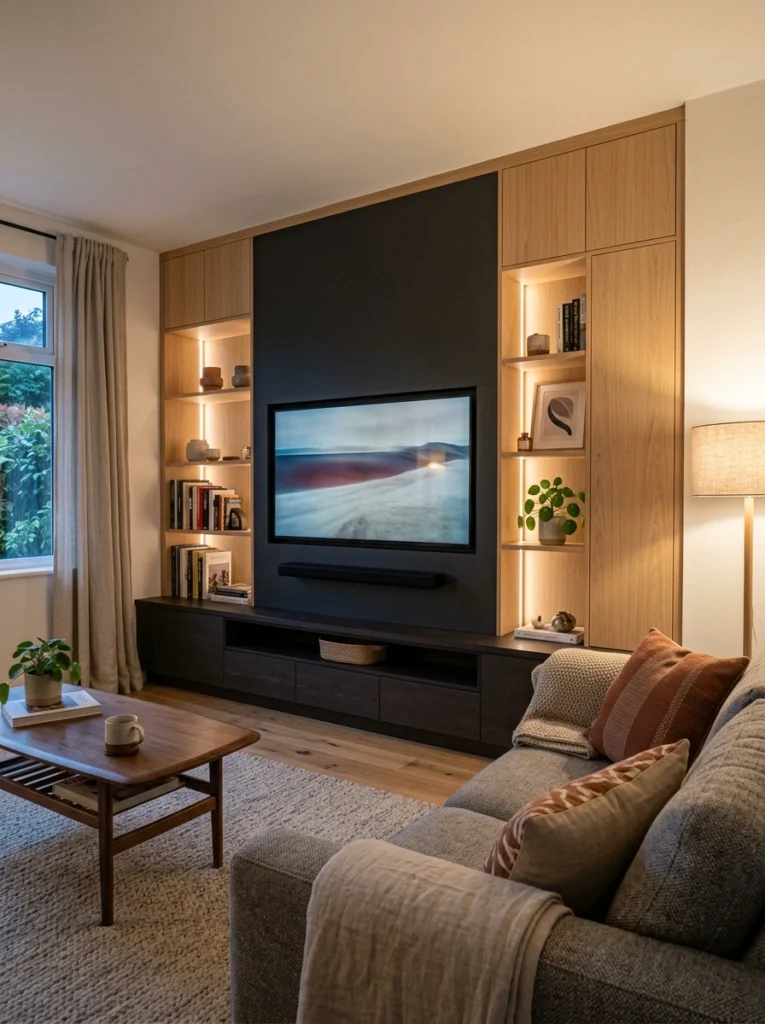
Paint is powerful. Create a media wall by painting a deep, moody color directly behind the TV, and framing it with lighter, contrasting cabinetry or floating shelves on the perimeter.
- Lighting Integration: Use indirect lighting behind the lighter framing elements to make the dark central TV area recede further, creating a stunning illusion of depth.
17. The Cinema-Dark Alcove
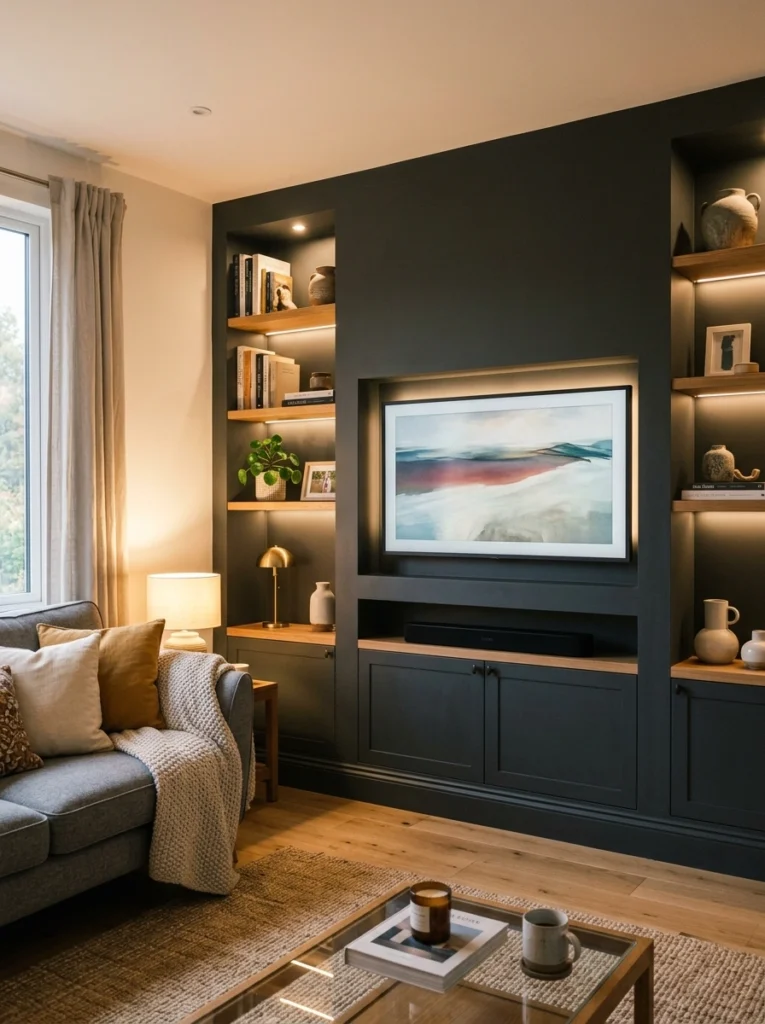
If your living room has an existing alcove, paint the entire nook—walls, ceiling, and trim—in a flat, dark shade like charcoal or navy. Build custom shelves right into the recess.
- What NOT to do: Absolutely no visible cables. When you create a dark, seamless alcove, a single white power cord dangling down will instantly ruin the cinematic magic. Route everything behind the drywall.
Final Thoughts
Stop thinking of your media center as just a place to park a screen. These structures are comprehensive architectural systems that define your living room’s entire identity. They dictate the flow of the room, manage the chaos of modern technology, and establish the baseline for your home’s comfort and organization. By treating this zone as a permanent design feature rather than an afterthought, you instantly elevate the perceived value of your space. Whether you are framing it with rich textures or streamlining it with sleek concealed storage, a thoughtful approach ensures your entertainment hub looks absolutely incredible even when the screen is turned off.