
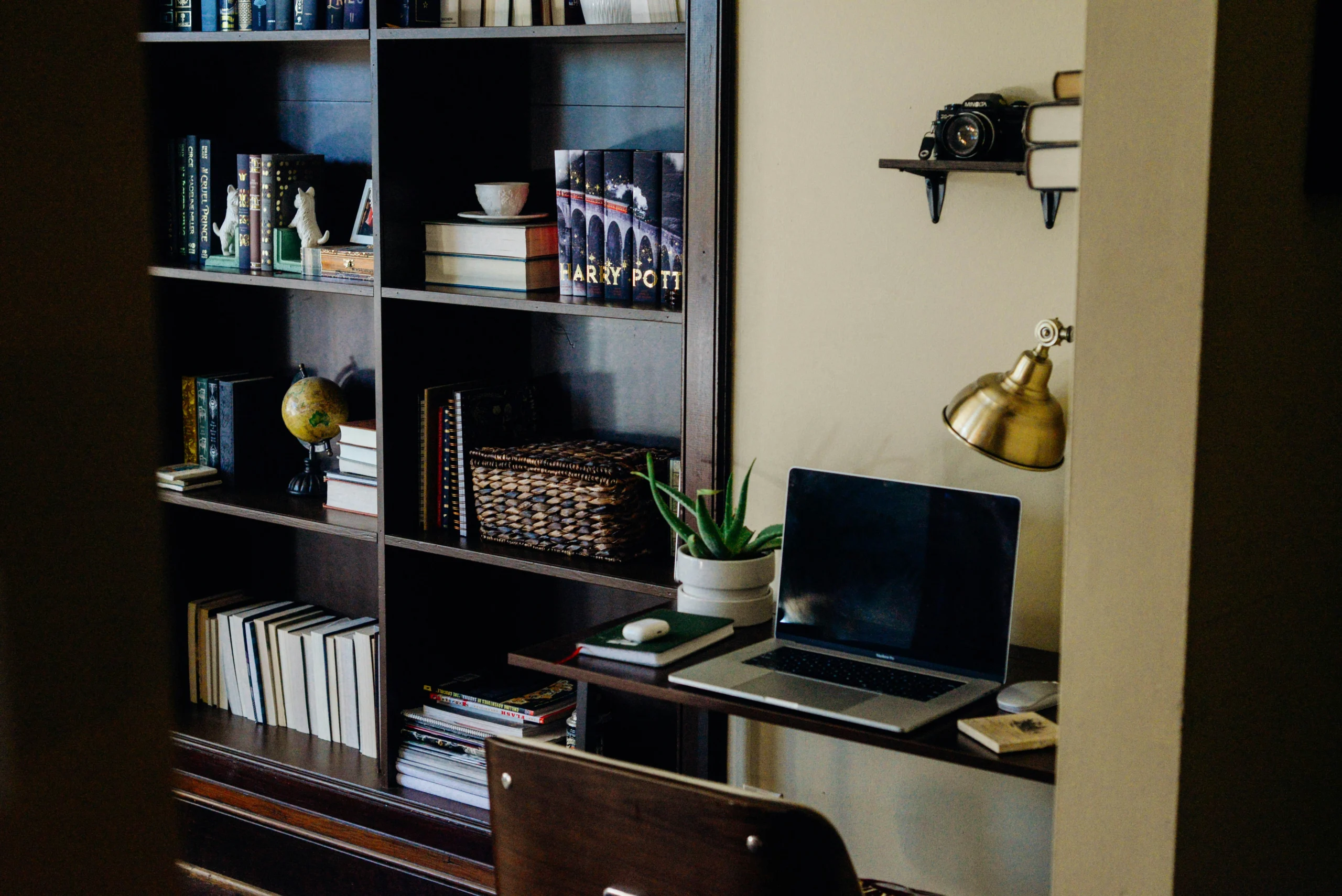
Hi there! I’ve been doing a deep dive into interior styling lately, and I realized something—great design isn’t just about the furniture you buy, but how you arrange the little things. It’s all about creating moments in your home that feel curated but lived-in. I gathered some inspiration that ranges from minimalist kitchen vibes to lush, plant-filled corners. Whether you are working with a tiny nook or a full wall, here are some easy ways to get these specific looks in your own place.
1. Minimalist Pantry
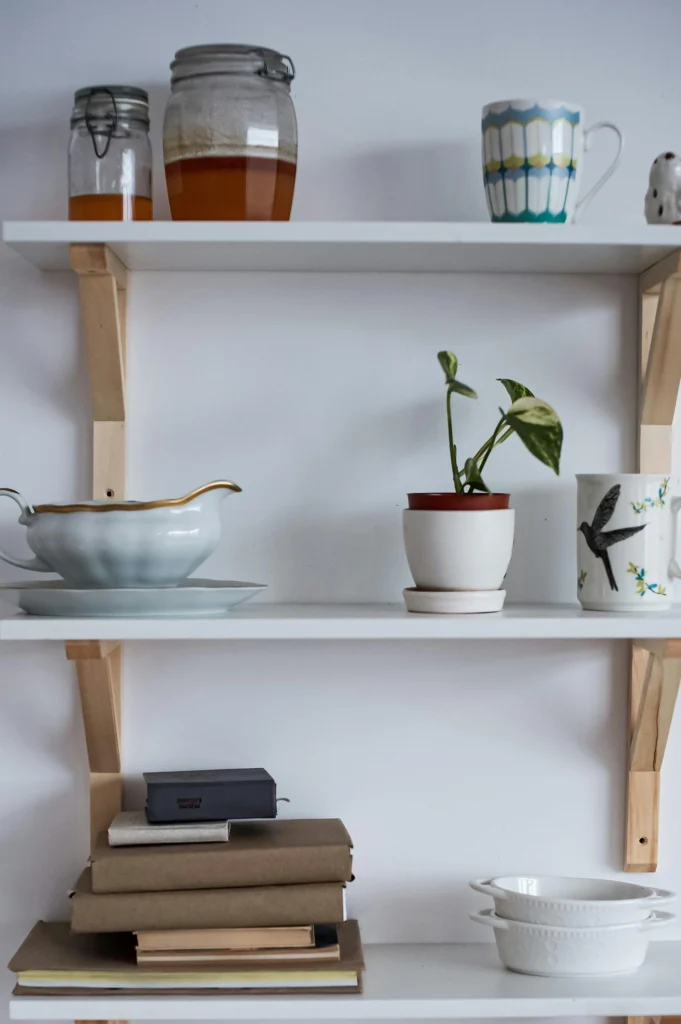
Install simple, white floating shelves with visible wooden brackets to create an open, airy framework. Decant your pantry staples into matching glass jars with classic clamp lids for instant visual uniformity. Add a single, small trailing plant in a ceramic pot to break up the sterile look with a touch of life. Stack a few neutral-colored books horizontally to create varying heights. Keep the spacing generous between items—negative space is the secret ingredient here to make it feel organized rather than empty.
2. Creative Corner
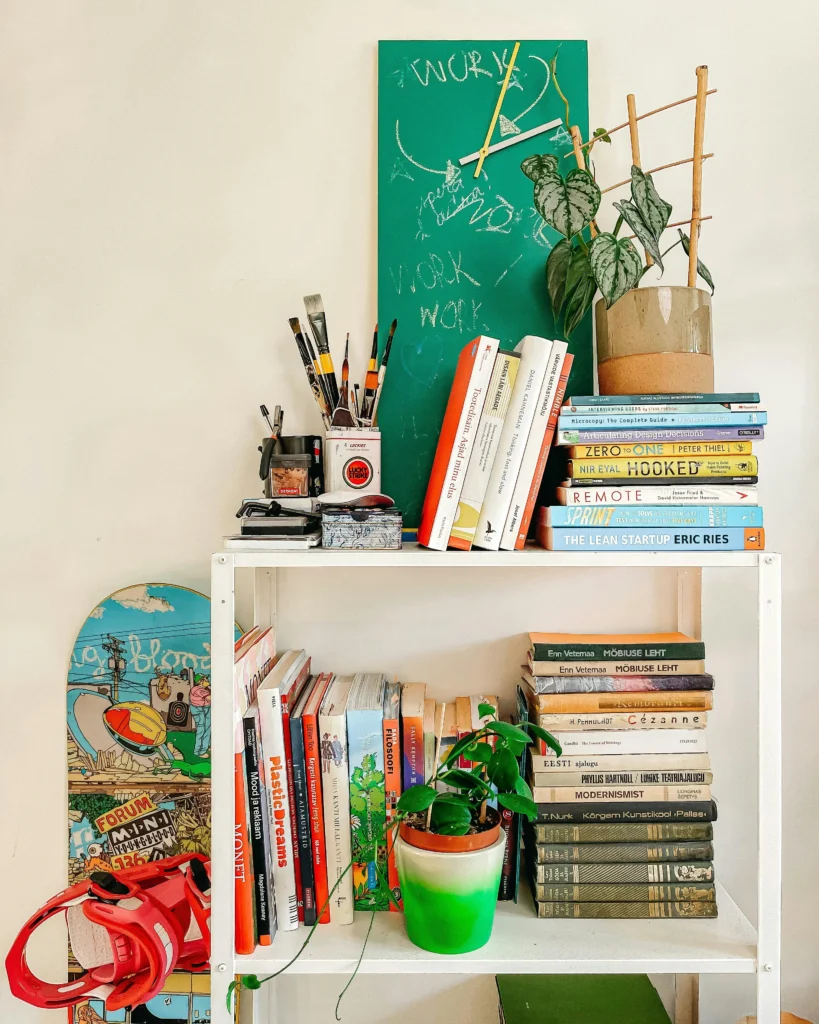
Paint a DIY chalkboard panel behind your shelving unit to create a functional, creative backdrop. Stack colorful books horizontally to act as makeshift risers for other objects. Gather art supplies like paintbrushes and pens in a vintage tin or ceramic mug to keep tools accessible yet styled. Add a climbing plant on a small wooden trellis to bring vertical height and organic texture to the arrangement. Don’t be afraid of density here; embrace the eclectic, “busy” aesthetic of a working studio space.
3. Modern Dining

Select a large, open-concept shelving unit with a black metal frame and light wood shelves to anchor the room. Pair this with a solid light oak dining table and modern, upholstered grey chairs for a balanced mix of textures. Hang a cluster of glass pendant lights at varying heights to create a warm, glowing focal point. Style the shelves with oversized design books and unique ceramic vases. Keep the color palette neutral—focus on woods, blacks, greys, and touches of deep green.
4. Curated Display
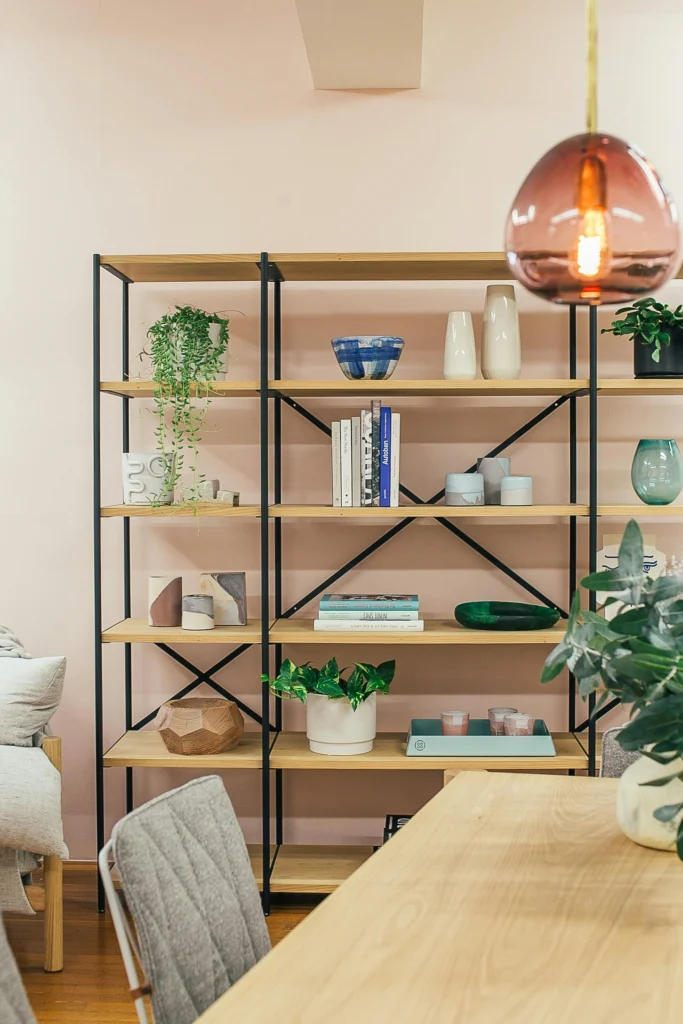
Incorporate a mix of textures by pairing matte ceramics with glossy glass vases. Place a cascading plant, like a string of pearls or ivy, on a high shelf to draw the eye upward and soften the metal lines. Group your decor items in odd numbers—threes or fives work best for visual balance. Use a decorative tray to corral smaller items like candles or coasters. Leave some shelf sections entirely open or sparsely populated to maintain that sophisticated, gallery-like atmosphere.
5. Compact Nook
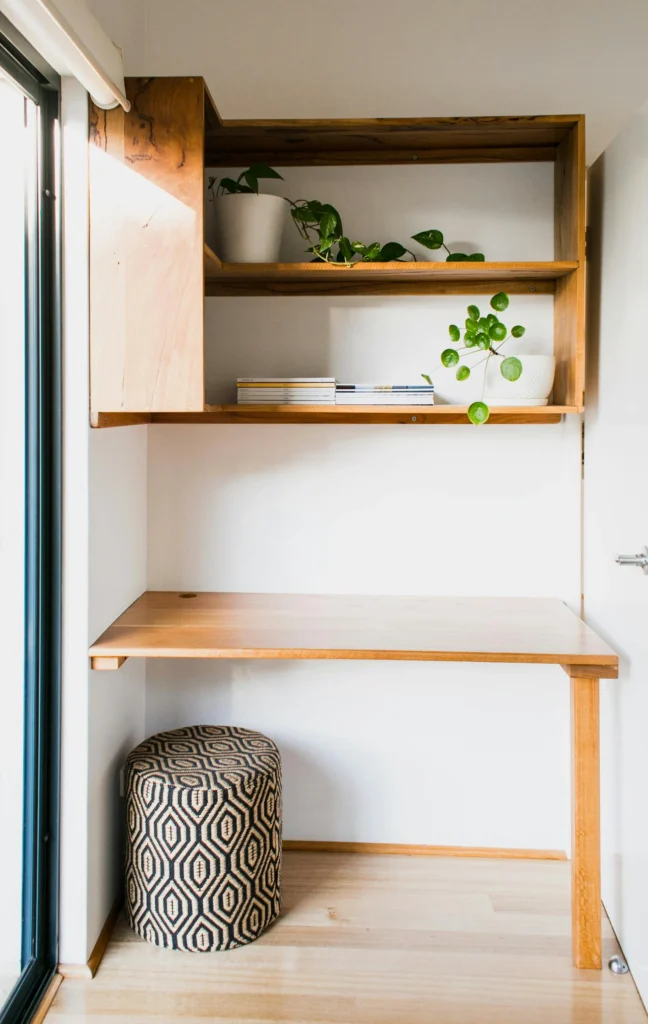
Construct a custom wooden floating desk into a small alcove to maximize every inch of square footage. Install overhead shelving in the exact same wood tone for a seamless, built-in appearance. Skip the bulky office chair and choose a cylindrical, patterned ottoman that tucks completely under the desk when not in use. Keep the desktop surface bare to emphasize the clean architectural lines. Add a single potted plant on the top shelf to bring a breath of nature into the recessed space.
6. Workspace Essential

Position your laptop centrally on the wooden surface to clearly define the workspace zone. Stack two or three inspiration books on the left side for quick reference and visual weight. Use a simple, textured coaster for your white ceramic mug to protect the wood while adding a homey touch. Soften the seating area with a colorful, graphic throw pillow on your stool. Ensure your lighting is adequate by utilizing natural light from a nearby window to keep the mood bright and productive.
7. Focused Study
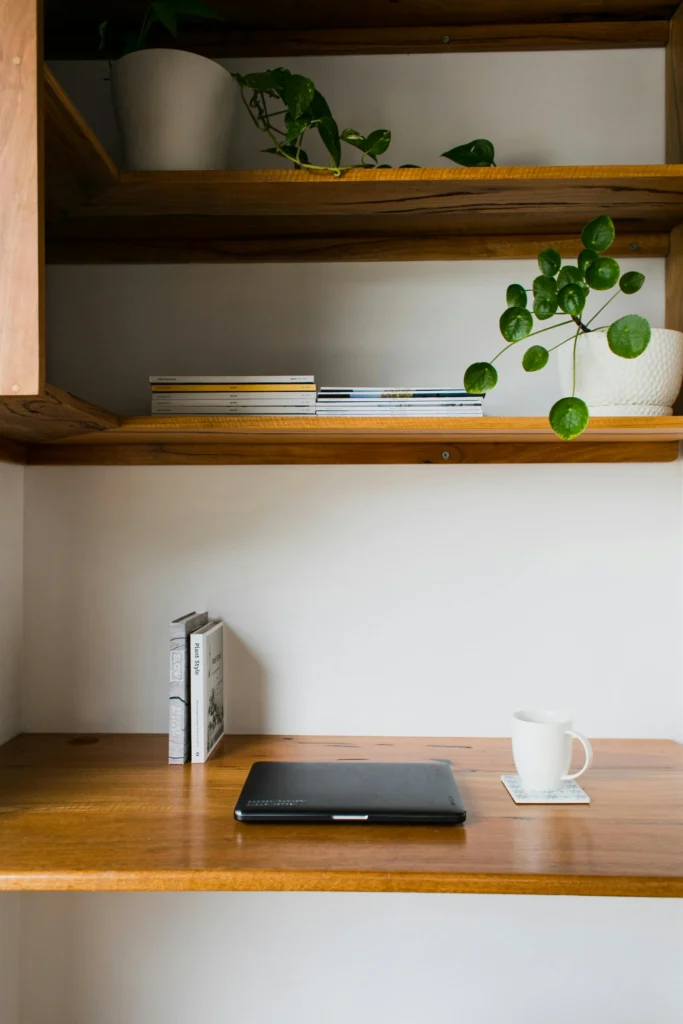
Curate a distraction-free zone by keeping the desktop strictly for essentials. Stand a few hardcover books vertically against the wall for easy access without cluttering the surface. Select a minimalist white planter with a unique geometric texture for your greenery. Use a closed laptop or a slim notebook to maintain the sleek horizontal lines of the desk. Let the natural grain of the wood be the star of the show by avoiding tablecloths or large desk mats.
8. Cozy Organization
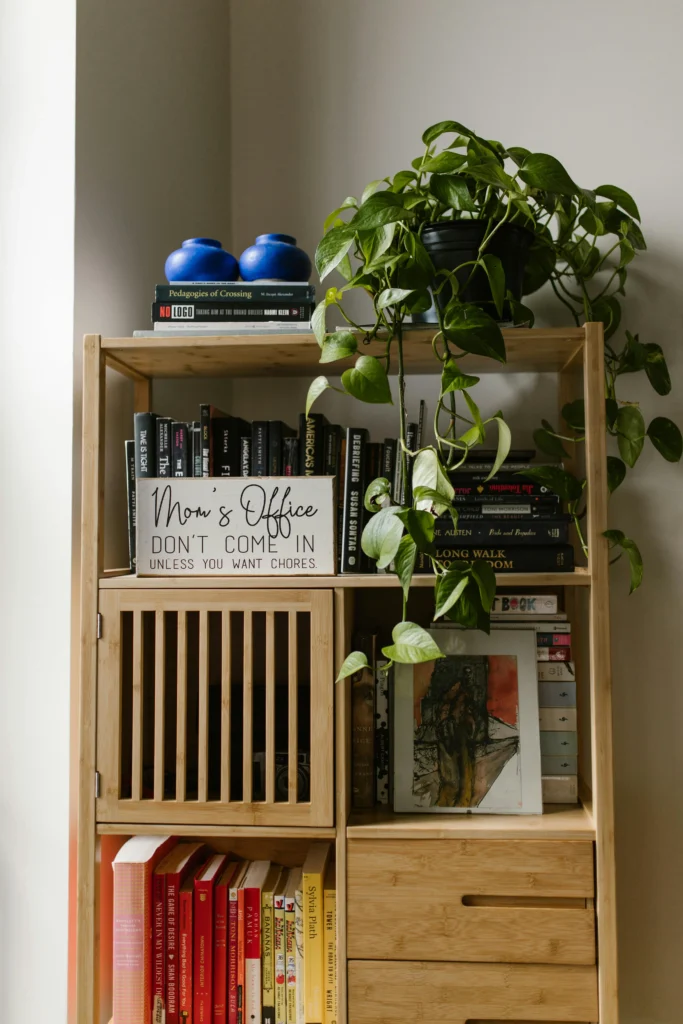
Choose a sustainable bamboo shelving unit that features a mix of open shelves and closed cabinetry. Place a fun, framed quote sign at eye level to add personality and a bit of humor to the room. Let a lush pothos plant trail down from the top shelf, draping specifically over the books below to soften the edges. Organize books both vertically and horizontally to add visual interest. Use the bottom drawers to hide away messy chargers and papers, keeping the visual clutter low.
9. Boho Hanging
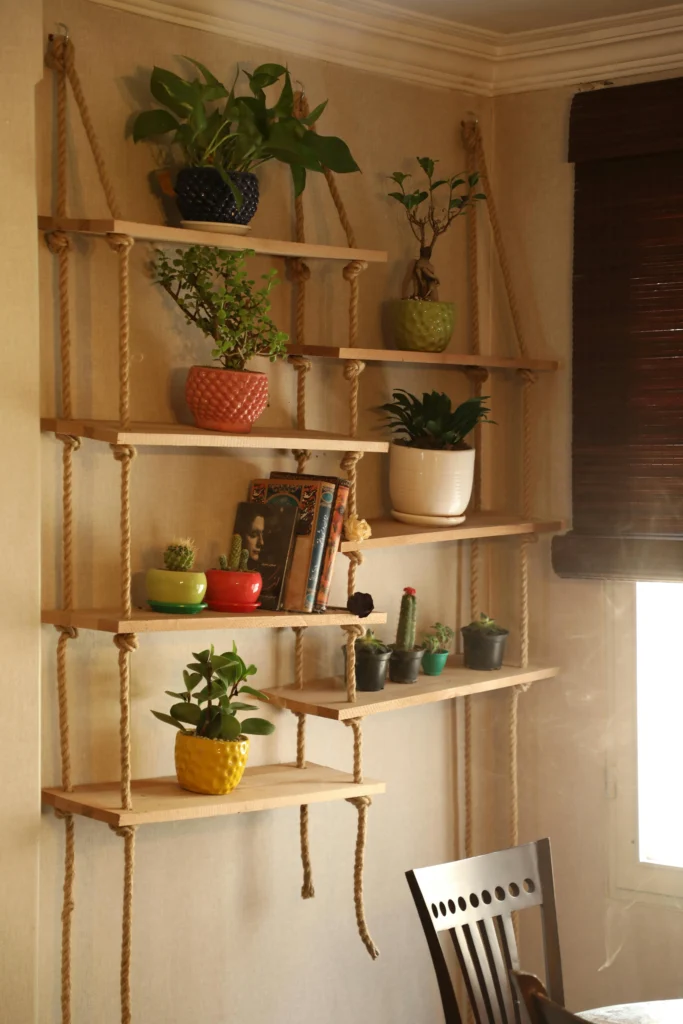
Hang rustic wooden shelves suspended by thick jute rope to instantly add a bohemian vibe to your wall. Mount them against a textured or fabric-wallpapered surface to add depth and warmth. Fill the shelves with a variety of small potted succulents and cacti in mismatched, colorful pots. Lean a vintage book or two against the ropes for a casual look. Create a “living wall” effect by varying the heights of your plants and mixing trailing varieties with upright ones.
10. Vertical Garden
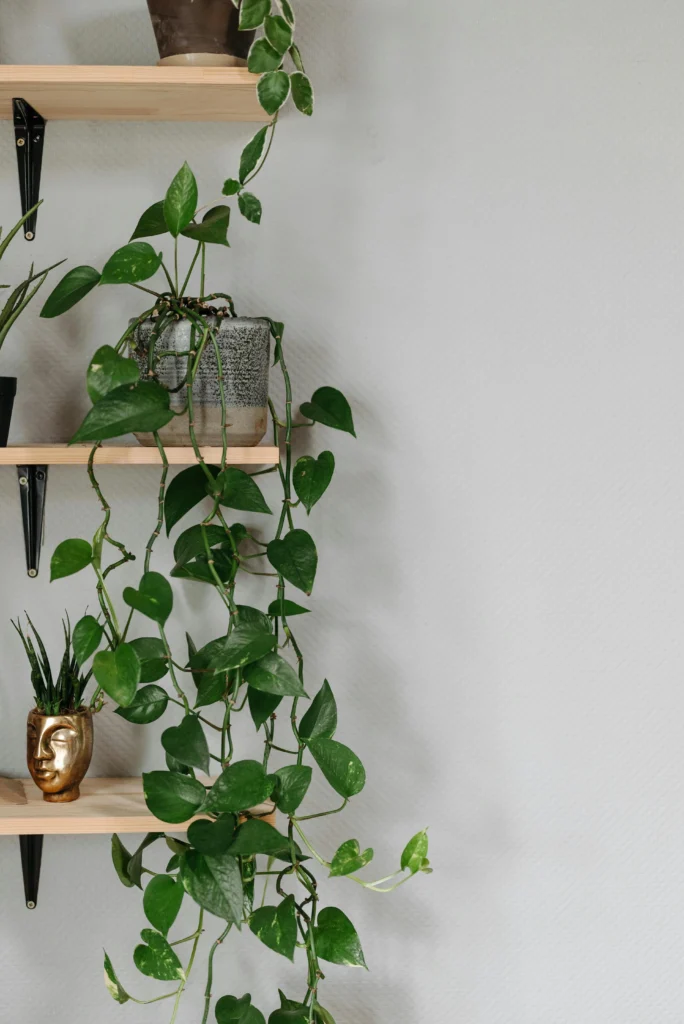
Install simple light wood planks with black metal brackets for a sturdy, industrial foundation. Dedicate these shelves entirely to greenery to create an indoor jungle effect. Use a metallic accent, like a brass face planter, to add a touch of shine and character among the leaves. Allow fast-growing vining plants to hang freely, creating a natural curtain against a pale grey wall. Keep the styling monochromatic—stick to wood, metal, and shades of green to let the plants speak for themselves.
Conclusion
So, there you have it! Styling your home doesn’t have to mean a complete renovation or spending a fortune at a furniture store. As you can see from these examples, it’s really about being intentional with what you already have. It’s about noticing the play between a hard ceramic vase and a soft, trailing vine, or the way a stack of books can bring color to a boring corner.
I hope these breakdowns help you look at your own shelves and desks a little differently. Maybe you’ll move that plant from the windowsill to the top shelf, or perhaps you’ll finally declutter that desk to let the wood grain shine through. The goal isn’t perfection; it’s creating a space that feels good to be in. Start small—pick one shelf or one corner today and try out one of these formulas. You might be surprised at how much a simple “place this here, move that there” approach can change the entire mood of a room. Let me know which look is your favorite!