
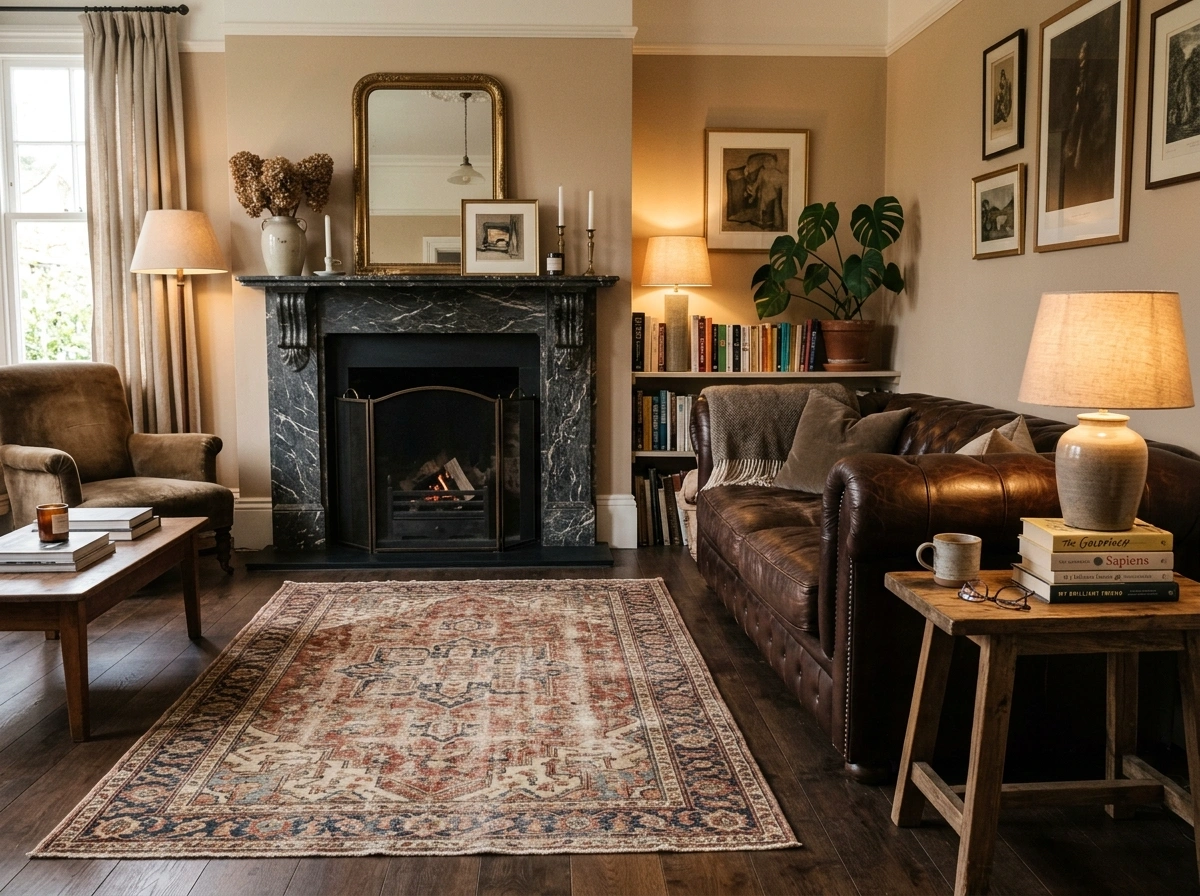
A fireplace is the undisputed heart of a living room—a natural focal point that radiates warmth and character. But what about the floor space in front of it? Too often, it’s a design dead zone, leaving your beautiful fireplace feeling a bit stranded. The right area rug can solve this instantly, grounding the seating area and making the entire room feel cohesive and intentionally designed.
But finding one that looks high-end without the punishing price tag is the real challenge. That’s why we’ve put together this guide to 9 Smart Rugs in Living Room Fireplace Ideas That Look Expensive, filled with actionable tips to elevate your space.
1. The Quietly Confident Neutral Woven Rug
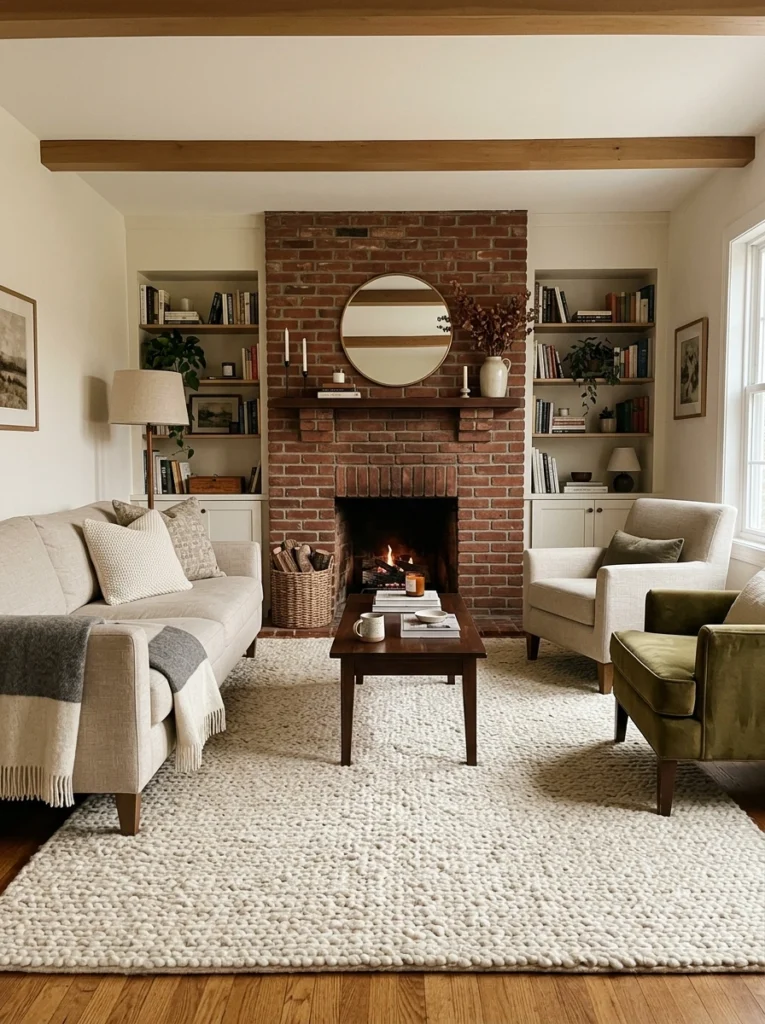
Forget boring beige. We’re talking about a rug with so much textural interest that it doesn’t need a loud pattern to make a statement. Think chunky weaves, nubby loops, or subtle braided details.
Why it Works: This rug complements, rather than competes with, your fireplace. Its rich texture adds a layer of quiet luxury and warmth, creating a cozy fireplace styling that feels effortlessly sophisticated. It’s the perfect foundation for almost any décor style, from modern farmhouse to coastal chic.
The High-End Trick: Size up! A generously sized rug that allows the front legs of all your furniture (sofa, chairs) to rest on it makes the room feel larger and more luxe. For a large room, aim for at least 18 inches of bare floor between the rug and the walls. In a smaller living room, a rug that fills most of the central floor space works wonders. Its all about creating a unified zone.
- Placement: Ensure the rug stops at least 12-24 inches from the fireplace hearth for safety and visual breathing room.
- Budget Tip: Look for wool-blend or polypropylene rugs that mimic the look of expensive, all-natural wool. The texture is key.
- Avoid: A flat, cheap-looking solid rug. Texture is what creates the expensive feel here.
2. The “Inherited” Vintage-Patterned Rug
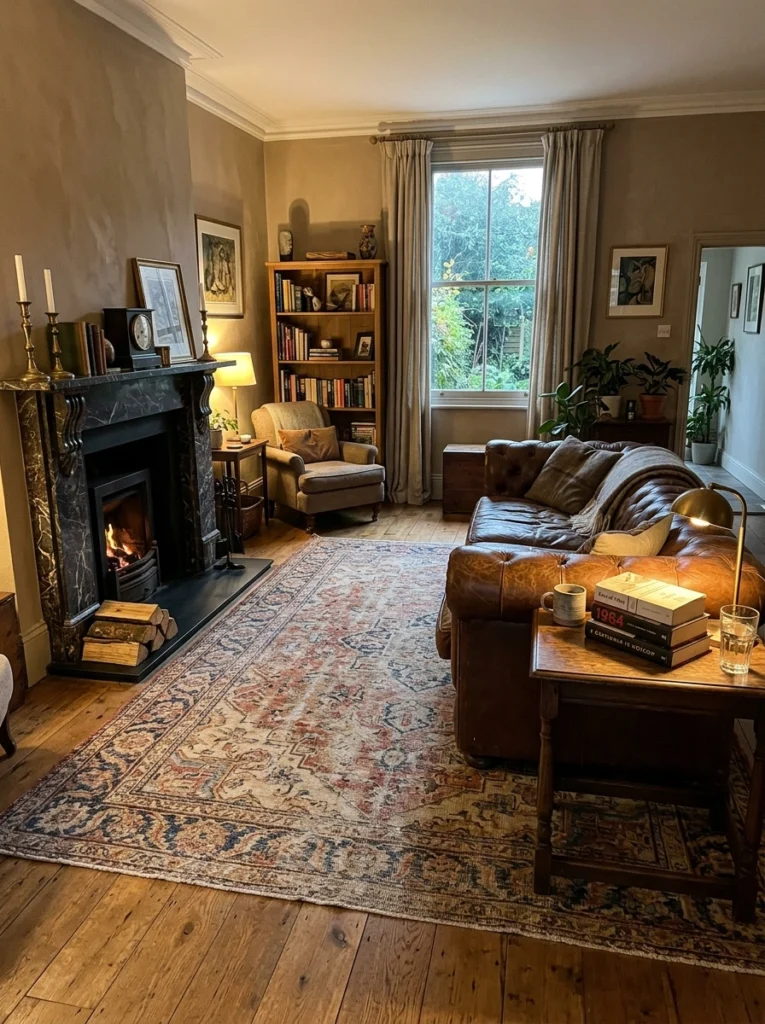
There’s something undeniably chic about a rug that looks like it has a story. A vintage or vintage-inspired rug with a gracefully faded pattern brings character and a sense of history to a room.
Why it Works: The intricate patterns and muted colors are brilliant at hiding minor stains or everyday wear—a huge plus for a high-traffic area. It juxtaposes beautifully against both modern, sleek fireplaces and traditional, ornate ones, creating a timeless, layered look.
The High-End Trick: Opt for patterns in muted, complex color palettes—think dusty rose, slate blue, saffron, and moss green instead of bright, primary colors. These look more like authentic, vegetable-dyed antiques.
- Maintenance: These are often low-pile, making them easier to clean. A quick vacuum is usually all that’s needed. Keep a spark screen on your fireplace to protect the fibers.
- Small Room Strategy: A single, beautiful patterned rug can be all the “art” a small living room needs.
- Avoid: Overly distressed, digitally printed fakes. Look for rugs where the pattern is woven in, not printed on top.
3. The Deep, Plush Solid-Color Rug
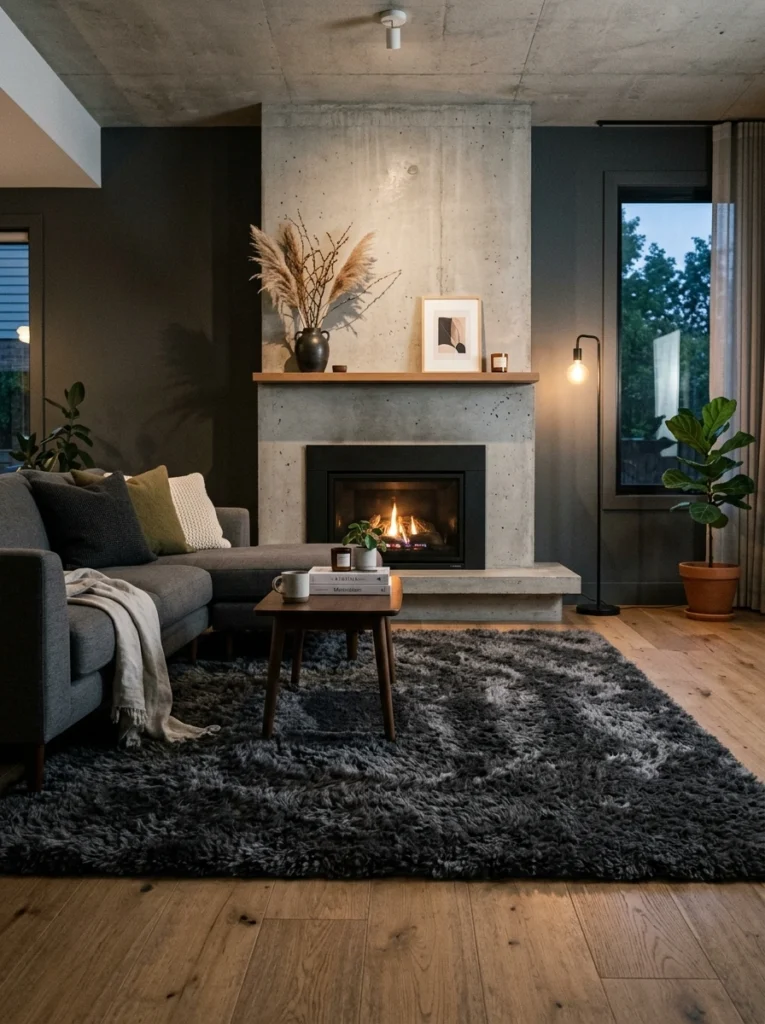
This is pure, unapologetic comfort. A plush, high-pile rug invites you to sink your toes in and relax by the fire. The luxury here isn’t in a pattern, but in the sheer sensory experience.
Why it Works: It adds a massive dose of coziness and sound absorption, making the living room feel quieter and more intimate. Against the hard materials of a fireplace (brick, stone, tile), the soft, deep texture creates a beautiful contrast.
The High-End Trick: Choose a sophisticated, saturated color. Instead of a basic gray, consider a deep charcoal, a rich navy, or an earthy olive green. These colors feel custom and dramatic, creating a zone thats both inviting and stylish.
- Fireplace Safety: This is crucial. High-pile rugs are more flammable. You must place it a safe distance from the hearth (check local codes, but 36 inches is a good rule) and always use a fireplace screen. A non-flammable hearth rug right in front of the firebox can be a smart addition.
- Sizing: Because it’s so visually “heavy,” ensure it’s large enough to anchor the entire seating area. A too-small plush rug looks like a bath mat.
- Avoid: Placing it so close that embers could be a hazard. Safety first!
4. The Smartly Scaled Geometric Rug
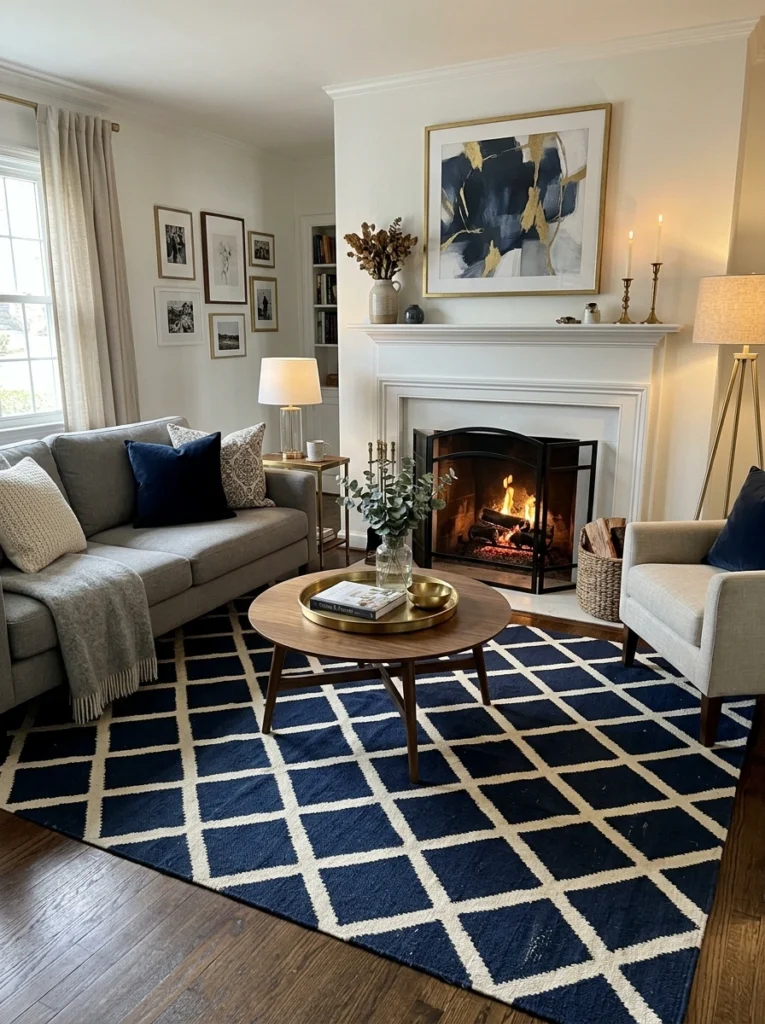
Geometric rugs bring energy and a modern edge. They can feel incredibly upscale when done right, defining the fireplace area with clean lines and a bold personality.
Why it Works: It’s a perfect way to modernize a room with a very traditional fireplace. The structured pattern provides a visual anchor that is crisp and clean, preventing the seating area from feeling cluttered.
The High-End Trick: Pay attention to scale. For a large room, you can go with a large-scale, bold pattern. For a smaller living room, choose a smaller, more repetitive pattern (like a tight trellis or diamond design) so it doesn’t overwhelm the space. A low-contrast geometric (like cream-on-ivory) reads as texture from a distance and pattern up close—very chic.
- Color Palette: Stick to two or three colors at most. A simple black and cream, navy and white, or gray and ivory combination looks expensive and timeless.
- Placement: Follow the “front-legs-on” rule to ensure the pattern feels grounded and not like it’s just floating in the middle of the room.
- Avoid: Clashing the rug pattern with other prominent patterns in the room (like on pillows or curtains). Let the rug be the star.
5. The Art of the Layered Rug Look
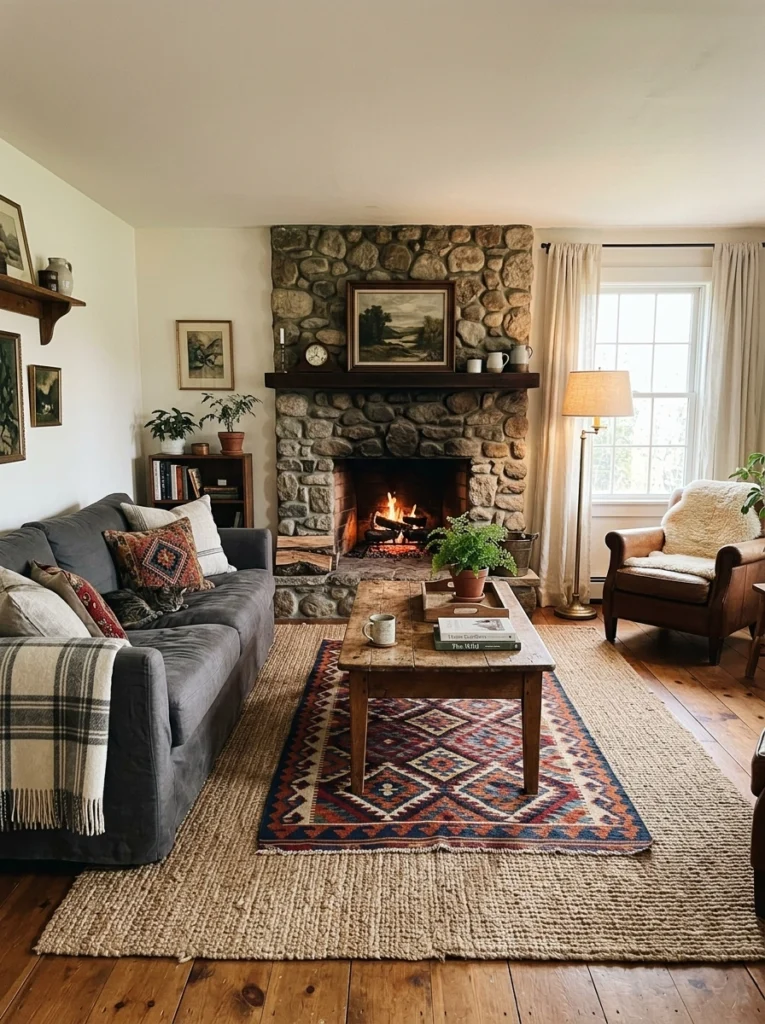
Want an instant dose of designer-approved style? Layer your rugs. This technique adds incredible depth, texture, and a curated feel that screams luxury living room.
Why it Works: It solves multiple problems. It’s a brilliant budget strategy—use a large, inexpensive natural fiber rug (like jute) as a base and layer a smaller, more expensive-looking (or genuinely special) patterned or plush rug on top. It also allows you to define the seating area more precisely.
The High-End Trick: The top rug should be significantly smaller and placed asymmetrically or centered under the coffee table. The contrast is key: layer a soft, patterned rug over a flat, textured one. Or a faux-hide over a low-pile neutral.
- Base Rug: A large jute, sisal, or flatweave rug is the perfect affordable foundation. Make sure it’s big enough to hold all your furniture.
- Top Rug: This is where you can have fun with a smaller, more decorative piece—maybe a vintage find, a faux sheepskin, or a bold-colored accent rug.
- Avoid: Layering two thick, high-pile rugs—it becomes a tripping hazard and looks bulky. Also, avoid two busy patterns that fight each other.
6. The Grounded Natural Fiber Rug (Jute & Sisal)
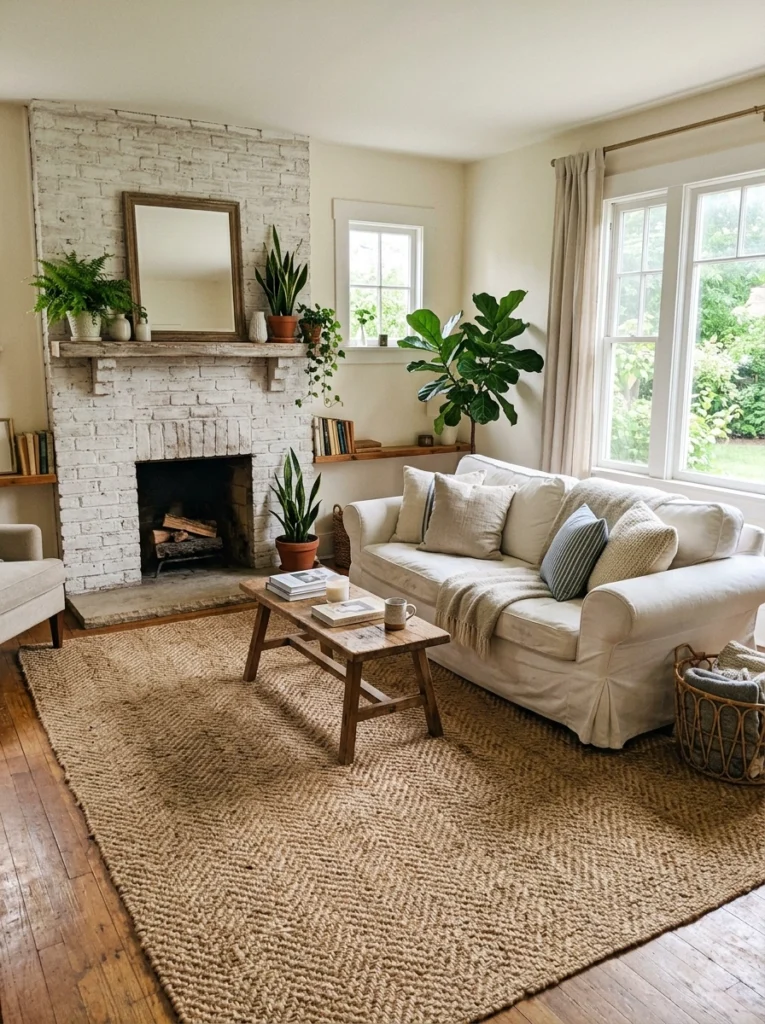
Earthy, organic, and full of texture, natural fiber rugs like jute and sisal are chameleons of interior design. They can feel coastal, rustic, or even surprisingly modern.
Why it Works: Their golden, wheat-like tones are a perfect complement to the warmth of a fire. They provide a neutral, textured backdrop that lets the fireplace and your furniture shine. They are also incredibly durable, making them one of the best fireplace rug ideas for busy households.
The High-End Trick: Look for a jute rug with a border (often in cotton twill) or one woven in a more interesting pattern, like a herringbone or chevron. This small detail elevates it from a simple beach-house staple to a sophisticated design element.
- Feel: Worried about scratchiness? Jute is generally much softer than sisal. Many modern jute rugs are blended with chenille for extra softness.
- Maintenance: These are great. You can’t see dirt easily, and they’re simple to vacuum. They’re less of a fire hazard then a high-pile shag, but still keep it a safe distance from the hearth.
- Avoid: Placing them in damp areas. Natural fibers can be susceptible to mold, but a dry living room is perfectly fine.
7. The Sleek, Low-Pile Modern Rug
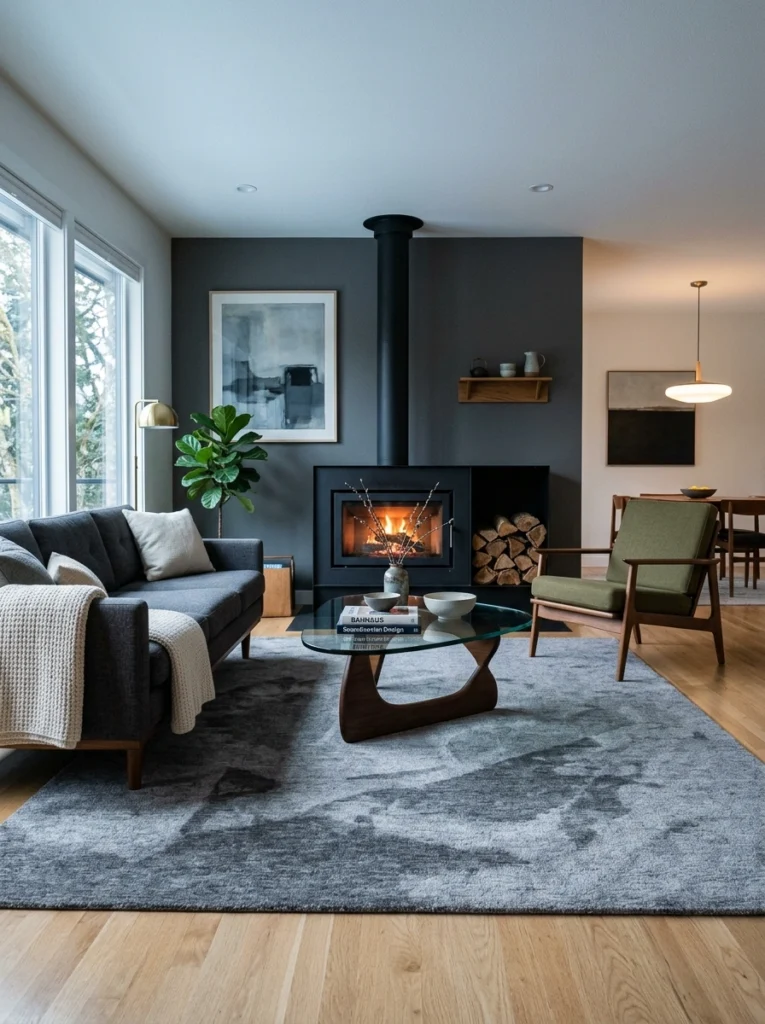
For the minimalist or mid-century modern enthusiast, a sleek, low-pile rug is the answer. It defines the space without adding visual clutter, keeping the focus on the clean lines of the room and the fireplace itself.
Why it Works: It creates a clean, uncluttered foundation. This allows architecturally interesting fireplaces—like those made of concrete, slate, or steel—to stand out. Its simplicity is its strength, providing a sophisticated and understated modern area rug idea.
The High-End Trick: Choose a rug with a subtle, abstract, or tonal pattern. Think soft, watercolor-like blotches of color or a simple border detail. A solid color works too, but look for one with a slight sheen or “heathered” effect (multiple tones of the same color woven together) to give it depth.
- Feel: Low-pile doesn’t have to mean hard. Look for dense, tightly woven wool or high-quality synthetics that feel smooth and solid underfoot.
- Safety: Low-pile rugs are a safer choice near a hearth as they are less likely to catch a stray spark.
- Avoid: Flimsy, thin rugs that curl at the edges. A quality low-pile rug should have some weight and a proper backing to lie flat.
8. The Tonal, Low-Contrast Patterned Rug
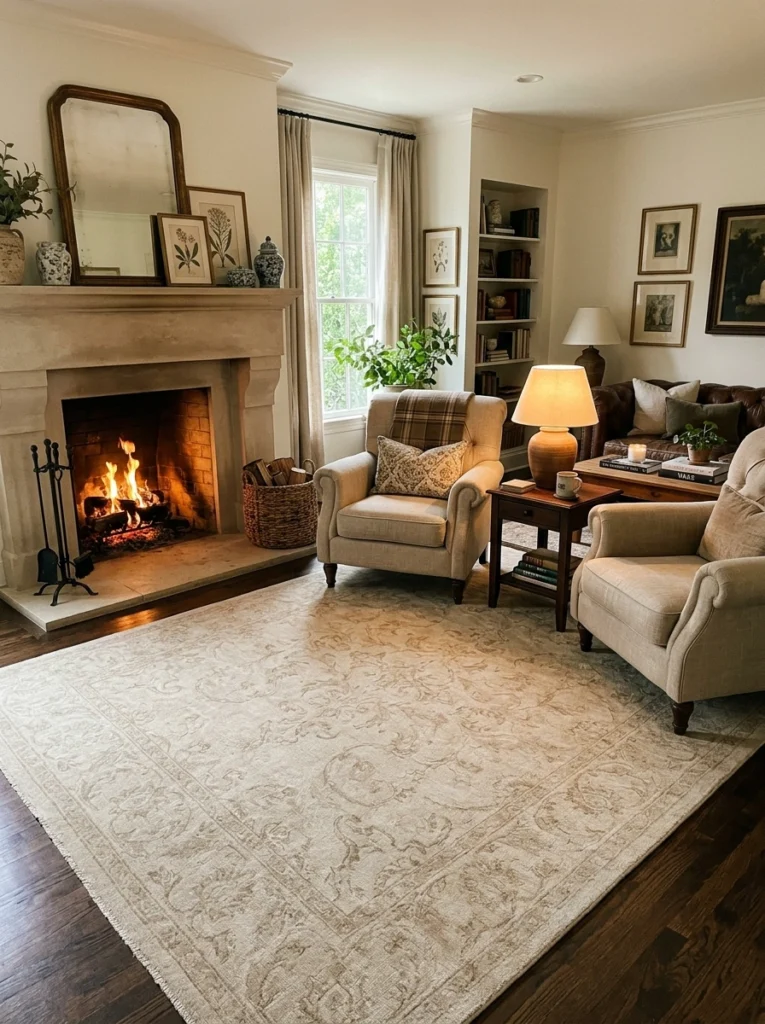
This is the secret weapon for elegant living room design. A tonal rug features a pattern—often damask, scrollwork, or abstract—in shades very close to the rug’s background color.
Why it Works: It delivers the visual interest of a pattern without overwhelming the room. From a distance, it reads as a solid color with rich texture. Up close, the subtle pattern reveals itself, adding a layer of discovery and sophistication. It’s a perfect, calming companion for a grand fireplace.
The High-End Trick: Look for a “tone-on-tone” design where the pattern is created by a change in pile height or sheen, rather than a different color. This is the epitome of quiet luxury.
- Color Choice: Soft grays, mushroom tones, creamy beiges, and muted blues work exceptionally well for this style.
- Rug Placement Living Room: This style is very forgiving. Because the pattern is subtle, it works in both large and small spaces and pairs well with other textiles.
- Avoid: High-contrast versions of this. The goal is subtlety. If the pattern pops from across the room, it’s not a tonal rug.
9. The Unexpected Faux-Hide Rug
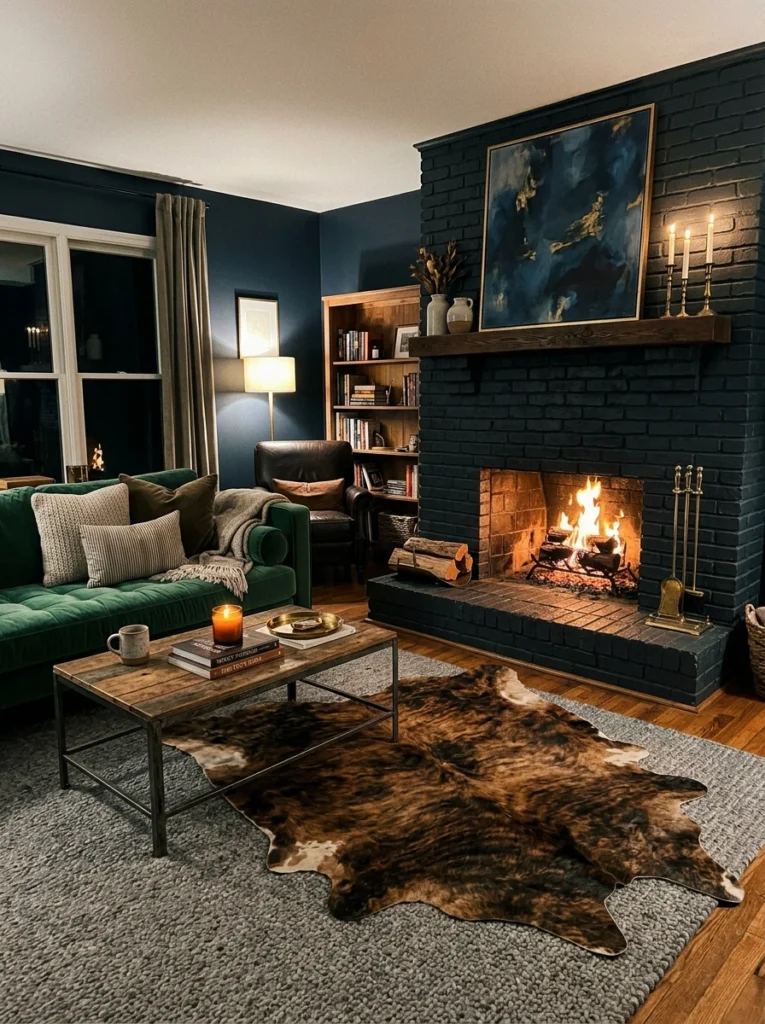
For a touch of organic shape and modern drama, a faux-hide rug is an unbeatable accent. It breaks up all the straight lines in a room (mantel, furniture, windows) and adds a dash of edgy glamour.
Why it Works: Its irregular shape is perfect for awkward spaces or for layering. It can soften a stark, modern fireplace or add a rustic touch to a more traditional one. It acts as a connector, bridging the gap between the hearth and the main seating group.
The High-End Trick: Use it as a layering piece. Place a faux-hide rug at an angle over a larger, neutral rug. This creates a curated, high-style look. High-quality fakes now have realistic color variations and a soft feel.
- Placement: Don’t try to anchor your whole furniture group on it. Use it as an accent under a coffee table, in front of the hearth (at a safe distance), or to fill an empty spot.
- Budget & Ethics: Faux options offer an affordable and animal-friendly way to get this iconic look. They are also often more durable and easier to clean.
- Avoid: A cheap-looking faux hide with a flat color and a stiff, plastic-like feel. Look for one with a soft backing and varied tones.
Conclusion
Choosing a rug for your fireplace area is about more than just covering the floor. It’s an act of design that can fundamentally change the feel of your room. The right rug anchors your furniture, preventing that “floating in space” look and creating an intimate, intentional conversation zone. It softens the hard edges of a brick or stone hearth, absorbs sound, and injects your personal style into the room’s most important focal point. Whether you choose a subtly textured neutral or a bold layered look, think of the rug as the final brushstroke that pulls your entire living room masterpiece together