
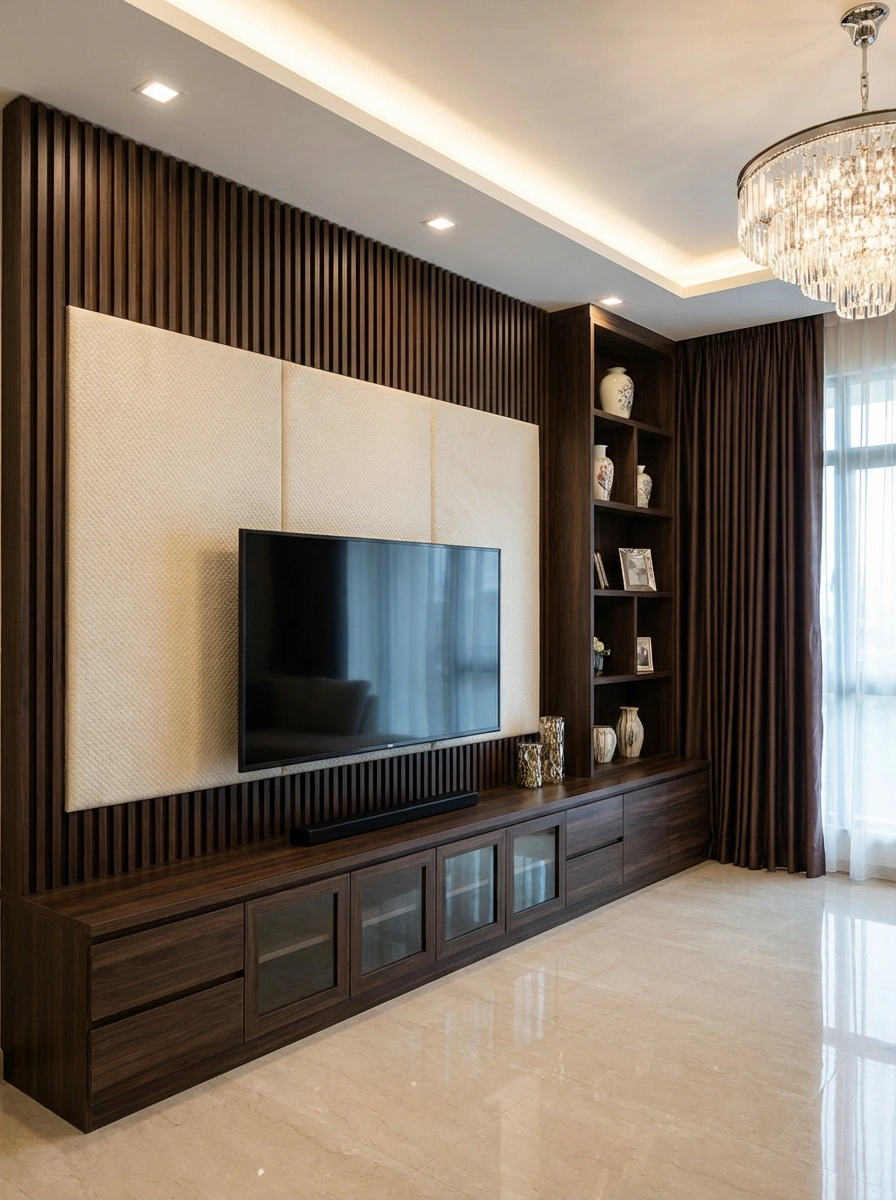
Let’s be real, the screen is usually the boss of the house, but that doesn’t mean your space has to look like a chaotic electronics store. Finding the right balance between tech and tranquility are tricky, but it’s totally doable! If you are tired of tangled cords and bulky cabinets stealing your peace, these 13 Modern Minimalist TV Room Ideas will help you out. We are going to strip away the visual noise and focus on what really matters. Ready to chill out? Let’s dive into some setups that feel intentional, calm, and undeniably stylish for your next binge-watching session.
1. The Floating Console Illusion
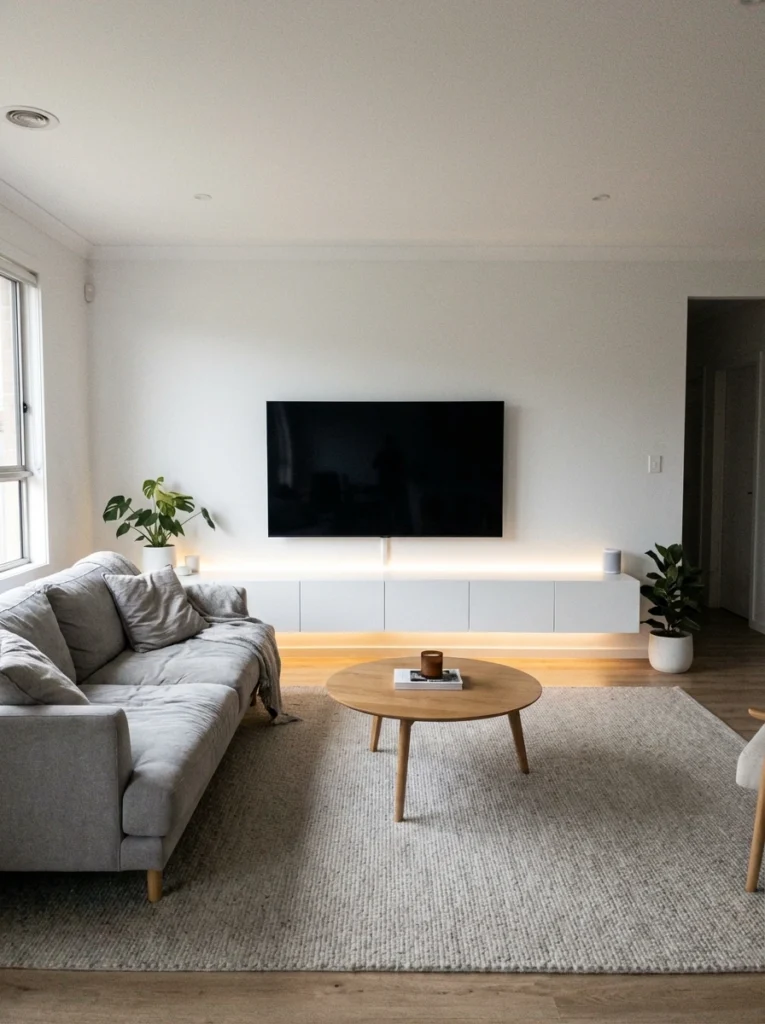
The Concept: Ditch the heavy entertainment center that sits on the floor and eats up square footage. By mounting a sleek, handle-less console directly onto the wall below your TV, you create an illusion of floating furniture. It really make the room feel bigger when the floor is exposed. This keeps the sightlines entirely uninterrupted.
Practical Tips:
- Layout: Keep a minimum of 12 to 18 inches of breathing room between the bottom of the console and the floor.
- Furniture: Choose a flat-panel, handle-free floating cabinet.
- Lighting: Add a warm LED strip under the floating console for a soft night-time glow.
- Storage: Keep all cables routed behind the drywall; use the console solely for hidden tech boxes.
- Color Palette: Crisp white or light ash wood against a soft gray wall.
Why It Works: Minimalism thrives on negative space. Lifting the furniture off the floor tricks the brain into perceiving more square footage, making it one of the best small TV room ideas out there. It keeps the viewing area light and incredibly airy.
2. Tone-on-Tone Textures
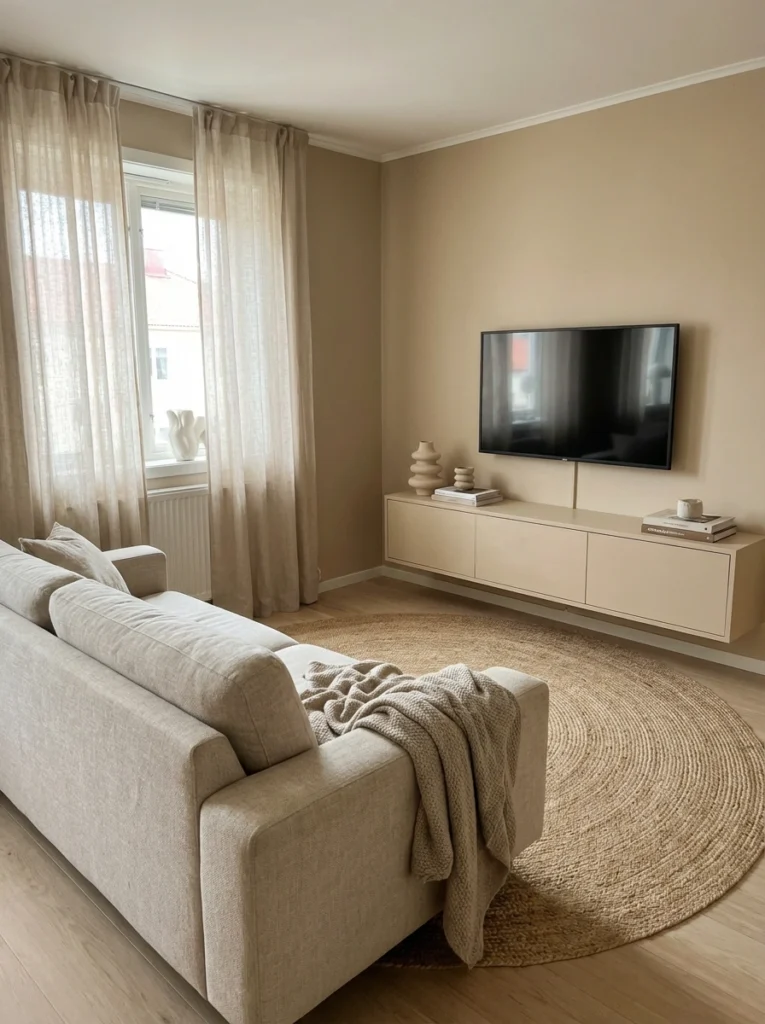
The Concept: If you think a neutral color palette is boring, you just aren’t using enough texture! Instead of relying on contrasting colors to make the TV wall pop, this idea uses varying shades of the same color—like warm beige or soft taupe—mixed with different tactile materials to create a deeply soothing environment.
Practical Tips:
- Layout: Center the TV, but keep seating slightly curved or angled to soften the room’s rigid lines.
- Furniture: A low, plush sofa in a bouclé or linen fabric.
- Lighting: Soft, diffused natural light pouring through sheer linen curtains.
- Storage: A media unit painted the exact same color as the wall so it camouflages seamlessly.
- Color Palette: Monochromatic warm beige, cream, and sand.
Why It Works: This modern TV wall design prevents the "black box" effect of the TV from feeling too harsh. The rich textures absorb light and sound, creating a cozy cocoon that feels intentionally designed without screaming for attention.
3. The Gallery Camouflage
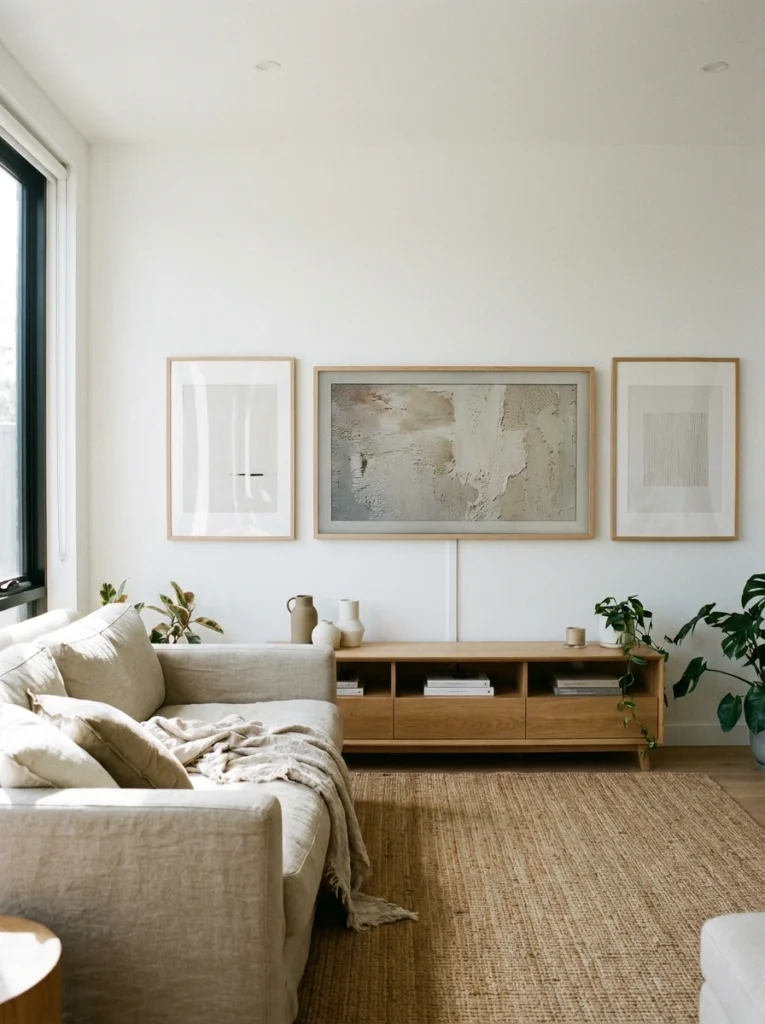
The Concept: Why let the TV dominate the room when it can just blend in? Using a frame-style television that displays art when turned off, you can surround it with 2 or 3 carefully selected, minimalist art prints. You get your contemporary home decor fix without sacrificing movie night.
Practical Tips:
- Layout: Position the TV off-center on a large wall, flanked by two equally sized framed art pieces.
- Furniture: A slim profile media credenza in natural wood.
- Lighting: Directional ceiling spotlights aimed gently at the art pieces (and the TV when it’s in art mode).
- Storage: Keep decor on the credenza to an absolute minimum—maybe one structural ceramic vase.
- Color Palette: Matte white walls with thin black or oak frames for the art.
Why It Works: It strips the TV of its identity as an appliance. By treating the screen like a piece of art, the room maintains its clutter-free space vibe, feeling more like a serene gallery than a media room.
4. Asymmetrical Balance
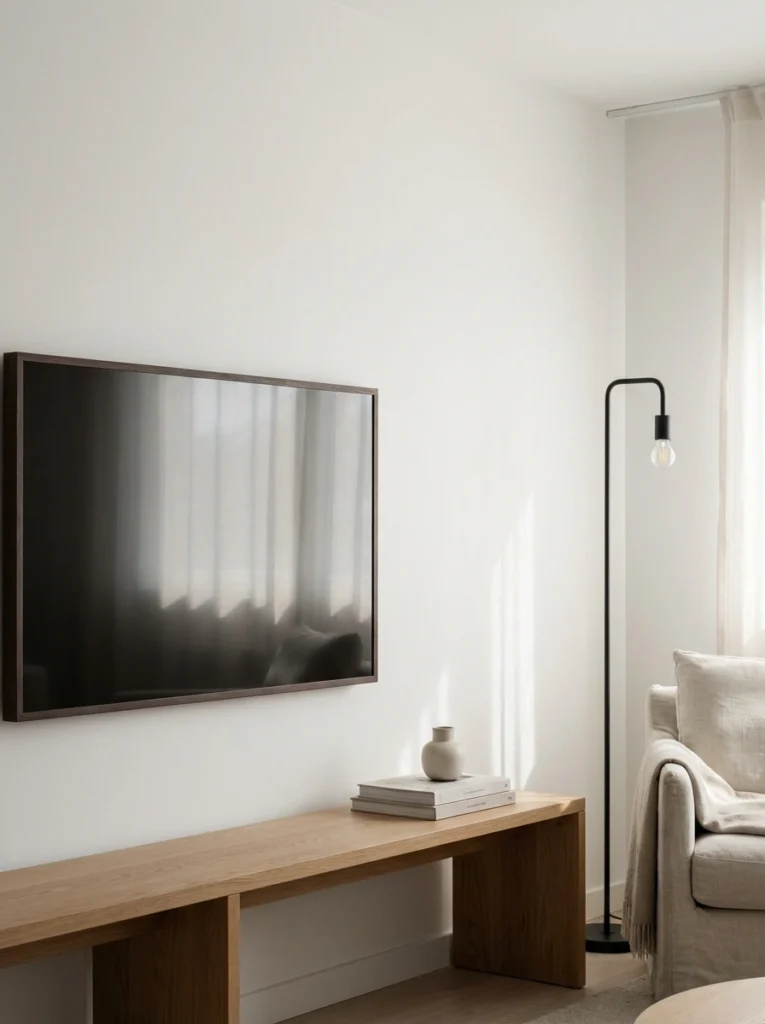
The Concept: Symmetry is great, but asymmetry brings a modern, effortless edge. Instead of centering everything perfectly, shift your TV and console to one side of the wall, and balance the visual weight with a tall, striking element on the other side.
Practical Tips:
- Layout: Mount the TV to the left or right third of the wall. Place a tall olive tree or a sweeping floor lamp on the empty side.
- Furniture: An elongated, low-profile bench that stretches across the entire wall.
- Lighting: A statement floor lamp (like an arched minimalist design) balancing the TV.
- Storage: Drawers integrated directly into the long floor bench.
- Color Palette: Charcoal, warm wood tones, and stark white.
Why It Works: It breaks the rigid, predictable rules of traditional living rooms. This approach guides the eye across the entire room, making the space feel dynamic and highly curated while still utilizing very few items.
5. The Moody Cinema Nook
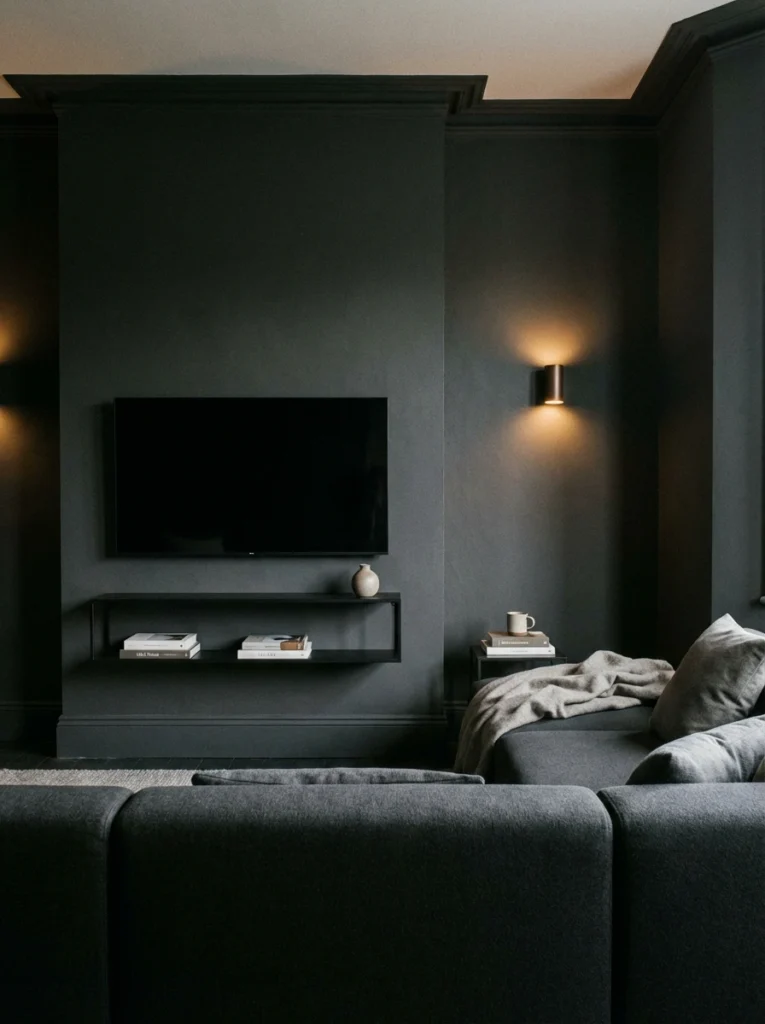
The Concept: Minimalism doesn’t always mean bright and white. A dark, moody, minimalist living room creates a deeply immersive viewing experience. By painting the walls, ceiling, and trim in a rich, dark hue, the borders of the room melt away.
Practical Tips:
- Layout: Keep the seating directly facing the screen to mimic a theater setup.
- Furniture: A deep, comfortable modular sofa in a dark gray or navy.
- Lighting: Blackout shades for the windows and dimmable sconces on the walls.
- Storage: A floating black metal shelf below the TV.
- Color Palette: Monochromatic dark charcoal, slate grey, or deep forest green.
Why It Works: Dark colors naturally blur the edges of a room, which ironically can make small spaces feel boundless. When the lights go down, the dark backdrop eliminates all visual distractions, making the bright TV screen the sole focal point.
6. Grounded Low-Profile Lounge
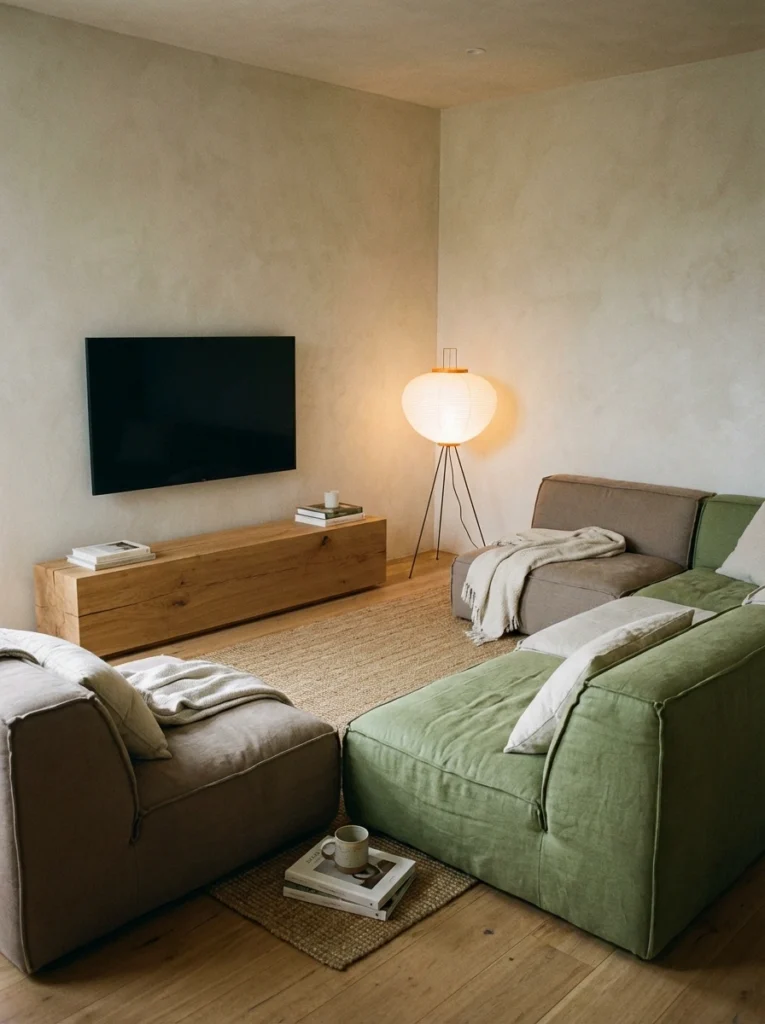
The Concept: Take it to the floor. Inspired by Japanese minimalism, this setup uses extremely low furniture to create a grounded, earthy atmosphere. The TV is mounted much lower than usual, meant to be watched from floor-level sofas or oversized cushions.
Practical Tips:
- Layout: Keep everything under a 3-foot horizontal plane. Nothing in the room should be tall.
- Furniture: Floor-level, armless lounge seating and a solid block coffee table.
- Lighting: Paper lantern floor lamps resting directly on the ground.
- Storage: A very low, single-drawer console spanning the TV wall.
- Color Palette: Warm taupes, matcha greens, and light oak.
Why It Works: Lowering the furniture increases the negative space between the furniture and the ceiling, giving the room an incredibly high, airy feel. It enforces relaxation—you literally have to sink down into the space to enjoy it.
7. Built-In Niche Sleekness
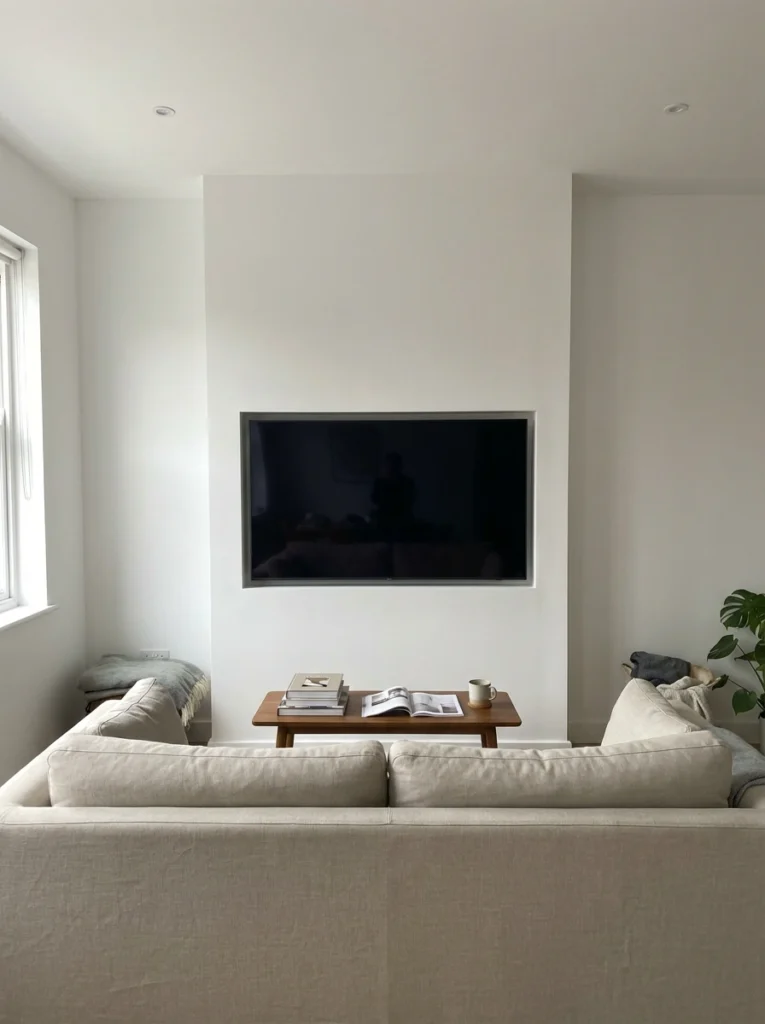
The Concept: If you want to achieve the absolute peak of a clean interior design, embed the TV directly into the wall. By building a shallow drywall niche specifically sized for your screen, the TV sits perfectly flush with the wall surface. There is literally no shadows casted by the screen.
Practical Tips:
- Layout: Dedicate a specific architectural wall for the niche, centering the seating arrangement directly opposite.
- Furniture: A streamlined sofa with exposed metal legs to maintain a light footprint.
- Lighting: Recessed ceiling lights washed down the flush wall.
- Storage: Hidden side-wall cabinets that push-to-open, completely hardware-free.
- Color Palette: Pure gallery white with accents of brushed steel.
Why It Works: It physically removes the bulk of the television. Instead of an object hanging on the wall, it becomes a seamless part of the architecture, completely eliminating the visual weight of tech equipment.
8. Warm Japandi Slats
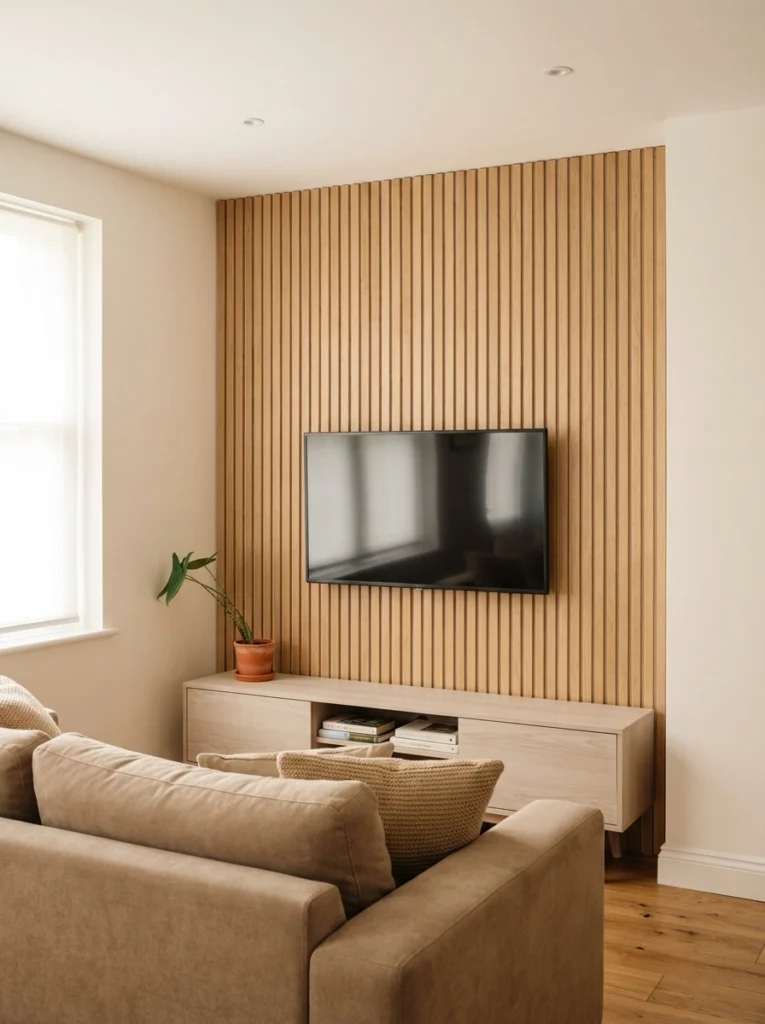
The Concept: Merge the functional elegance of Scandinavian design with the warm minimalism of Japanese interiors. By adding a backdrop of narrow, vertical wood slats behind the TV, you introduce organic warmth without adding clutter or fussy decor.
Practical Tips:
- Layout: Apply wood slats to only the center section of the wall behind the TV to frame it, leaving the sides painted white.
- Furniture: A light ash or walnut TV stand with sliding slatted doors to match.
- Lighting: Natural sunlight combined with warm backlighting behind the TV to highlight the wood texture.
- Storage: Hide consoles inside the slatted cabinet (slats allow remote control signals to pass through!).
- Color Palette: Warm whites, light woods, and subtle black accents.
Why It Works: The vertical lines of the slats draw the eye upward, giving the illusion of taller ceilings. It brings a slice of nature indoors, adding just enough visual interest so the minimalist setup doesn't feel cold or sterile.
9. The Invisible Tech Setup
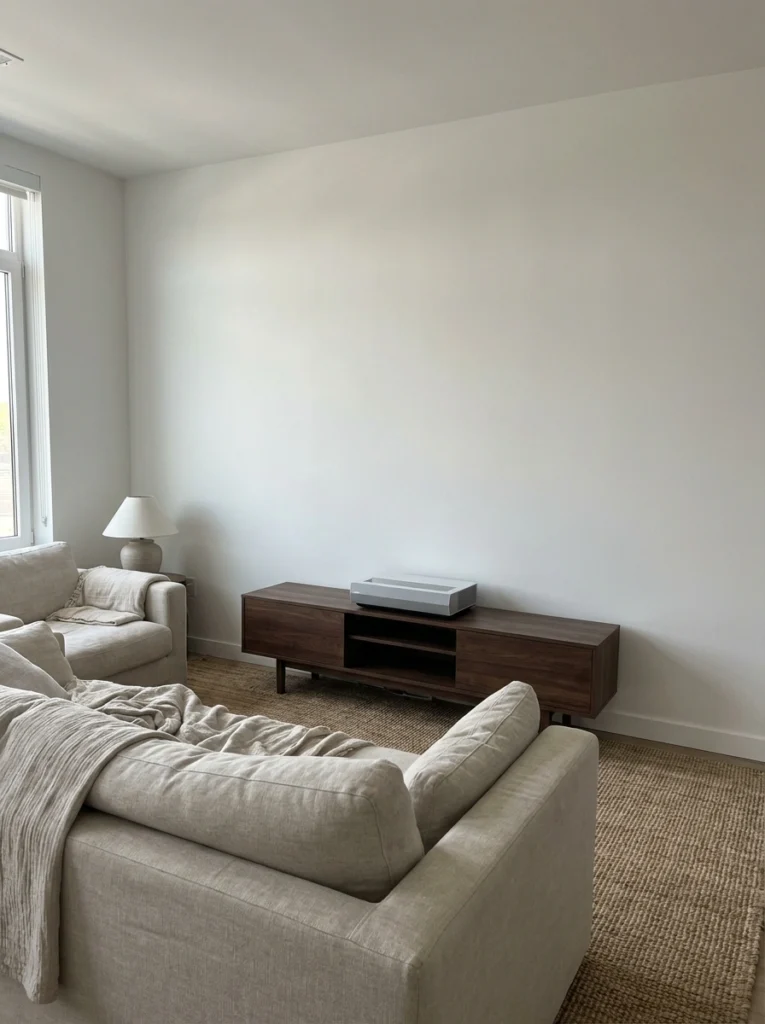
The Concept: What if the TV simply wasn’t there until you needed it? Using an ultra-short-throw projector sitting on a minimalist credenza, you project directly onto a blank, smooth white wall. When it’s off, it’s just a beautiful piece of furniture against a blank wall.
Practical Tips:
- Layout: Dedicate a large, flawless stretch of wall entirely free of art or shelves.
- Furniture: One long, sleek credenza to house the projector.
- Lighting: Install smart blinds to completely kill natural light when it’s movie time.
- Storage: Keep the credenza mostly empty, holding only the projector and a single structural bowl.
- Color Palette: Bright matte white walls with a rich walnut or black credenza.
Why It Works: It is the ultimate expression of a clutter-free space. You get the cinematic experience of a massive screen without the imposing black rectangle dominating your living room during the day.
10. Earthy Organic Minimalism
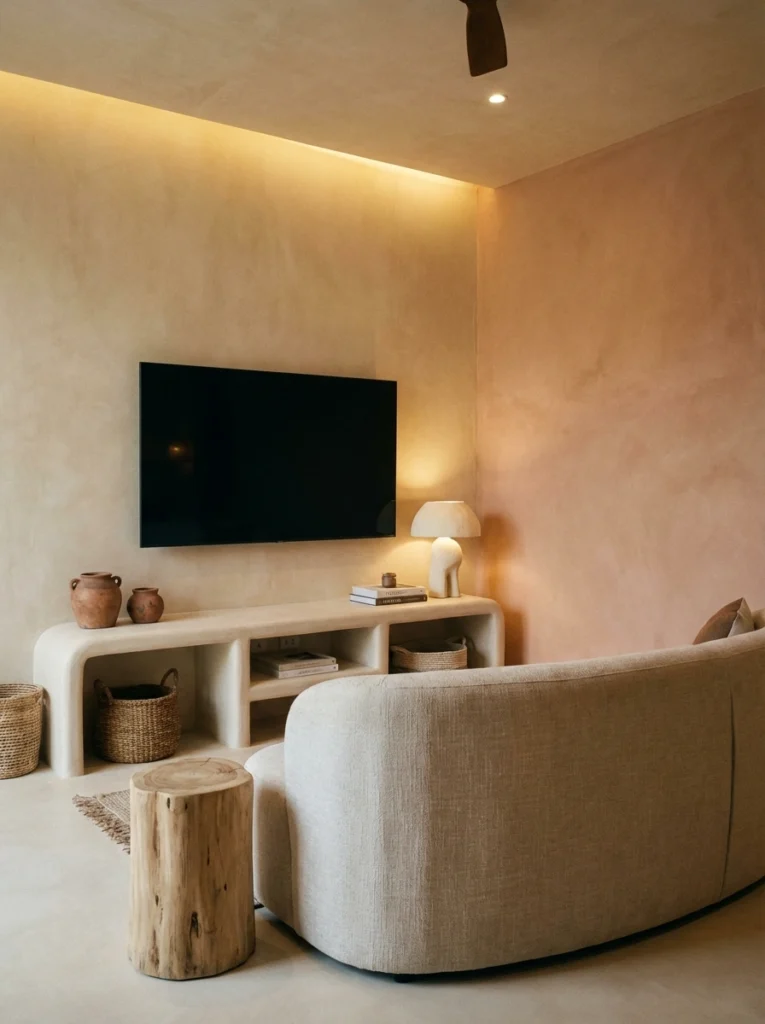
The Concept: Move away from sharp corners and stark whites. This setup relies on soft curves, Roman clay or plaster walls, and natural imperfections. The TV sits quietly among organic shapes, making the room feel like a modern cave retreat.
Practical Tips:
- Layout: Keep furniture loose and breathable; avoid pushing everything flat against the walls.
- Furniture: A curved, kidney-bean shaped sofa and a raw wood stump as a side table.
- Lighting: Soft, diffused ambient lighting—avoid harsh overheads entirely.
- Storage: A low, rounded-edge console made of natural, unvarnished stone or plaster.
- Color Palette: Terracotta, warm plaster pinks, and earthy browns.
Why It Works: The organic shapes naturally relax the human eye. By surrounding the rigid, rectangular technology of the TV with soft, imperfect natural elements, the tech feels less aggressive and perfectly harmonized with nature.
11. The Sparse Bookshelf Frame
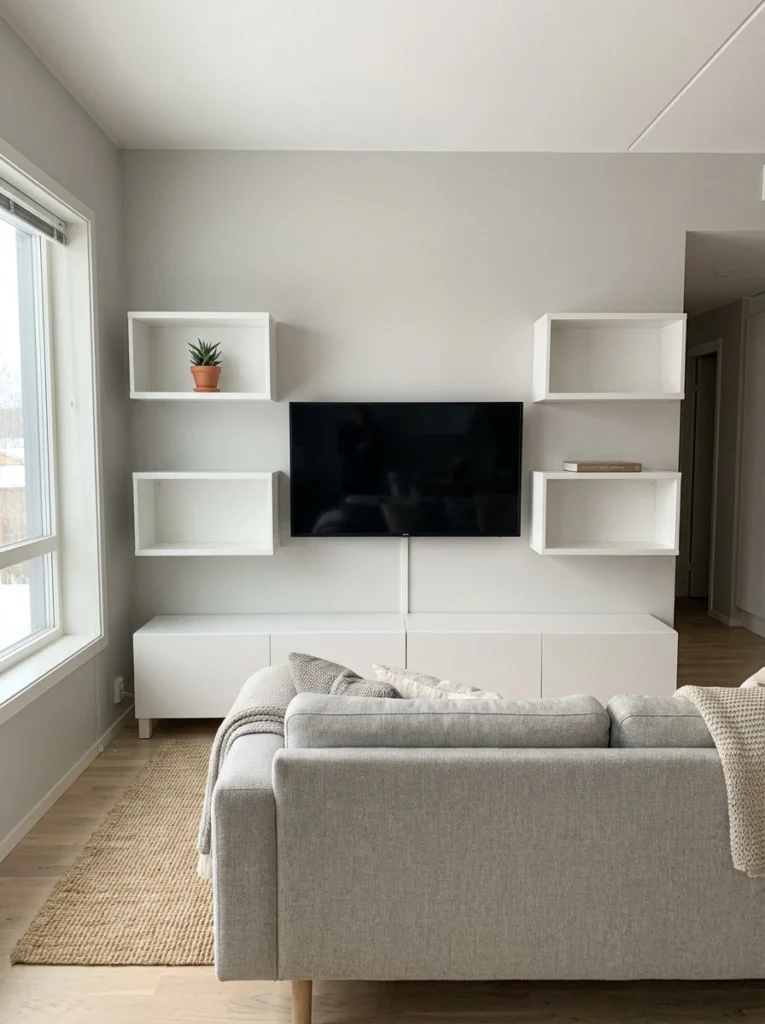
The Concept: You can have shelving around your TV without it turning into a cluttered nightmare. The trick is extreme restraint. Build minimalist open shelves around the screen, but leave 70% of the shelf space completely empty.
Practical Tips:
- Layout: Frame the TV with symmetrical, floating wooden shelves.
- Furniture: A classic mid-century modern sofa with clean lines.
- Lighting: Small, battery-operated picture lights mounted above the top shelves.
- Storage: Use the bottom shelf for enclosed storage boxes, and keep the upper shelves mostly bare.
- Color Palette: Soft greys, natural oak, and pure white.
Why It Works: It provides the feeling of a traditional library or den but maintains the strict discipline of minimalism. The heavy use of negative space on the shelves turns the few items you do display into intentional art pieces.
12. The Cozy Corner Strategy
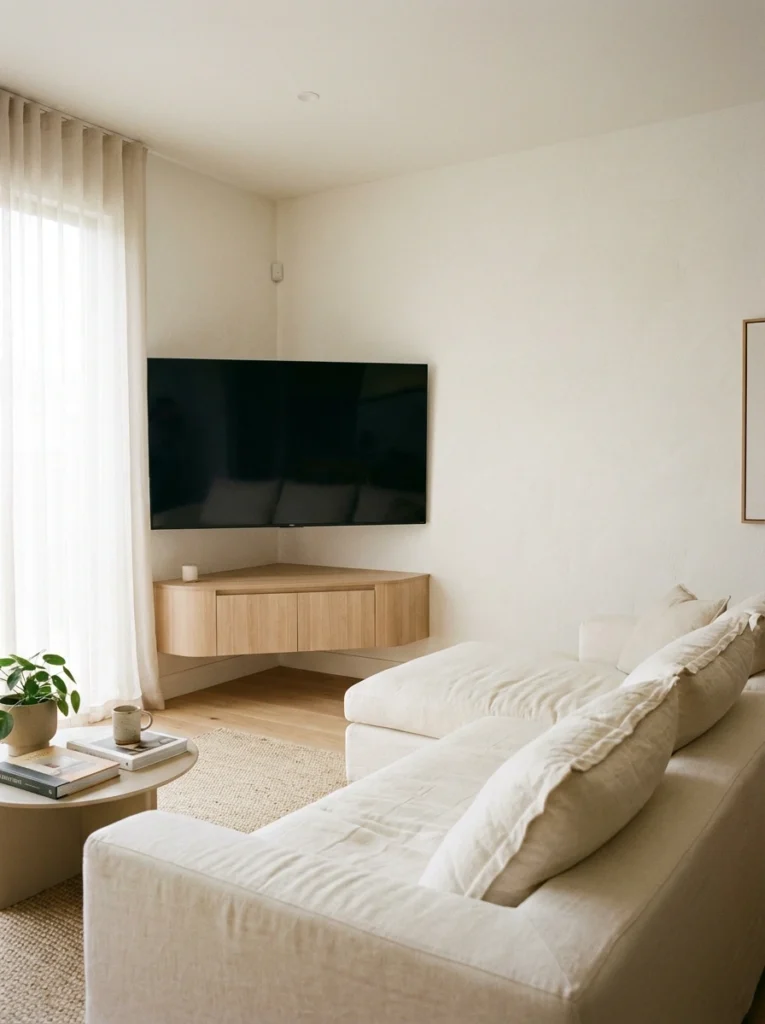
The Concept: Got a tricky layout? Don’t force the TV onto a massive wall where it looks tiny and lost. Tuck it neatly into a corner. By keeping the corner setup ultra-minimal, you save space and create an intimate, tucked-away viewing zone.
Practical Tips:
- Layout: Use a specialized corner-mounting bracket so the TV sits flush across the angle.
- Furniture: A small, triangular or softly curved corner console that doesn’t jut out into the walking path.
- Lighting: A small pendant light hanging gently in the adjacent corner to balance the room.
- Storage: Keep storage restricted to the small corner unit underneath.
- Color Palette: Light, airy pastels or warm whites to keep the corner from feeling shadowed.
Why It Works: It’s highly efficient. Corner setups maximize usable square footage in small spaces. By keeping the decor strictly minimal, the corner doesn't feel like a cramped afterthought—it feels like a deliberate, cozy destination.
13. Industrial Softness
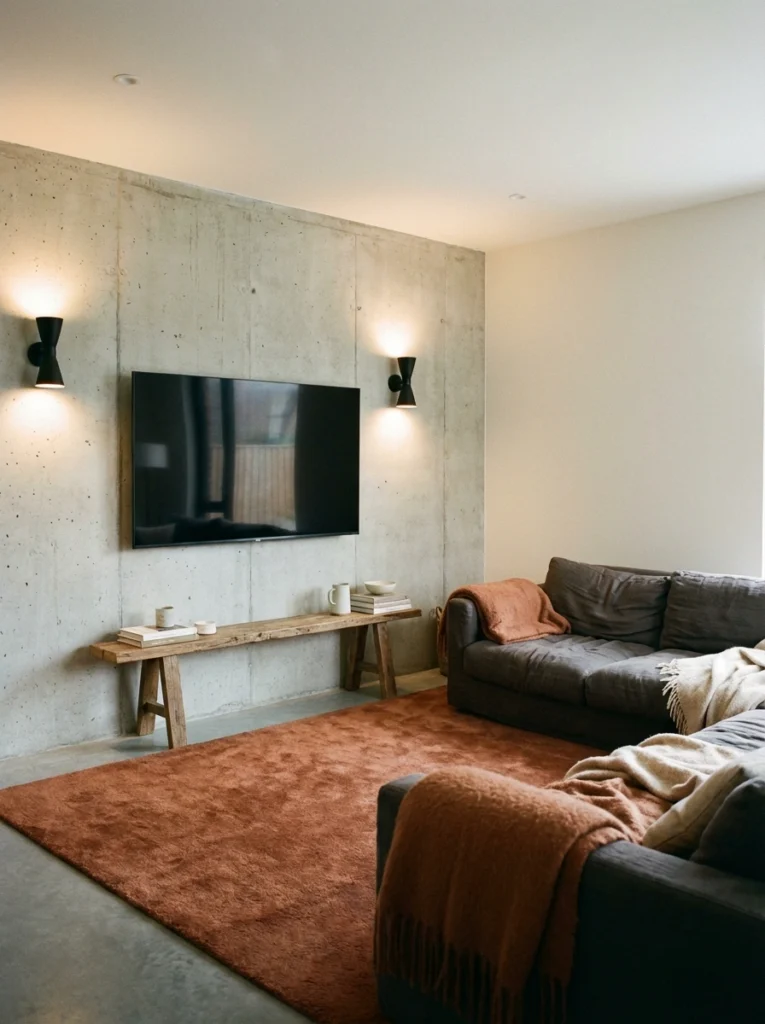
The Concept: Combine the raw, stripped-back nature of industrial design with the cozy comforts of a modern home. Think a bare concrete accent wall behind the TV, severely softened by an ultra-plush rug and warm fabrics.
Practical Tips:
- Layout: Center the TV on the concrete architectural wall, ensuring all cables are routed through metal conduits or hidden completely.
- Furniture: A chunky, low-slung sofa piled with soft textiles.
- Lighting: Matte black wall sconces offering indirect, warm lighting.
- Storage: A heavy, reclaimed wood bench acting as the TV console.
- Color Palette: Cool concrete gray, warm rust, and matte black.
Why It Works: The contrast is incredible. The cold, hard surface of the concrete makes the soft furnishings feel exponentially more comfortable. It’s an edgy take on the minimalist living room that requires virtually no decorative objects to feel complete.
When you strip away the excess, something amazing happens to your daily routine. A truly minimalist living room isn’t just about having less stuff; it’s about creating a hyper-intentional space that genuinely respects your downtime. By eliminating the visual clutter around your screen, you actually reduce mental fatigue and distractions. You are no longer staring at blinking router lights or a messy stack of game cases. Instead, the focus shifts entirely to relaxation and connection. A clean interior design forces you to be mindful about what you bring into your home, resulting in a calming sanctuary that breathes with you.